

.png) 4 month_ago
24
4 month_ago
24
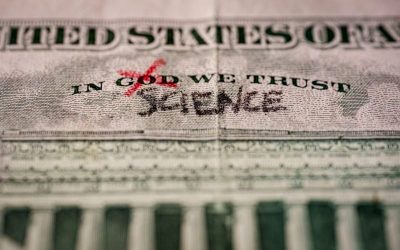
Modern civilization prides itself on knowledge, yet it is increasingly marked by confusion. Never before have societies generated so much data, so many models, and so many expert opinions—yet fundamental human questions remain unanswered. What is consciousness? What is truth? What is the purpose of human life? The paradox is striking: as technical power expands, understanding seems to contract. This is not accidental. It reflects a culture that mistakes calculation for comprehension and technique for truth.
Español, Русский, 中文, Portugues, Français, عربي, Hebrew, Deutsch, Farsi, Italiano, 日本語, 한국어, Türkçe, Српски. And 40 more languages.
Long before the modern age, thinkers warned that knowledge divorced from humility would not lead to understanding but to illusion. When theory is elevated above reality, inquiry feeds on its own assumptions and becomes barren. The metaphor is simple: beating an empty husk of wheat. One may expend enormous effort, raising dust and noise, but no grain will appear because the substance has already been removed. This metaphor applies with uncomfortable precision to much of contemporary science.

In principle, science is a method: observation, testing, falsifiability, and openness to correction. In practice, it has increasingly hardened into an ideology—one that begins with a rigid assumption that reality must be impersonal, purposeless, and reducible to matter alone. Any evidence pointing beyond that framework—toward consciousness, intelligent design, or meaning—is filtered out before inquiry even begins. Conclusions are decided in advance; research is often reduced to decorating assumptions with data. This broader distortion of science into ideology has been examined in detail elsewhere, including in the book Godless Fake Science.
Science once meant reliable knowledge of reality. Today it too often means speculative models treated as settled truth despite resting on unprovable premises. Theory is not science, yet theories now dominate public policy, education, and media narratives. The word science itself comes from scientia, meaning knowledge, and its philosophical roots are inseparable from perception and consciousness. Stripped of any reference to mind or meaning, modern science no longer seeks understanding—it manages uncertainty and enforces consensus.
Cosmology offers a revealing example. The dominant creation story of our time—the Big Bang—presents itself as scientific while relying heavily on unobservable or purely theoretical entities: dark matter, dark energy, singularities, and mathematical infinities. These are not discoveries in any direct empirical sense; they function as conceptual placeholders invoked to preserve a strictly materialist explanatory framework that cannot account for fine-tuning, coherent order, or the striking intelligibility of the universe. The issue is not when such constructs were introduced historically, but the role they now play in stabilizing that framework—extended and reinforced through inflationary theory—by converting unresolved foundational problems into mathematical abstractions treated as ontological realities.
We are asked to believe that a universe governed by blind chance somehow produces laws, constants, beauty, and minds capable of contemplating it.
For nearly a century, modern science has treated the failure of a strictly materialist framework as unthinkable, compensating for unresolved contradictions by inventing new particles, unseen forces, and provisional rules that defer rather than resolve foundational questions.
Evolutionary theory follows a similar pattern. Variation within species is observable; the transformation of one kind of organism into another is not. Yet textbooks present this unobserved leap as established fact, while dissent is treated as heresy. When fossils appear suddenly and fully formed, theory is adjusted. When transitional forms are missing, new explanations are invented. The process never reaches substance because it cannot admit limits.
A more immediate and politically consequential example appears in the modern climate narrative. As previously analysed, the claim that carbon dioxide—a trace gas essential to plant life—is the primary driver of catastrophic climate change has hardened into dogma rather than remaining a testable hypothesis. Models are treated as evidence, historical temperature fluctuations are downplayed or ignored, dissent is marginalized, and CO₂ is reframed as a moral pollutant, turning speculative modeling into a tool of fear and control.
In medicine, the pattern has proven even more dangerous. During the pandemic, entire populations were subjected to unprecedented policies based on models, tests, and assumptions shielded from scrutiny. Dissenting doctors were silenced and fear replaced reason. As documented elsewhere, a basic question was never allowed to surface: What if the underlying framework itself was flawed? Once again, speculation masqueraded as certainty, and the costs were borne by ordinary people.
None of this means that empirical investigation is wrong. The problem is not science; it is scientism—the belief that knowledge begins and ends with material measurement. Scientism is not scientific; it is philosophical. Worse, it is self-refuting.
Consciousness itself—the very faculty doing the measuring—cannot be reduced to chemistry without undermining the concept of knowledge altogether. If thoughts are nothing more than biochemical reactions, then beliefs are not true or false, only caused. In that case, science ceases to be a search for truth and becomes merely the reporting of neural events. A worldview that cannot account for the knower invalidates its own claim to knowledge.
At this point, the question can no longer be avoided. If knowledge, reason, and consciousness are real—and not illusions produced by blind processes—then they cannot be self-originating. Order does not arise from disorder, intelligibility does not emerge from meaninglessness, and truth cannot be grounded in chance. Historically, this recognition led not away from science but toward God, understood not as a competing explanation within nature, but as the source of creation and intelligibility that makes science possible in the first place.
Even committed materialists have acknowledged this problem. As biologist J.B.S. Haldane once admitted, “If my mental processes are determined wholly by the motions of atoms in my brain, I have no reason to suppose that my beliefs are true.”
Modern institutions now reflect this confusion. Universities train specialists who know more and more about less and less while remaining silent about first causes. Students are taught how to calculate but not how to question assumptions. Funding shapes conclusions. Prestige replaces truth. The result is a class of experts highly skilled in manipulating symbols yet blind to meaning.
This is why modern science increasingly resembles theology without God. Its doctrines are treated as unquestionable, dissenters are excommunicated, and consensus is enforced. But unlike traditional religion, it offers no redemption—only management. Humanity is redefined as a biological accident, consciousness as a glitch, morality as a social construct.
From this view, control becomes inevitable. If human beings are merely biological machines shaped by chance and environment, there is no intrinsic dignity to respect and no principled limit beyond efficiency. When meaning is denied, governance replaces conscience and regulation replaces responsibility.
Yet cracks are appearing. Many people sense that something is wrong. They notice that “following the science” often means following money, politics, and narrative control. They see that dissent is treated as danger rather than dialogue. They intuit—correctly—that reality is richer than equations and that consciousness cannot be an afterthought.
True knowledge does not require rejecting reason. It requires restoring it to its proper place as a tool. When intellect serves truth, it illuminates; when it replaces truth, it blinds. Reality is not conquered by force of intellect but disclosed through alignment—alignment of mind with truth and, ultimately, with a higher source of order that precedes human institutions.
This may be why serious inquiry so often leads back to willingness to ask not only how but why. A recognition that consciousness points beyond matter, that order points beyond chance, and that love routinely contradicts survival logic. These are not mystical evasions; they are empirical facts of human experience.
Beating an empty husk produces only dust. Returning to the grain requires courage—the courage to question assumptions, resist manufactured consensus, and admit that the deepest truths may be given, not invented. Civilization does not suffer from lack of intelligence. It suffers from misdirected intelligence.
The fulfillment of science is not the elimination of transcendence but the recognition of its own foundations. Science reaches maturity not when it claims to explain everything, but when it acknowledges that order, intelligibility, and consciousness are not products of blind chance but signs of a deeper source.
As Max Planck, the father of quantum theory, observed:
“I regard consciousness as fundamental. I regard matter as derivative from consciousness.”
Werner Heisenberg reached a similar conclusion from within physics itself:
“The first gulp from the glass of natural sciences will turn you into an atheist, but at the bottom of the glass God is waiting for you.”
The way forward is not more speculation, but intellectual humility and honesty. Not louder experts, but deeper responsibility. Not godless science, but science grounded once again in meaning.
*
Click the share button below to email/forward this article. Follow us on Instagram and X and subscribe to our Telegram Channel. Feel free to repost Global Research articles with proper attribution.
Mark Keenan is a former United Nations technical expert and an independent writer on science, technology, political economy, and human freedom. He is the author of Godless Fake Science, The AI Illusion, Climate CO2 Hoax, and The Debt Machine. He publishes essays at markgerardkeenan.substack.com and comments on X (@TheMarkGerard). His work is archived at Reality Books.
He is a regular contributor to Global Research.
Global Research is a reader-funded media. We do not accept any funding from corporations or governments. Help us stay afloat. Click the image below to make a one-time or recurring donation.















.jpg)


 French (CA)