

.png) 1 day_ago
33
1 day_ago
33
To speak of “Christianity” as though it were a singular, cohesive force is to ignore both the faith’s historical complexity and its social diversity.
Christianity has never existed as one uncontested institution, one political programme, or one uniform moral sensibility.
It encompasses the contemplative traditions of Eastern Orthodoxy, the sacramental imagination of Catholicism, the communal witness of Anabaptism, the nonviolent radicalism of the Quakers, the social gospel of progressive Protestantism, the liberation theology of Latin America,
Black ecclesial traditions, feminist theologies, evangelical movements committed to poverty relief and peacemaking, and countless local forms of Christian practice. The fundamental question, whenever Christianity enters public criticism, must therefore be: Which Christianity are we addressing?
That question is not a minor qualification. It determines the object of criticism. A denunciation of Christian nationalism, fundamentalist authoritarianism, or imperial Christianity should not be confused with a denunciation of every Christian community or of every form of Christian belief. Indeed, one of the most important tasks of contemporary religious criticism is to distinguish between Christianity as a diverse family of traditions and the particular political theology that has acquired disproportionate cultural power in parts of the modern West.
In the United States, the most politically visible and institutionally aggressive form of this theology is a fusion of Christian identity with national belonging, cultural conservatism, and the pursuit of state power. Scholars commonly describe Christian nationalism as an ideology that seeks to give a privileged place to a particular form of Christianity within public life. It treats national identity, civic symbols, historical narratives, and political authority as inseparable from an identitarian version of Christianity. The result is not simply religious conviction entering public debate. It is the transformation of religion into a political project and of politics into a quasi-sacred struggle.
This movement should not be mistaken for the universal or transcendent message of Christianity. It represents a particular form of Christian identity which is often ethnicized, patriarchal, exclusionary, and deeply invested in the restoration of an imagined national past. Research on Christian nationalism has associated it with nativist assumptions, racial hierarchy, authoritarian forms of social control, militarism, and resistance to pluralistic democracy. Those associations do not mean that every person who adopts Christian-nationalist language embraces all of these positions consciously or to the same degree. They do mean, however, that the ideology’s central structure makes political belonging dependent upon the elevation of one religious-cultural identity over others.
The problem is therefore theological as well as political. Christian nationalism does not merely use Christian symbols to advance ordinary political interests. It places those interests under the sign of divine authority. Political victories become evidence of providential favour; national myths become sacred history; opponents become enemies of God; and authoritarian leaders can be presented as instruments of redemption. Once political power receives theological sanction, criticism becomes sacrilege. Compromise appears as betrayal, pluralism as weakness, and democratic restraint as an obstacle to the fulfilment of providential history.
The Radical Ethic of Jesus
The contrast between this political theology and the ethical centre of the Gospels is difficult to avoid. In the Sermon on the Mount, Jesus blesses the poor in spirit, the meek, the merciful, the peacemakers, and those who hunger and thirst for righteousness.
These beatitudes do not glorify domination, imperial prestige, or national greatness. They direct attention towards precisely those forms of life that systems of power tend to disregard: humility, mercy, grief, reconciliation, and moral courage.
.

Sermon on the Mount, an 1877 painting by Carl Bloch (Public Domain)
.
The Sermon’s most disruptive command is the instruction to love one’s enemies and pray for those who persecute one’s community. The scope of love is extended beyond the familiar circle of neighbour, family, nation, and religious group. Scholarly interpretations of the passage have repeatedly emphasized that Jesus’ teaching refuses the ordinary logic by which moral obligation stops at the boundary of the in-group. The enemy is not transformed into a legitimate object of hatred merely because he or she is dangerous, foreign, impious, or politically opposed.
This teaching does not amount to passive indifference toward injustice. To love an enemy is not to deny the reality of harm, excuse oppression, or abandon the vulnerable. It is to reject the belief that violence, humiliation, and revenge can create a just social order. Jesus’ ethic is radical because it challenges the assumption that domination is the only realistic response to threat. It seeks the transformation of human relationships rather than the permanent enlargement of one group’s power over another.
The same pattern appears in the parables and public actions associated with Jesus. The stranger becomes the model of neighbourly conduct in the parable of the Good Samaritan. The socially despised become recipients of mercy. Children, beggars, foreigners, the sick, and the morally condemned are not treated as disposable material outside the boundaries of concern. In Matthew 25, the decisive moral question is framed through the treatment of the hungry, the thirsty, the stranger, the naked, the sick, and the imprisoned. The criterion is not ideological purity or national loyalty, but concrete solidarity with vulnerable human beings.
This ethical vision is incompatible with any Christianity that regards compassion as weakness and political enemies as contaminants. It is also incompatible with the assumption that the nation, rather than the human person, is the primary object of moral loyalty. Jesus does not tell his followers to identify God’s reign (not “God’s kingdom”) with an empire, an ethnicity, a state, or a civilizational bloc. He announces a REIGN whose values unsettle the hierarchies of the world.
From Faith to Tribal Identity
When a religious tradition becomes a tribal religion, its central concern shifts from spiritual transformation to boundary maintenance. Faith is reduced to a public identity marker used to distinguish the “clean” from the “unclean,” the loyal from the disloyal, the patriot from the traitor, and the authentic citizen from the suspected internal enemy. The religious community ceases to function primarily as a school of moral formation and becomes instead a mechanism for sorting human beings into protected and disposable populations.
This transformation has profound consequences for moral judgment. Integrity is no longer measured by whether one treats the poor, the foreigner, the prisoner, or the political opponent with dignity. It is measured by one’s loyalty to the tribe. A politician may lie, exploit, humiliate, or incite violence and yet retain religious legitimacy if he promises to defend the group’s cultural status. Conversely, a person may display generosity, honesty, and concern for the vulnerable but be condemned as an enemy if he or she challenges the tribe’s political mythology.
The result is a reversal of the traditional relationship between religion and power. Religion once claimed, at least in principle, to judge rulers by a moral standard higher than political expediency. The prophet confronted the king; the martyr refused to worship the emperor; the church’s conscience was supposed to remind the state that no government possesses absolute authority. Under Christian nationalism, however, the state becomes the instrument through which religious identity is defended and restored. Instead of asking whether political power conforms to justice, the movement asks whether justice serves the interests of its political coalition.
This helps explain the movement’s persistent attraction to strongman politics. Christian nationalism is associated, in varying degrees and contexts, with support for authoritarian leaders and the belief that democratic constraints may be suspended in order to restore a preferred social order. The attraction is not always reducible to personal admiration for one leader. It often reflects a deeper longing for hierarchy, certainty, cultural dominance, and the recovery of an imagined past in which the group possessed unquestioned authority.
The strongman therefore assumes a quasi-messianic role. He is portrayed as the leader who alone can defeat corruption, silence enemies, restore national greatness, and protect the faithful from social change. His personal conduct becomes secondary to his symbolic function. He may violate the virtues that religious teaching ostensibly celebrates, yet his transgressions are excused because he is believed to serve the tribe’s larger purpose. In this arrangement, the leader does not need to be holy. He needs only to be useful.
The Politics of Fear
Militant Christian nationalism often thrives less by offering a constructive account of social life than by identifying threats. Its political energy is generated through a series of perceived emergencies: immigration, secularism, feminism, racial equality, LGBTQ rights, public education, scientific authority, demographic change, or the supposed disappearance of a Christian nation that may never have existed in the form imagined. Each controversy becomes evidence that the faithful are under siege.
This politics of permanent emergency has an important psychological function. It converts social complexity into moral clarity. Economic insecurity is attributed to immigrants; cultural change to secular conspiracies; political disagreement to demonic influence; and institutional failure to the betrayal of the nation by internal enemies. Such explanations are emotionally powerful because they assign blame and restore a sense of collective purpose. They also discourage serious analysis of the structural causes of inequality, ecological crisis, institutional corruption, and social fragmentation.
The movement’s apocalyptic imagination intensifies this pattern. Apocalyptic language can express a genuine concern for justice: it can expose the violence of oppressive systems and affirm that injustice will not have the final word. But in nationalist politics, apocalypse often becomes a language of purification. The world is imagined as a battlefield between the righteous community and a corrupting enemy. Political defeat is interpreted not as an ordinary feature of democracy but as persecution. The resulting worldview makes coexistence increasingly difficult because compromise appears to assist evil.
A society governed by this logic cannot sustain pluralism easily. Pluralism requires citizens to accept that no single group possesses the state absolutely, that opponents have legitimate rights, and that political authority must remain accountable to institutions rather than to sacred claims. Christian nationalism resists these premises when it defines political legitimacy according to religious belonging. Its ideal citizen is not simply a participant in a common civic order, but a member of the morally favoured community.
This is why the ideology’s effects extend beyond questions of church and state. It affects attitudes toward minorities, migrants, religious outsiders, women, sexual minorities, public education, social welfare, science, and democratic institutions. Studies have connected Christian nationalism with a range of exclusionary and authoritarian attitudes, though the strength and form of those associations vary across populations and research designs. The common thread is the belief that political authority should preserve or restore the pre-eminence of an identitarian Christianity within civic life.
Empire in Christian Dress
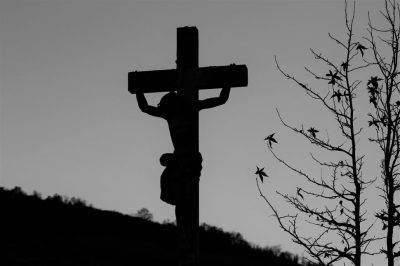
The central irony of Christian nationalism is that it presents the pursuit of dominance as obedience to a teacher who rejected domination. It turns the cross into a political emblem of victory while neglecting its original challenge to the logic of conquest. The cross does not celebrate the triumph of the powerful over the weak. It reveals what imperial and religious power can do to the innocent, and it calls into question every political order that sanctifies violence in the name of righteousness.
This does not mean that Christianity has always resisted empire. From late antiquity onward, Christian institutions have repeatedly accommodated, legitimized, and sometimes sanctified imperial power. Churches have blessed armies, defended colonial domination, justified slavery, and aligned themselves with authoritarian regimes. The history of Christianity is therefore not a simple story of moral resistance. It is a history of recurring tension between the Gospel’s prophetic critique of power and the institution’s desire for security, influence, and social control.
That tension is visible in the modern West. Christian nationalism often portrays the nation as a sacred vessel whose authority must be defended against contamination. It may invoke religious liberty, but frequently means the liberty of a dominant group to impose its moral vision through public institutions. It may speak of family values, but often protects a hierarchical family order in which authority is concentrated in male and patriarchal structures. It may invoke freedom, yet support coercive state power when that power is directed against disfavoured groups.
The language of liberty thus becomes selective. Freedom is celebrated when it protects the majority’s cultural privileges and rejected when it enables minorities to dissent from those privileges. Religious liberty becomes a shield for one tradition rather than a principle that protects everyone. Democracy is praised when it produces the desired result and denounced as corrupt when it permits the wrong people to exercise equal political power.
This is not the freedom of the Gospel. It is the freedom of domination: the freedom of the powerful to define the public order in their own image.
The Betrayal of Social Responsibility
A further contradiction emerges in the movement’s response to social suffering. Christianity has long generated traditions of hospitals, schools, mutual aid, poverty relief, abolitionism, labour activism, and social reform. Even where Christian institutions have failed, the Christian moral vocabulary has often supplied a language for judging societies by their treatment of the vulnerable.
Christian nationalism, by contrast, frequently directs its energy toward symbolic battles rather than material repair. It may speak at length about morality while neglecting healthcare, housing, poverty, incarceration, labour exploitation, and ecological destruction. It may defend unborn life rhetorically while showing little interest in the conditions into which children are born. It may condemn personal vice while remaining silent about corporate exploitation, racialized poverty, environmental devastation, or the cruelty of punitive institutions.
This selective morality reveals a deeper confusion between moral seriousness and moral surveillance. The movement is often intensely concerned with policing identity, sexuality, family structure, speech, and cultural symbolism. Yet moral concern becomes much less urgent when the issue involves the powerful or when justice would require redistribution, institutional reform, or limits on economic privilege.
The Gospels offer a different standard. They do not treat compassion as an optional supplement to faith. They make the treatment of the vulnerable central to the question of whether faith is genuine. The test is practical: Who is fed? Who is sheltered? Who is welcomed? Who is imprisoned? Who is forgotten? A Christianity that answers these questions primarily through punishment, exclusion, and domination has departed from the moral grammar it claims to defend.
Recovering the Radical Christ
The critique of Christian nationalism should not conclude with the assumption that Christianity is beyond recovery. On the contrary, the existence of a false gospel presupposes that there is a standard by which falsity can be recognized. The Christian tradition contains resources for resisting its own distortions: the prophets’ denunciations of unjust rulers, the Gospels’ identification with the poor and excluded, the apostolic rejection of ethnic privilege, the martyrs’ refusal to absolutize the state, monastic traditions of simplicity, Anabaptist commitments to nonviolence, Black churches’ struggle against racial domination, and liberation theology’s insistence that salvation cannot be separated from justice.
The task is not to construct an imaginary pure Christianity untouched by history. No tradition escapes ambiguity, institutional compromise, or human failure. The task is to recover a critical relationship between Christian faith and political power. Christianity must be able to judge the nation rather than worship it, to defend the stranger rather than fear the stranger, and to value truth above tribal loyalty. It must recover a moral community whose boundaries are widened by compassion rather than narrowed by suspicion.
Such a recovery would require several renunciations:
- The renunciation of the belief that national identity is sacred.
- The renunciation of the fantasy that political domination can create the “kingdom of God”.
- The renunciation of the use of divine language to immunize leaders from criticism.
- The renunciation of the idea that enemies are outside the reach of moral concern.
- The renunciation of a theology that values cultural control more than human flourishing.
- The renunciation of the conviction that Christianity needs state privilege in order to remain true.
The alternative is not political quietism. The radical Christ is not a figure of indifference, withdrawal, or passive acceptance. The Gospels portray a teacher who confronted religious hypocrisy, economic exploitation, social exclusion, and imperial violence. But his confrontation did not reproduce the methods of the empire. He did not establish a rival machinery of coercion. His authority emerged through service, truth-telling, solidarity, healing, and the refusal to treat human beings as instruments of collective power.
The false gospel of empire therefore fails not because it is too political, but because its politics are incompatible with the moral revolution it claims to represent. It seeks to conquer the world for Christ by adopting the methods that Christ repudiated. It celebrates strength while neglecting mercy, invokes righteousness while practising exclusion, and claims to defend faith while making political power its true object of worship.
The tragedy is not merely that Christian nationalism has become authoritarian. It is that, in its pursuit of cultural dominance, it has made Christianity less capable of bearing witness to its own deepest ethical claims. It has replaced neighbour-love with tribal loyalty, peacemaking with militancy, humility with resentment, and sacrificial service with the pursuit of control.
A Christianity worthy of the name cannot be measured by the size of its political influence or the proximity of its leaders to state power. It must be measured by the lives it protects, the enemies it refuses to dehumanize, the strangers it welcomes, the poor whose dignity it defends, and the forms of domination it is willing to confront even when those forms of domination arise within its own institutions.
Until Christianity confronts its tribal impulse, the dominant public face of the faith will remain not a beacon of compassion but an engine of division and control. But the final word need not belong to that distortion. The radical Christ remains a standing judgment upon every attempt to sanctify empire: God’s reign is not realized by conquering others, but by learning to love them.
*
Click the share button below to email/forward this article. Follow us on Instagram and X and subscribe to our Telegram Channel. Feel free to repost Global Research articles with proper attribution.
Prof. Ruel F. Pepa is a Filipino philosopher based in Madrid, Spain. A retired academic (Associate Professor IV), he taught Philosophy and Social Sciences for more than 15 years at Trinity University of Asia, an Anglican university in the Philippines. He is a Research Associate of the Centre for Research on Globalization (CRG).
Global Research is a reader-funded media. We do not accept any funding from corporations or governments. Help us stay afloat. Click the image below to make a one-time or recurring donation.























.jpg)


 French (CA)