

.png) 3 week_ago
12
3 week_ago
12
NE LAISSER PAS LE 5G DETRUIRE VOTRE ADN Protéger toute votre famille avec les appareils Quantiques Orgo-Life® Publicité par Adpathway

"There is no reason why good cannot triumph as often as evil. The triumph of anything is a matter of organization. If there are such things as angels, I hope that they are organized along the lines of the Mafia."
— Kurt Vonnegut, The Sirens of Titan
Vonnegut’s ironic observation touches, through the language of literature, upon a fundamental problem of political economy: the ontological superiority of organizational form. However, isolating this quote from the context of the novel risks missing Vonnegut’s biting satire—specifically, the challenge of "by what subjective will history is written." The speaker, Winston Niles Rumfoord, is a character who, thanks to a "chrono-synclastic infundibulum"—a disruption of space-time where all truths collide—views the totality of time and space from a "divine" perspective. He is a figure who plans events from above and manipulates the future.
When Rumfoord dreams of organizing "angels like the Mafia," he represents the tragic fate of an elitist intellectual, entirely isolated from mass practice, who prioritizes his own "cosmic vision" over class dynamics. Every time Rumfoord believes he sees the "whole" through the infundibulum, he fails to realize he is merely a "pawn" within the deterministic structure of the Tralfamadorians. His "strategic" interventions are nothing more than biological repair processes needed by the Tralfamadorians to fix a faulty part. His status as a pawn is not merely that of a passive victim of fate; he is so alienated that he cannot see that the system he believes he is directing with his own free will is, in fact, serving a mechanical function entirely disconnected from his own ultimate goals. Rumfoord was a pawn because he did not care for the historical consequences of his actions, only for the "cosmic script" imposed upon him by the infundibulum.
The greatest danger facing a revolutionary movement is not that its organizational form might become "mafia-like" (though this danger cannot be entirely ignored), but rather the isolation brought on by a Rumfoord-esque hubris, the risk of getting lost in Kafkaesque labyrinths, or the delusion that "good intentions" constitute a strategy. In history, "good intention" is not an organizational strategy; it is merely a consolation for the conscience.
The core thesis of this article is that organization is not merely a technical issue, but a means to overcome alienation. Spontaneity cannot traverse this labyrinth; on the contrary, it deepens it. As Engels formulated:
"Only conscious organization of social production, with planned production and distribution, can lift humanity above the rest of the animal kingdom."

Vonnegut, Heller, and Kafka—in depicting the collapse of modern humans who fail to organize or organize incorrectly—actually construct the literary laboratory for the "alienation" described by Marx in his I. According to Marx, alienated labor alienates the human being from their own activity; activity turns into passivity, power into powerlessness, and the world they create becomes a hostile force turned against them:
"Alienation appears not merely in the fact that my means of life belong to someone else, that my desire is the inaccessible possession of someone else, but also in the fact that everything is something other than itself, that my activity is something other than itself, and finally—this applies to capitalists as well—that a superhuman power rules over everything."
Rumfoord exists within the Tralfamadorian determinism where all things are fixed as "what was, is, and will be." Rumfoord sets out with the ambition of seeing the whole; yet this claim turns him into a puppet unable to manage his own will. Politically, this represents the elitist planning fantasy that thinks it understands history solely through its own theory, divorced from mass practice. Rumfoord’s pawnship is the inevitable fate of any "vanguard" understanding that does not allow the masses to become subjects, viewing them instead as extras in its own "cosmic script".
Joseph Heller’s Catch-22 carries this alienation into the realm of bureaucratic institutionalization. The system traps the individual within its own irrational rules. If organization aims only to protect its own procedures (bureaucracy) rather than a class-based goal (revolution), the institution becomes nothing but a trap.
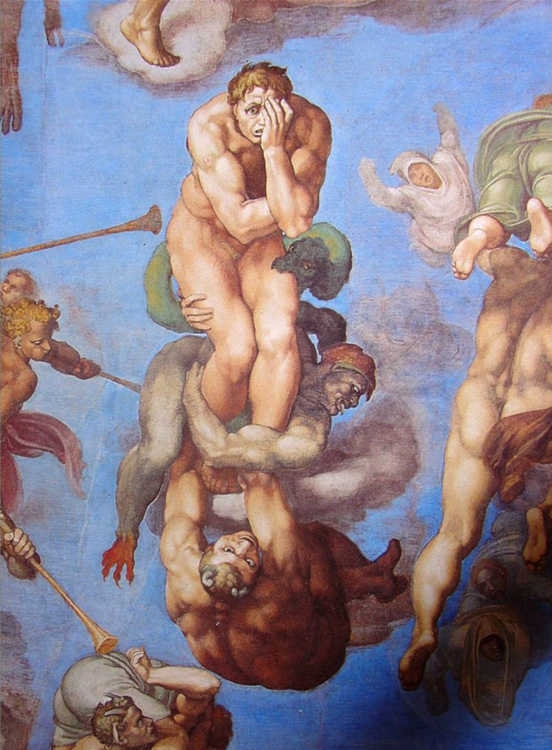
In Kafka’s world, the system does not merely crush the individual; it makes them question the meaning of their own existence. Joseph K. is tried without knowing his crime. This trial process is the loneliness of the individual deprived of a concrete class struggle and an associated organizational line. The unorganized individual is doomed to the position of Kafka’s "prosecuted Joseph K."; because, instead of a class power to resist, they face a void and an absurdity mechanism that turns every move against them.
These three literary examples prove that organization is the mechanism to break alienation. Social reproduction does not exist spontaneously; it is a concrete practice produced daily by ordinary people through labor, struggle, and cooperation. It is only organization, which subjects this reproduction process to collective will, that breaks the Kafkaesque labyrinth.

Antonio Gramsci’s concept of the interregnum states: "The old is dying and the new cannot be born; in this interregnum, a great variety of morbid symptoms appear". In this period, structures lacking a class perspective and dialectical mass practice degenerate, evolving into mechanisms of "protection-rent".
1914 – The Collapse of the Second International: The SPD was a giant with millions of members, but the bond between its theoretical compass and practical action had been severed. The apparatus existed, discipline existed, but the "content" (revolutionary essence) had evaporated. This is a historical replica of Heller’s Catch-22: the institution destroyed its foundational purpose to protect its own existence.
1918-19 Germany – The Tragedy of Luxemburg: The murder of Rosa Luxemburg and Karl Liebknecht in January 1919 was not a tragedy of counter-revolutionary violence, but of the "lack of organization." Luxemburg trusted the spontaneous creative energy of the masses; yet while Lenin had a prepared party behind him, Luxemburg’s party was barely a few weeks old.
Spain 1936 – The Paralysis of Spontaneity: The CNT-FAI experience had plenty of enthusiasm but lacked central coordination. The anarchists’ insistence on "leaderlessness" turned into a paralysis against Franco’s disciplined army, brought on by the lack of a strategic instrument.
Post-68 Activism: The slogan "We are
the 99%" was the sum of individuals shouting in the middle of a Kafkaesque labyrinth. By rejecting central leadership and strategic hierarchy, the movement condemned itself to the position of Kafka’s "prosecuted Joseph K.".
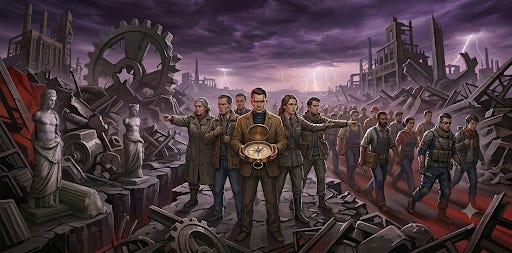
October 1917 was the victory of organized will, not spontaneity. What distinguished the Bolshevik Party was its capacity to provide a "backbone" to the mass movement. Lenin’s famous 1903 emphasis still carries the weight of a call to engineering: "Give us an organization of revolutionaries, and we will overturn Russia!"
This organization is not a bureaucratic shell, but an "organic intellectual" mechanism—to use Gramsci’s term—that unites the consciousness of the masses with their own class interests. The success of the Leninist model rested on three pillars:
(1) Preserving theory as a compass,
(2) Centralized leadership, and
1(3) Permeability to the masses (legitimacy based on factory committees, not bureaucracy).
Luxemburg’s justified warnings regarding bureaucracy were not a danger, but a vital part of organization, provided the dialectical link remained unbroken. In What Is to Be Done?, Lenin anchors this necessity:
"The history of all countries shows that the working class, exclusively by its own effort, is able to develop only trade union consciousness." "Without revolutionary theory there can be no revolutionary movement."
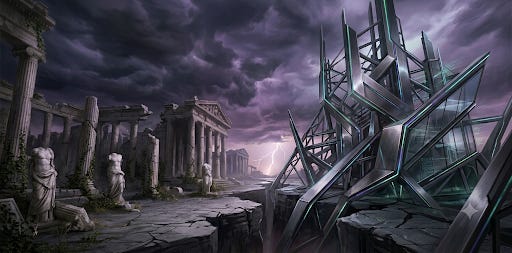
In the preface to A Contribution to the Critique of Political Economy, Marx emphasizes:
"It is not the consciousness of men that determines their existence, but their social existence that determines their consciousness."
The vanguard party is the only concretizing power capable of transforming this social existence and reclaiming alienated labor and will. Vonnegut’s sharp satire, Heller’s stifling bureaucracy, and Kafka’s absurd labyrinth all deliver the same message: if you do not intervene in the flow of history "consciously," the system turns you into an "object" within the labyrinth of meaning and bureaucracy it has created.
Revolution is not a gathering of good people; it is the art of professionally organizing historical processes. Vonnegut’s angels can intervene in the flow of history—not "like the Mafia," but with scientific responsibility—only through Leninist vanguard party discipline; that is, through concrete and class-based organization. Otherwise, we can be nothing more than an alienated, unorganized crowd forever chasing its own tail in a Kafkaesque labyrinth. The choice is not a matter of "morality," but of "existence." History is not the work of those with intentions, but of those who analyze contradictions and transform that analysis into material power. Organization is mandatory; however, its quality—class-based, dialectical, focused on reproduction, and fueled by revolutionary theory—determines everything. 【●】

























.jpg)


 French (CA)