

.png) 1 month_ago
91
1 month_ago
91
NE LAISSER PAS LE 5G DETRUIRE VOTRE ADN Protéger toute votre famille avec les appareils Quantiques Orgo-Life® Publicité par Adpathway

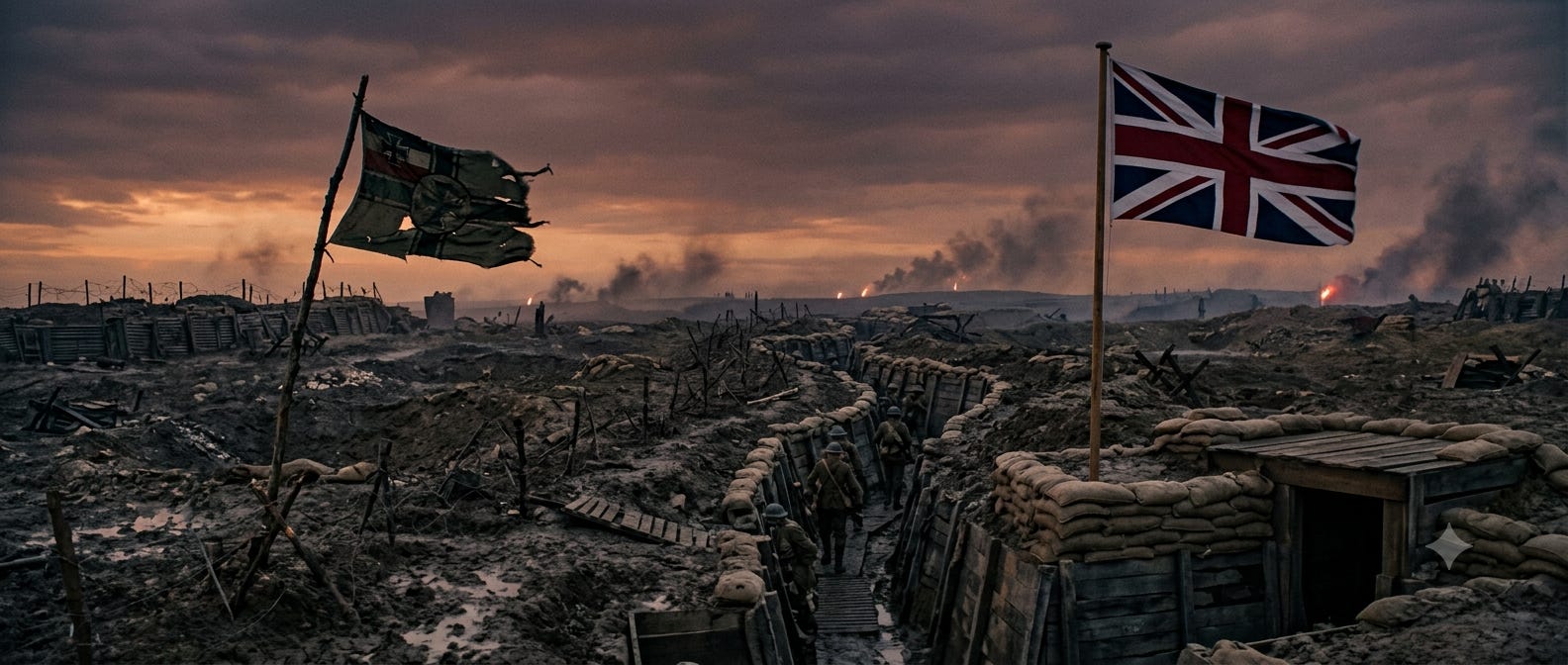
The benches of the House of Commons, the lower chamber of the British Parliament, were packed on the evening of 1 March 1848. The ground was shifting across the Continent: the February rising in Paris had toppled a throne, and the tremor was moving toward Vienna and Berlin. Yet the most pressing item on the chamber’s agenda that night concerned another part of the world entirely. The debate had crystallized around a single motion. A week earlier, on 23 February, the member for Youghal, Thomas Anstey, had spoken for five hours, laying out a forty-count indictment. The first count on the list was the Treaty of Adrianople.
Anstey’s charge was this: in 1829, when Russia imposed the Treaty of Adrianople on the Ottomans, the Wellington government had objected — yet Palmerston had subsequently treated the treaty as effectively valid. Every name on the list opened its own file. When the Egyptian army under İbrahim Pasha, son of Mehmed Ali Pasha of Kavala, pressed toward Kütahya, Russia rushed to the rescue. The 1833 Treaty of Hünkâr İskelesi was signed as the price of that assistance. Under its terms, the Ottoman Sultan Mahmud II bound himself to consult Russia on all matters touching the empire, while a secret clause committed the Sultan to close the Dardanelles to Russia’s enemies. The Black Sea was thereby sealed off from the British fleet. The 1841 London Straits Convention did not unlock that seal — it merely multilateralized it: in peacetime the Straits were closed to all foreign warships. Palmerston defended this as a triumph, since a privilege Russia had extracted unilaterally had become a joint commitment of five powers. Anstey countered that the lock operated in only one direction: the British fleet could not enter the Black Sea, while Russia was already on its own shore. When a British ship’s attempt to breach the Russian blockade of Circassia was thwarted by the Russian navy, London had not treated it as a casus belli. Persia’s siege of Herat, backed by Russia, was the final link in Britain’s retreat from Central Asia. Anstey’s logic was simple: at every threshold where Britain could have checked Russia, Palmerston had failed to do so; a pattern of inaction repeated this consistently could not be coincidence. At the core of the charge lay the premise that a statesman’s proximity to another state amounted to treason — Anstey was arguing, in other words, from the assumption that friendships and enmities were fixed, moral, and permanent.
That evening at the dispatch box stood the Foreign Secretary of the Russell government, Lord Palmerston (Henry John Temple). He took up the forty counts one by one in a defense that ran for hours. The tone was set from the start: he treated the forty-count indictment as an exaggeration to be ridiculed. He compressed the whole of Anstey’s charge into a single sentence: You accuse me of having reduced Britain to a position of crawling at the feet of Russia. Toward the close of his speech, he forged the formula that would rescue him from the charge of betrayal: England has no eternal allies and no perpetual enemies. Our interests are eternal and perpetual, and those interests it is our duty to follow.
***
The place where this sentence was born was no accident. The formula now circulated as an abstract principle of international relations was born, in the middle of an Ottoman-Russian reckoning, out of a minister’s need to launder his own Russia policy. What Palmerston was essentially saying was: do not ask me why I came to terms with Russia — I did what interest required. The formula was not a principle but a defense strategy; not a theoretical discovery but a way of shedding responsibility. Behind the sentence that would be treated as an academic law for the century and a half to follow lies the self-rescue reflex of a minister cornered at the dispatch box.
***
And yet this sentence outgrew the chamber where it was spoken by far. It was torn from the historical moment of its utterance — Britain’s uncontested supremacy in the world market — and, through liberal academia, international-law faculties, and newspaper editorials, elevated to the standing of a law of gravity.
The concept of “state interest” — raison d’état — placed by realist, neorealist, and neoliberal theory at the center of international politics treats the state as a monolithic subject standing above class, representing every stratum of society equally. This acceptance is not a neutral premise. Through the dogma that casts the state as arbiter and the nation as its homogeneous part, what gets done under the cover of “national interest” is the business of the dominant capitalist class. The interest Palmerston defended from the dispatch box was not the interest of the women sweating at the looms of Lancashire or the men swinging pickaxes in the coal pits of Wales; it was the need of nineteenth-century British industrial and financial capital to preserve its hegemony over markets, hold on to its colonies, and sustain uninterrupted accumulation.

A distinction must be made at the outset. “Eternal interest” is not our term. It belongs to Palmerston, to those who adopted it, to the liberal tradition that inherited the maxim as though it were a law of nature. From a historical-materialist standpoint nothing is eternal. States are not eternal: they are the products of a particular mode of production, a particular order of property, born with that order and passing into history with it. Classes are not eternal either. Class is a historical category, and what is historical is, by definition, bounded by time. When private property in the means of production is abolished, classes too will be abolished. What is not eternal cannot have an eternal interest.
For this reason, throughout this text, the bourgeoisie’s interests will be called “long-term.” The difference is not a matter of style. Palmerston’s formula carries a claim to infinity; it removes capital’s dominion from time and places it beyond history. To call a class’s interest “long-term,” by contrast, restores it precisely to where it belongs — inside history. The British bourgeoisie’s interest in 1848 was real, but it was not permanent. Within a century the empire had, in fact, dissolved; the pound sterling had come down from its throne; supremacy in the world market had passed into other hands. The claim to eternity is always a way for a decaying dominion to deny its own decay.
***
The purpose of this essay is to expose the historical and class-based incoherence of a thesis presented by liberal intellectuals as an immutable reason of state, and to demonstrate with concrete facts that alliances and conflicts in international relations are, at bottom, a class war that has assumed an international dimension.
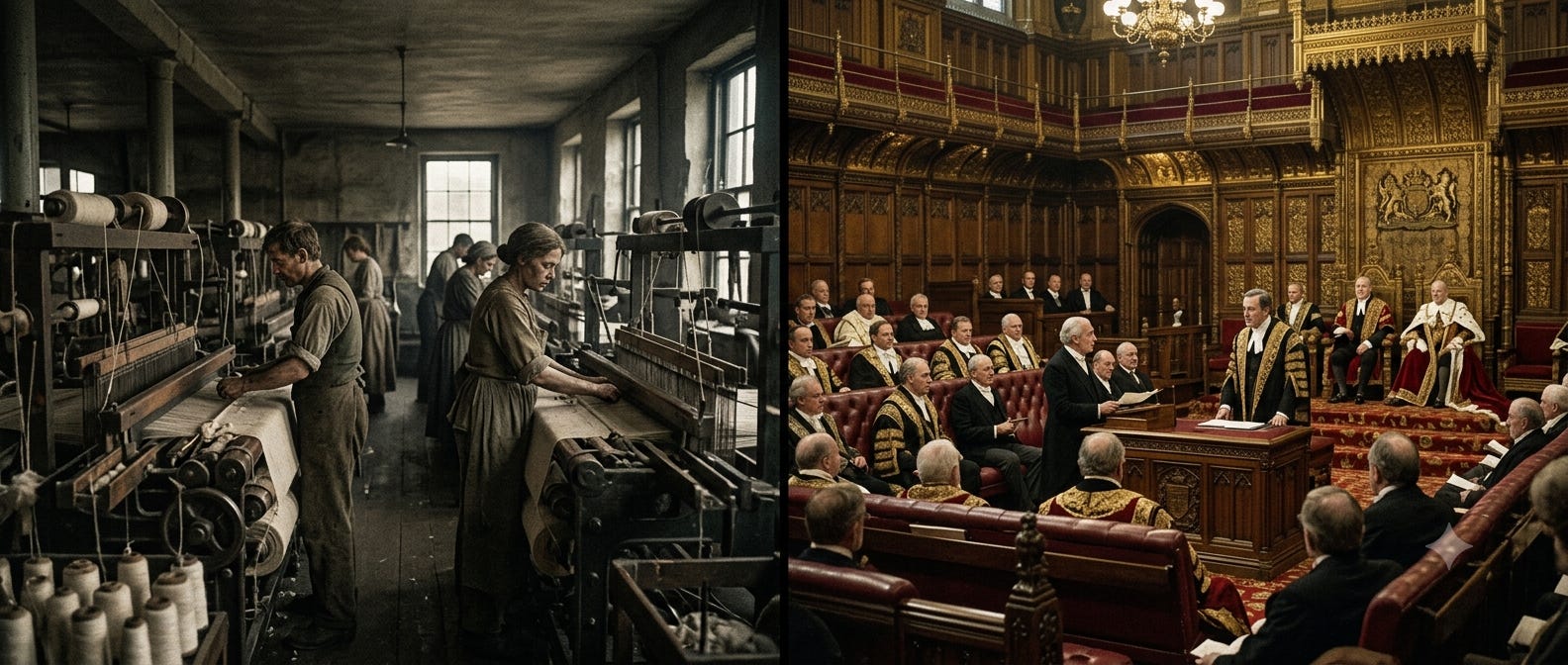
The concept of “national interest,” endlessly recirculated in the literature of international relations and in the mass media, rests on the dispossessed masses’ willingness to accept the ruling class’s own interest as though it were their general interest. As Marxist state theory demonstrates with great simplicity, the state is the product of the irreconcilability of class contradictions; it is the instrument that preserves the domination of the ruling class and its order of property. The interest a state pursues in foreign policy is shaped by the accumulation-regime needs of the bourgeois cliques and finance capital that dominate that state and its means of production.
The main dynamic behind foreign-policy moves is capital’s need to expand, to find new markets, to close off cheap sources of raw materials, and to counteract the tendency of the rate of profit to fall. A state’s alliance with another, its signing of a secret pact, or its declaration of war overnight cannot be explained by an abstract reason of state. Any other reading leads us to an absurd conclusion. To claim that the working class — driven to the front, dying in the trenches, its home flattened by bombardment, worked to the bone under martial law — is bound together with the industrial and financial bourgeoisie that, in that same war, multiplies its profits through military contracts and compounds its fortune through stock-market speculation, around a shared “national interest,” is to reject class reality altogether.
War production, militarism, and arms races are legitimized through the discourse of national security. For the bourgeoisie these are the reproduction of capital and an immense gateway to profit. For the working class the same process is not only death at the front; it is precarity in the factory, the suspension of the right to strike, the lengthened working day, the lowered wage. The rhetoric of homeland defense is the oldest instrument for suppressing class demands and for mobilizing working people in the service of their own exploiter’s thirst for profit. (Just wars, which carry a different character, are addressed below.)
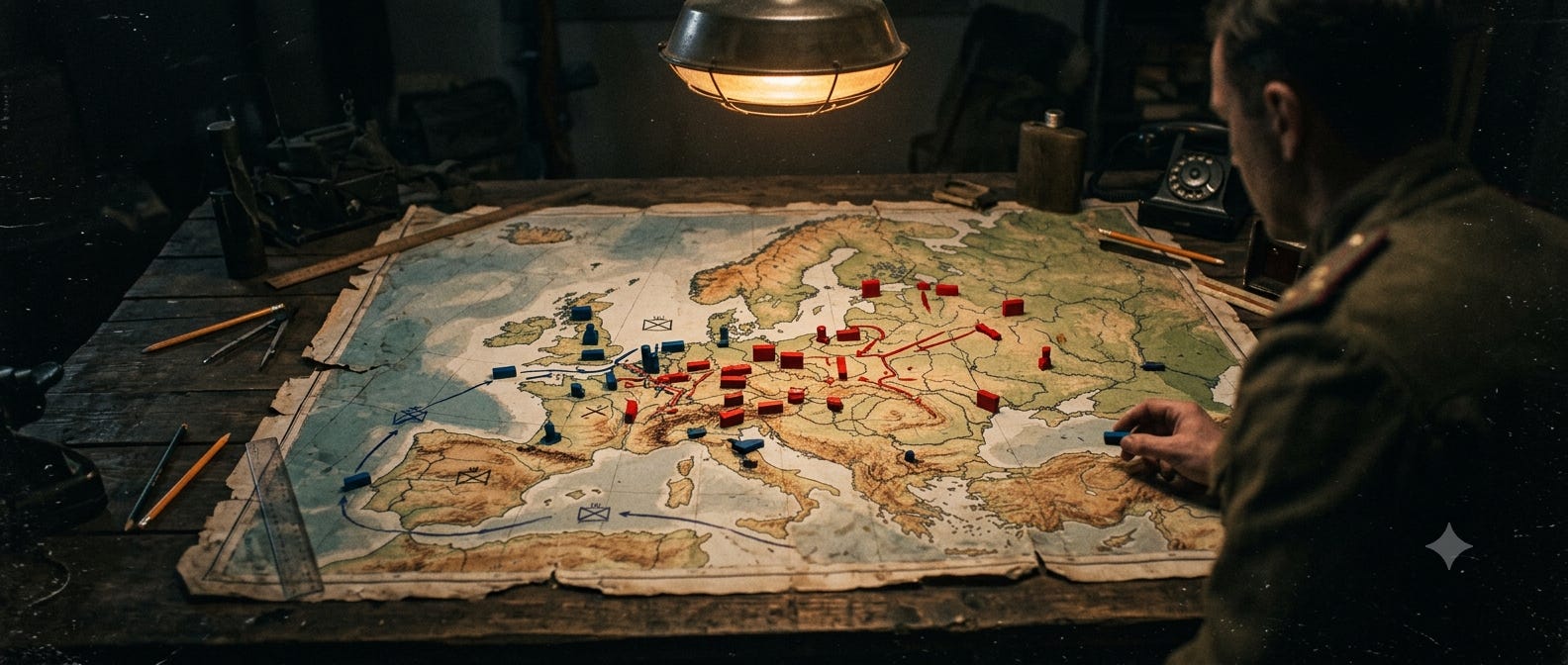
One of the great legends of liberal historiography is its portrayal of the Allied bloc formed during the Second World War — the United States, Britain, the Soviet Union — as a shared-interest consensus of the free world against fascism. In this account, class and ideological differences were set aside in the face of a common threat, and states came together temporarily in pursuit of their interests. The archives tell a different story. Anglo-American imperialism’s conduct was never grounded, at any point, in a principled anti-fascism; on the contrary, it was built from beginning to end on a calculation to liquidate socialism.
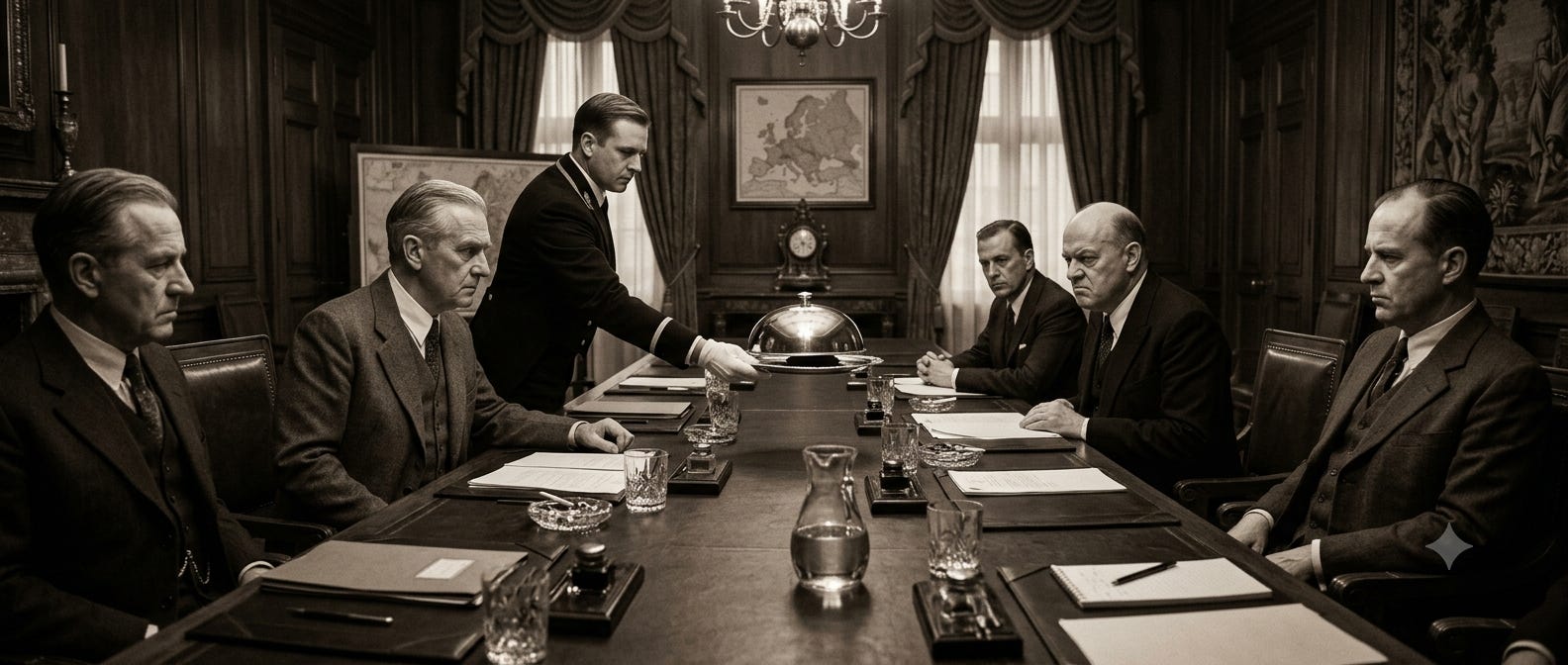
Throughout the 1930s, the bourgeoisies of Britain and France regarded the rising Nazi Germany less as a threat than as a battering ram that could be turned against the Soviet Union — a state that, growing in the East, posed an existential danger to capitalism itself.
The Munich Agreement, signed in September 1938, is the starkest expression of this strategy. British Prime Minister Neville Chamberlain and French Prime Minister Édouard Daladier, in handing over Czechoslovakia’s sovereignty and the Sudetenland to Hitler on a silver platter, packaged the act as a requirement of appeasement. The real calculation was to point the Nazi war machine toward the Soviet borders — a corridor was being opened toward that frontier. The collective-security proposals the Soviet Union had put forward throughout the 1930s, its offers of a joint anti-Hitler pact, were deliberately stalled and finally rejected. Indeed, the British and French military missions dispatched to Moscow in August 1939 did not even carry the authority to sign an agreement. For the Western bourgeoisie, however much of a market rival Nazi Germany might be, the existence of a workers’ state that had expropriated the means of production remained the more secondary problem.

Even the forced alliance that emerged once Hitler, having run out of control, first occupied Western Europe and then, on 22 June 1941, struck the Soviet Union with Operation Barbarossa, became the stage for undertakings driven by a covert class war operating beneath the surface.
The Red Army and the Soviet people bore the brunt of the Nazi war machine alone between 1941 and 1943, suffering millions of casualties and staging history’s bloodiest resistance at Stalingrad. Britain and the United States, for their part, deferred the Second Front that was to be opened through France for years. The joint communiqué issued in June 1942, following talks in London and Washington by Soviet Foreign Minister Vyacheslav Molotov, declared the opening of the front within that year an “urgent task.” Yet the landing did not come until June 1944. The calculation behind the delay was not military but class-based: it was expected that the Red Army and the Wehrmacht would exhaust one another on the Eastern Front, and that the Soviet Union would either suffer a catastrophic defeat or emerge from the war too devastated to intervene in postwar European politics. The Western bourgeoisie landed at Normandy only after panicking at the sight of the Red Army’s unstoppable march toward Berlin.

The spring of 1945, while Nazi Germany had not yet surrendered, was a period in which secret documents were drawn up that laid bare, in undisguised form, the class hatred concealed beneath the guise of alliance. Winston Churchill instructed the British War Cabinet’s Joint Planning Staff to prepare a plan for an immediate attack on the Soviet Union.
Known to history as “Operation Unthinkable,” the plan is dated 22 May 1945. The date envisaged for the outbreak of hostilities was 1 July 1945 — a mere two months after the end of the war in Europe. The plan called for British and American forces to re-arm some ten divisions of the surrendered German army and incorporate them into the offensive against Soviet positions in Eastern Europe. The stated objective in the document was to impose the will of the United States and the British Empire upon Russia. The plan was shelved only after the Chiefs of Staff reported that, given the Soviet forces’ conventional superiority and fighting capacity, the undertaking had no chance of success. That it remained on paper does not make it insignificant — it stands as the most concrete document available of how thin a membrane the rhetoric of interstate “friendship” was, set against the class hostility harbored toward a workers’ state.

The atomic bombs that exploded over Hiroshima and Nagasaki on 6 and 9 August 1945 were not dropped, as the official narrative claims, to end the war quickly and save American soldiers’ lives. Japan was already under naval blockade, its supply of raw materials cut off, and stood on the brink of surrender. American intelligence knew this. The postwar report of the United States Strategic Bombing Survey concluded that Japan would have surrendered before the end of 1945 even had the bombs never been dropped and no land invasion ever taken place. This view was shared by the most senior military officials of the period.
The chronology must be set straight. The bomb was dropped on 6 August; the Soviet offensive against the Japanese Kwantung Army in Manchuria began on the night of 8 August. The bombing, in other words, was a move that preceded the Soviet entry, not a response that followed it. Washington had known this timetable well in advance: at Yalta in February 1945, the Soviet Union had committed to entering the war against Japan three months after Germany’s surrender. Germany surrendered on 8 May, which placed the Soviet entry at the beginning of August. Truman was aware of this to the point of noting in his Potsdam diary that the Soviet entry would mean the end for Japan.
The bomb struck two targets at once. The first was to prevent Japan’s occupation by the Soviets, and with it the spread of socialism across Asia. The second was to demonstrate, in fact, to Moscow the mass-destruction capacity now in hand and the will to use it — so as to sit at the table, when the postwar order was drawn up, with that power behind it. The hundreds of thousands of Japanese working people slaughtered instantly and afterward by radiation at Hiroshima and Nagasaki are the Cold War’s first victims. The bomb was not dropped on Japanese militarism. It was dropped on the Soviet Union.

Lenin’s Imperialism: The Highest Stage of Capitalism, written in 1916, offers a framework that shakes the Palmerstonian fallacy of state interest at its root. Imperialism is not the conquering ambition of individual rulers, nor a mistaken diplomatic preference; it is an objective stage within the developmental process of free-competition capitalism, resting on the hegemony of finance capital, monopolistic structures, and the export of capital.
The core countries at the apex of the imperialist pyramid, through monopolistic capital and financial mechanisms, extract super-profit by plundering the resources, capital, and cheap labor of the periphery countries. A portion of this profit is put to a strategic purpose: softening the class contradictions, social tensions, and ethnic and sectarian fault lines within their own borders.
The high living standards, developed social-security networks, and relatively conciliatory domestic political climates of Switzerland, Belgium, the Netherlands, or the Scandinavian countries cannot be explained by the virtue of those countries’ bourgeoisies, by deep-rooted democratic traditions, or by rational statecraft. Behind this prosperity lies the exploitation of the peoples of Asia, Africa, and Latin America down to the marrow. The metropolitan bourgeoisie buys off the upper stratum of its own working class with the crumbs transferred from global plunder. In Lenin’s conceptualization, a labor aristocracy is created. This stratum identifies its own short-term interest with the plunder of the imperialist bourgeoisie, and the revolutionary dynamic is thereby cut off at the root.

In the geographies that are the direct target of exploitation, the process runs in reverse. The local bourgeoisie of these countries lacks an independent dynamic of industrialization and carries a comprador character tied at the navel to imperialism. Because immense wealth is transferred outward, and because it is itself squeezed within the vice of monopolistic pricing, it has no super-profit share left to pass on to its own people. Pacifying class unrest, ethnic and religious tension through social reform or high wages is impossible. The result is predictable: the starkest dictatorships, military juntas, sectarian bloodbaths. The unending civil wars of the Middle East, Africa, and Latin America are not the product of those peoples’ backwardness but the direct consequence of the imperialist system of exploitation.
Seen from this perspective, it becomes clear that the stage of international relations is not an arena of states equal before the law. The class war that unfolds at the scale of individual countries has, in the age of imperialism, been carried onto the international field, transformed into a global reckoning between oppressor nations and oppressed nations.
In this reckoning, the question of the legitimacy of armed conflict cannot be resolved through the crude pacifist rhetoric of liberalism or the abstract principles of bourgeois law. As is often repeated, war is the continuation of politics by other means. What renders a war legitimate, then, is not the firing of weapons but which politics and which class’s interest it serves. Lenin’s distinction in Socialism and War is unequivocal.
Every war waged by imperialist blocs to redivide markets, to hold on to colonies, to expand the dominion of finance capital, and to export their own internal contradictions is an unjust war. Packaging it as homeland defense, the delivery of democracy, or national interest changes nothing of this character. A war is legitimate only when it is just. Legitimacy resides in the national-liberation wars waged by oppressed peoples against imperialist powers, in the struggles for independence fought against colonialism, in the revolutionary struggle waged by the working class to overthrow bourgeois domination. The oppressor’s market squabble with the oppressor is illegitimate; the oppressed’s struggle for liberation against the oppressor is legitimate. The true boundary in the international arena is not the border of states — it is this class line.

Palmerston’s sentence is not a description; it is a veil. It served to present the hegemonic ambitions of nineteenth-century British imperialism as a necessity inherent to the nature of the state, and it continues, to this day, to be offered up by liberal intellectuals, academics, and media organs as an unquestionable dogma. Beneath the veil lies the bourgeoisie’s effort to impose its own narrow interest on society as “national interest,” and to universalize its own temporary dominion.
What shapes foreign policy is not some abstract reason of state. It is the ruling class’s need to sustain its accumulation regime and protect its rate of profit. In periods of crisis and war, the bourgeoisie multiplies its profit while working people pay the price; as the sons and daughters of the people die at the front, job security is stripped away in the factory, the working day is lengthened, and fortunes accumulate on the back of military spending. International alliances are conjunctural; class hostility is permanent. The alliance the Western imperialist powers formed with the Soviet Union in the Second World War was not an interest consensus but the product of desperation in the face of fascism. The Operation Unthinkable plan, prepared before the war had even ended, and the bombs dropped on Hiroshima and Nagasaki, are the bloody documents of the hostility the capitalist system harbored toward the workers’ state. The relative social peace of the metropole has been bought with the super-profit transferred from the exploitation of peripheral peoples. The imperialists’ scramble for markets is illegitimate; the resistance of oppressed nations and the working class is legitimate.
What remains is the distinction with which we began. States have no eternal interest, because states are not eternal. Classes, too, have no eternal interest, because classes are not eternal. The bourgeoisie has long-term interests, nothing more; and the long term does not mean infinity — it means the span that history grants. The empire that carried the interests Palmerston called “eternal” dissolved within a century. The claim to eternity is always the effort of what is temporary to conceal its own temporariness.
The way to grasp international relations does not pass through the discourse of the diplomatic table or the propaganda of the bourgeois media — it passes through the property relations, the mode of production, and the class war under way behind the power structures of those states. The genuine brotherhood of peoples and a lasting world peace will not be built on the false claims to eternity made by bourgeois states. They will be built through the anti-imperialist struggle of oppressed nations and the revolutionary solidarity of the international working class.【●】

◇This text was composed from the author’s own ideas, arguments, and source selection; a large-language-model tool was used during composition for prose editing. All intellectual and scholarly responsibility for the content rests with the author.






















.jpg)


 French (CA)