

.png) 5 month_ago
26
5 month_ago
26
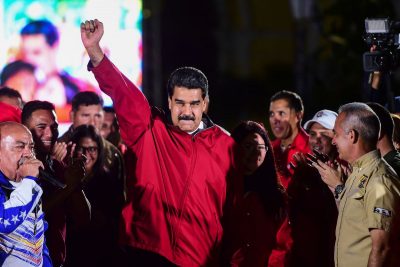
Is Nicolás Maduro a ruthless dictator or the guardian of a besieged fortress? In a country torn apart by sanctions and “electoral warfare,” reality is more complex than Western headlines would have us believe.
*
Nicolás Maduro Moros (1962) comes from a working-class family and was shaped by the trade-union movement. He worked as a bus driver for the Caracas metro system and grew into a prominent union activist.
Click here to read this article in Spanish/Español.
Image: Hugo Chavez
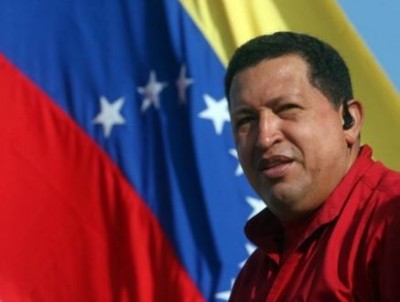
Within the Chavista project led by President Hugo Chávez, he built a career as a Member of Parliament, Minister of Foreign Affairs (2006–2012), and, from October 2012, Vice President. When a dying Chávez appointed him as his successor in December 2012, he did so with a clear message: Maduro was the man who could safeguard the unity of the PSUV (United Socialist Party of Venezuela) and preserve the country’s social gains.
A Heavy Legacy
Maduro, however, inherited a daunting task. While Chávez could rely on near-mythical charisma and record-high oil prices, Maduro had to lead the country through an era of scarcity and unprecedented external and internal aggression.
Maduro’s presidency is inseparably linked to the “hybrid war” unleashed by the United States. While international media focused on his perceived lack of charisma compared to his predecessor, Maduro developed a survival strategy against a suffocating sanctions regime.
These unilateral coercive measures, which blocked vital oil revenues, had the explicit aim of imploding the Venezuelan economy and forcing the population into revolt. According to a CEPR report,[1] to which Jeffrey Sachs contributed, economic sanctions in 2017–2018 caused approximately 40,000 additional deaths in Venezuela.
As a result of the economic state of emergency and internal polarization, more than 7 million Venezuelans left the country. This resulted in an enormous brain drain that further undermined the economy.
Maduro did not face only economic opposition. During his rule, Venezuela confronted US-sponsored coup attempts, such as the failed “Operation Gideon,”[2] and the shadow government of Juan Guaidó[3], which was heavily backed by Washington.
.

Venezuelan authorities intercepting a boat; Nicolás Maduro holding the US passports of captured former Green Berets; SEBIN agents displaying captured dissidents (CC BY 3.0)
.
And then there is polarization. In the past, the gap between rich and poor was enormous. Chávez and Maduro sought to bridge this gap, earning them significant support among the poorer classes. Conversely, among wealthier groups, resistance remains very high.
This is reflected in the media. As elsewhere in Latin America, commercial media outlets are largely owned by major capital groups that pursue a virulent anti-Maduro line. In contrast, public media outlets present the opposite perspective.
Commercial media maintains a massive impact on Venezuelan society; approximately 70 percent of radio and TV stations are privately owned, while only a small minority are directly state-owned.
Maduro’s Course
Despite polarization, destabilization attempts, and the manipulation of the political process by the US, Maduro managed to preserve unity within the armed forces and the PSUV.
During his rule, Maduro made significant efforts to strengthen civil society. The so-called comunas (communes)[4] were granted substantial decision-making power and autonomy for local neighborhood organization. Despite staggering inflation, Maduro has managed to keep social programs (Misiones)[5] afloat in an adapted form.
Milicianos and colectivos were also established. These are civilian militias mainly intended to be able to withstand a possible foreign intervention or domestic organized unrest. In total, it involves approximately 4 million Venezuelans.
You can say a lot about these militias, but in any case they have ensured that Venezuela, after the kidnapping of Maduro, did not end up in a civil war, as happened after the military intervention in Libya in 2011.
In recent years, the Venezuelan economy has begun to recover, and some Venezuelans are returning home. This partially explains why Maduro won the 2024 elections (see below).
In foreign affairs, Maduro followed Hugo Chávez’s footsteps, pursuing a tireless anti-imperialist course. Under his leadership, Venezuela served as an engine for Latin American integration, aiming to resist decades of United States interference.
Image: President Nicolas Maduro with President Vladimir Putin

By forging strategic alliances with countries such as China, Russia, and Iran, Maduro has effectively challenged Washington’s hegemony. This move toward a multilateral world – where Latin America is no longer the “backyard” of the US – made the country, alongside its vast oil reserves, a primary target of American aggression.
Human Rights
Critics accuse Maduro of authoritarian excesses and disputed elections. While both issues warrant discussion, a complete picture requires acknowledging the circumstances and the highly biased reporting surrounding the country.
Venezuela is a besieged nation that has had to endure several coups and internal destabilization efforts. As Ignatius of Loyola, founder of the Jesuits, noted in the sixteenth century: in a besieged fortress, any dissident is quickly viewed as a traitor.
Furthermore, due to the wealth gap, Latin America remains the continent with the highest levels of social and political violence. In polarized Venezuela, this violence is particularly acute. During the 2013 street blockades (guarimbas), dozens of police officers and civilians died due to actions by political opponents. Similar scenarios have repeated after almost every election.
In such a violent and besieged context, the boundaries of law enforcement are easily crossed. While this cannot be justified, a degree of modesty is appropriate for those observing from safe, stable positions.
Moreover, one must be cautious with reporting on state repression. For instance, a 2017 UN report on human rights was highly critical of the government, citing flagrant violations. However, international jurist and former UN expert Alfred de Zayas dismissed the report, claiming the team was ideological and “a priori opposed to the Bolivarian revolution.”
He argued the report relied on unreliable sources and ignored government information regarding victims of opposition riots. Often, a UN report reflects internal power balances more than the reality on the ground.
Democracy
A second reproach concerns the lack of democracy. Again, context is vital. Since Chávez won in 1998, the US has sought to tilt every subsequent election in its favor. It is not an exaggeration to call this “electoral warfare.”
Right-wing candidates have received financial support and strategic advice. Polling agencies of dubious reputation have organized exit polls that invariably produced results unfavorable to the left. People from the opposition camp were urged to infiltrate the electoral council.
In the 2024 presidential elections, a detailed scenario was allegedly designed to manipulate the process, involving sabotage and the organization of post-election riots. The most important parts of that scenario were even published in advance by an expert in psychological warfare and disinformation.
Image: María Corina Machado

The US stated in advance that it would only accept the result if the right-wing candidate won. While the official result showed Maduro with 52 percent and the opposition with 43 percent, the opposition claimed Maduro only received 30 percent.
While much of the world adopted the opposition’s version, recent polls suggest the opposition lacks a broad following. In an October poll, 91 percent of Venezuelans held an unfavorable opinion of María Corina Machado, the opposition figurehead. A poll by another firm in December confirms that. Moreover, 80 percent of the respondents see the Nobel Peace Prize awarded to Machado as a farce.
Even Donald Trump, with whom Machado worked closely, has indicated she lacks the domestic support to be a credible leader.
Since Maduro became president in 2013, there have been 12 elections and one referendum – an unusual record for a “dictator.” You can, however, ask yourself how meaningful it is to call elections in a context of electoral warfare and how a political system can protect itself against so many external and internal hostilities without undermining its democratic content.
In any case, dismissing Maduro simply as a “dictator” ignores the complex reality of hybrid war and extreme polarization. This does not absolve the government of responsibility, but it does demand a sober, balanced view of a democracy under permanent siege rather than simplistic caricatures.
*
Click the share button below to email/forward this article. Follow us on Instagram and X and subscribe to our Telegram Channel. Feel free to repost Global Research articles with proper attribution.
Marc Vandepitte is a member of the Network of Intellectuals and Artists in Defense of Humanity and was an observer during the presidential elections in Venezuela. He is a regular contributor to Global Research.
Notes
[1] CEPR: The Center for Economic and Policy Research, an independent think tank in Washington, D.C.
[2] Operation Gideon: A failed 2020 armed incursion involving Venezuelan dissidents and the American private company Silvercorp USA.
[3] Juan Guaidó: An opposition politician who declared himself interim president in 2019; his “interim government” was dissolved by the opposition in late 2022.
[4] Comunas: Local self-government structures for neighborhood development and social production.
[5] Misiones: Social programs focusing on healthcare, literacy, food distribution, and housing.
Global Research is a reader-funded media. We do not accept any funding from corporations or governments. Help us stay afloat. Click the image below to make a one-time or recurring donation.









.jpg)


 French (CA)