

.png) 2 day_ago
37
2 day_ago
37
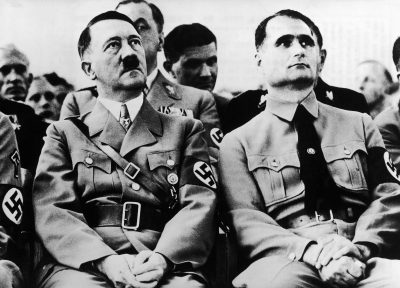
[Author’s Note: The article below first published with GR on 20 November 2021 focuses on the German efforts to take Kiev and Leningrad from the late summer of 1941. The Wehrmacht’s assault against Kiev and the surrounding territory ranks as one of the largest battles in the history of warfare. This armed clash was to conclude really successfully for the attacking forces, led by the German 6th Army, which was supported overhead by Luftwaffe aircraft flying with reckless abandon through the skies of Soviet Ukraine.
British historian Chris Bellamy in his volume ‘Absolute War’ wrote, “From 18 September Luftwaffe planes operating out of Belaya Tserkov [Bila Tserkva] supported the German 6th Army’s attack on the city of Kiev itself. Hitler had ordered them to ‘reduce the city to rubble and ashes’ and do half of the army’s work for them. This made it possible to take the city itself the next day, 19 September.”
The capture of Kiev saw the Germans inflict 700,544 irrecoverable losses against the Soviet military. Total Red Army casualties during the 1941 Battle of Kiev, including ill, wounded, and missing, came to slightly more than three-quarters of a million men, “perhaps 760,000” according to Bellamy, who wrote further that, “The South-West Front itself [of the Red Army] lost 585,598 out of 627,000. This was destruction on an unprecedented scale. And, by wiping out of the equation four armies and more than 700,000 men, the Germans had removed a major threat to Army Group Centre’s right flank as it moved on Moscow.”
The vast majority of Soviet irrecoverable losses around Kiev were those who surrendered to the Germans. Nearly 700,000 Soviet troops entered Nazi captivity in the Kiev sector in September 1941, which reveals serious morale problems within the Red Army. Around 15,000 Soviet troops managed to escape from the encirclement.
Bellamy’s fellow countryman Evan Mawdsley, writing in ‘Thunder in the East’, his study of the German-Soviet War, outlined that, “The Germans encircled Kiev and the region behind it in late September. This was their greatest triumph of the war in the East and the Red Army’s greatest single military disaster” while “Kiev was politically very important as the centre of medieval Russia, capital of the Ukraine and the third biggest city in the USSR… The ‘right bank’ Ukraine, west of the Dnepr, was now in German hands.”
About 650 miles to the north, the Germans were closing in on another famous Soviet metropolis, Leningrad, the second largest city of the USSR. Whereas Kiev was home to almost a million people in 1941, Leningrad’s populace amounted to over 3 million that year. The military forces of Germany and also Finland during the summer of 1941, after long marches through sometimes difficult terrain, including across soaked meadows, woodland, and pastures, reached the outskirts of Leningrad near the end of August and then completed their encirclement of the city in early September.
It looked certain to numerous outside observers that it was only a matter of time before Leningrad would come under the control of the Germans and Finns. On the very day that Kiev to the south had fallen, on 19 September 1941 the Germans launched one of their biggest aerial attacks against Leningrad of the war. Almost 300 Luftwaffe warplanes bombed the city at will, which included raids occurring in the daytime. Many public buildings in Leningrad were blown to pieces during the attack as were areas of commerce like marketplaces.
Yet the apparently unstoppable impetus which the Germans had gained in their months-long ground offensive towards Leningrad was lost forever. In the early autumn of 1941, the presence in the Leningrad region of General Georgy Zhukov had been crucial. Zhukov more than any other soldier throughout World War II was to be responsible for Nazi Germany’s defeat.
This was far from clear at the time. Soviet leader Joseph Stalin by the late summer of 1941 was expressing private fears that Leningrad would be taken by enemy forces. Such fears were to continue beyond 1941 with Leningrad remaining in a precarious position, hemmed in by German-Finnish armies with the threat of more ground attacks against the city.
During August 1942 five divisions from the German 11th Army, which the month before had completed its conquest of the Crimea, were sent northward to Leningrad in an attempt to take the place. Again the Germans were unable to do so. The heroic city withstood all efforts to capture it.
As the months and years went by, Leningrad was being struck frequently and with increased severity by some of the biggest weapons on earth such as the German railway guns. Their giant shells and barrels would remain within striking distance and pointed towards Leningrad into 1944. —Shane Quinn, October 5, 2026]
In the second half of August 1941, the German strategic plan in their invasion of the USSR was drastically altered. Most of Army Group Center’s armor was dispatched southward to the Ukraine, with the Wehrmacht’s advance on Moscow postponed temporarily.
By now, the Nazi Security Service was reporting on a “certain unease” and a “decline in the hopeful mood” of the German population. The quick triumph in the east they were assured of by Joseph Goebbels‘ propaganda had not arrived. The anxiety afflicting the German public was increased by letters sent home from Wehrmacht troops, many of which confirmed that the attack on the Soviet Union was not progressing as planned. There were also rising numbers of death notices of German soldiers in the newspapers.
Well-known German author Victor Klemperer, who was Jewish, wrote from Dresden with far-sighted accuracy on 2 September 1941,
“The general question is whether things will be decided in Russia before the wet season in the autumn. It does not look like it… One is counting how many people in the shops say ‘Heil Hitler’ and how many ‘Good day’. ‘Good day’ is apparently increasing”.
Hitler himself “realized that his plans for a Blitzkrieg campaign in the east had failed” by early August 1941, German historian Volker Ullrich wrote in the second part of his biography on Hitler. Two weeks later on 18 August, Hitler said outright to Propaganda Minister Goebbels that he and the German generals had “completely underestimated the might and especially the equipment of the Soviet armies”.
Russian tank numbers, for example, were more than twice greater than Nazi intelligence had originally estimated, and the Red Army itself was much larger than predicted. Seven weeks into the invasion, on 11 August 1941 General Franz Halder, Chief-of-Staff of the German Army High Command (OKH), stated in his diary, “At the start of the war, we anticipated around 200 enemy divisions. But we have already counted 360”.
Yet, as September 1941 began, it seemed quite possible that Hitler was pulling off another telling victory to silence his commanders’ doubts. In dry weather with clear skies overhead Panzer Group 2, led by General Heinz Guderian, captured the northern Ukrainian city of Chernigov on 9 September 1941, just 80 miles north of the capital, Kiev. Guderian’s panzers drove east, thereafter, to take the long Desna Bridge at Novgorod Severskiy.
Colonel-General Ewald von Kleist’s four panzer divisions, belonging to Army Group South, rolled northwards to link up with Guderian’s armor. It was becoming obvious to Soviet military men that the Germans were implementing a gigantic pincers movement, which was aimed at cutting off all of the Russian armies within the Dnieper Bend and, in doing so, surrounding Kiev. The 58-year-old Marshal Semyon Budyonny, leading the Soviet Southwestern and Southern Fronts, could see this clearly. He pleaded in vain with Joseph Stalin to let him retreat to the Donets River.
From early on Stalin had refused to allow Kiev to be abandoned. His prominent commander Georgy Zhukov warned him, as early as 29 July 1941, that the exposed Ukrainian capital should be forsaken for strategic purposes. An angry Stalin replied to Zhukov “How could you hit upon the idea of surrendering Kiev to the enemy?” Zhukov said throughout August that he “continued to urge Stalin to advise such a withdrawal”. On 18 August, Stalin and the Soviet Supreme High Command (Stavka) issued a directive ordering that Kiev must not be surrendered. Stalin could not bear to give up the Soviet Union’s third largest city without a fight.
At the end of August 1941, the Wehrmacht had forced the Red Army back to a defensive line at the Dnieper River. Kiev lay vulnerable at the end of a long salient. Stalin then compounded his original strategic mistake, by reinforcing the area around Kiev with more Red Army divisions.
On 13 September 1941 Major-General Vasily Tupikov, in the Kiev sector, compiled a report outlining how “complete catastrophe was only a couple of days away”. Stalin responded, “Major-General Tupikov sent a panic-ridden dispatch… The situation, on the contrary, requires that commanders at all levels maintain an exceptionally clear head and restraint. No one must give way to panic”.
The following day, 14 September, von Kleist and Guderian’s panzers met at the Ukrainian city of Lokhvytsia, 120 miles east of Kiev. The trap was sealed. Budyonny’s troops fought frantically to extricate themselves but these efforts failed. As also did the Russian attacks coming from further east, which were attempts to rescue the doomed 50 Soviet divisions encircled in the Dnieper Bend.
Kiev fell to the Germans on 19 September 1941, and by the time the fighting died down on 26 September, 665,000 Soviet troops surrendered, the better part of five armies. This was the largest surrender of forces in the field in military history. The Soviets further lost 900 tanks and 3,500 guns. Total Red Army personnel losses in the Kiev area, including casualties, came to 750,000 men. Among the dead was Tupikov who, as mentioned, had tried to warn the Soviet General Staff about the calamity that was set to unfold.
English scholar Geoffrey Roberts wrote, “On 17 September Stavka finally authorized a withdrawal from Kiev, to the eastern bank of the Dnepr. It was too little, too late; the pincers of the German encirclement east of Kiev had already closed”.
After the loss of Kiev, Stalin was “in a trance” according to Zhukov and it understandably took him some days to recover. At this point three months into the Nazi-Soviet war the Red Army had, altogether, lost at least 2,050,000 men, while the Germans had suffered casualties of less than 10% of that number, 185,000 men, the British historian Evan Mawdsley noted. The 185,000 figure still amounted to a higher number of casualties inflicted on the German Army (156,000) in the Battle of France, and the fighting on the Eastern front was of course far from over.
On 23 September 1941 Goebbels visited Hitler at the latter’s military headquarters, the Wolf’s Lair, located near the East Prussian town of Rastenburg. With Kiev having just fallen, Goebbels observed that Hitler looked “healthy” while he was “in an excellent mood and sees the current situation extremely optimistically”.
Hitler took personal credit for taking Kiev, in which he had previously ignored the German commanders’ protests, as they were adamant the advance on Moscow should resume. Hitler told Goebbels that Army Group South would continue marching, in order to capture the USSR’s fourth largest metropolis, Kharkov, in eastern Ukraine, over 250 miles further east of Kiev; and after that they should move on to take Stalingrad, another 385 miles further east again. One of these two goals was reached, with Kharkov falling to the German 6th Army on 24 October 1941. Northwards, Hitler also wanted Leningrad to be utterly subdued, Soviet Russia’s second biggest city.
In his memoirs Marshal Zhukov wrote, “Before the war, Leningrad had a population of 3,103,000 and 3,385,000 counting the suburbs”.
On 8 September 1941 Army Group North had penetrated these suburbs, with the German panzers just 10 miles from the city. So officially began the terrible Siege of Leningrad. During 10 September, Hitler informed lunch guests of his intentions regarding Leningrad, “An example should be made here and the city will disappear from the face of the earth”.
Already on 8 September, the Germans captured the town of Shlisselburg on the south shore of Lake Ladoga. A week later Slutsk (Pavlovsk) fell in Leningrad’s outer suburbs, as too did Strelna, close by to the south-west of Leningrad. To the north, the Finnish Army advanced to within a few miles of Leningrad’s northernmost suburbs and the city was now surrounded.
The German Armed Forces High Command (OKW), with Hitler’s agreement, ordered that Leningrad was not to be taken by storm; but would be bombarded from the air by the Luftwaffe, while the city’s residents were to be starved to death through military blockade. On 12 September 1941 the largest food warehouse in Leningrad, the Badajevski General Store, was blown up by a Nazi bomber aircraft.
Moreover, heavy German weaponry and artillery was ominously lined up on the ground, across Leningrad’s outskirts. The German guns had sufficient range to strike every street and district of the city, meaning that virtually no house or apartment block in Leningrad was safe, a constant terror for its inhabitants.
Following Hitler’s Directive No. 35 of 6 September 1941, Colonel-General Erich Hoepner’s Panzer Group 4 was moved away from the Leningrad region on 15 September. It was transferred to the central front for the renewed march towards Moscow. The halting of the German advance on Leningrad, at a time when it appeared on the cusp of success, meant in the end that the city was not captured at all. The 41st Panzer Corps commander, Georg-Hans Reinhardt, had been confident that Leningrad would be taken. Reinhardt was sketching various routes on a map of Leningrad for the advance into the city, when he was ordered to cease his approach.
Nor was Leningrad fully encircled in wintertime when the water froze on Lake Ladoga, by far Europe’s largest lake. The Russians were soon able to traverse Lake Ladoga with vehicles carrying food and supplies, though they were regularly assaulted by the Luftwaffe. Fortunately, a large proportion of Leningrad’s inhabitants escaped from the city. Zhukov wrote, “As many as 1,743,129, including 414,148 children, were evacuated by decision of the Council of People’s Commissars between June 29, 1941 and March 31, 1943”.
The Germans were never able to regain the momentum in their initial march towards Leningrad. In November 1941 an offensive to join forces with the Finns east of Lake Ladoga failed. Through December the Germans were forced to retreat to the Volkhov River, about 75 miles south of Leningrad. All efforts to destroy the Soviet bridgehead at Oranienbaum, near to the west of Leningrad, were unsuccessful.
Leningrad was helped in its defense by the city’s geographical position, between the Gulf of Finland and Lake Ladoga. In comparison to Kiev or Moscow, Leningrad was considerably easier for the Red Army to defend. Leningrad’s western approaches were guarded by the Gulf of Finland, its northern part by the narrow strip of land called the Karelian Isthmus, its south-eastern section by the upper Neva River; while much of the area bordering the city to the south comprised of marshy terrain, which the Germans could not wade through.
Stalin placed even more importance in Leningrad’s survival than Kiev. In a telegram of 29 August 1941 sent to his Foreign Affairs Minister Vyacheslav Molotov, an anxious Stalin wrote, “I fear that Leningrad will be lost by foolish madness and that Leningrad’s divisions risk being taken prisoner”. If the city was captured by Hitler’s forces, it would enable the enemy to make a flanking attack northward on Moscow. The loss of the city that bore Lenin’s name, the founder of Soviet Russia, could only constitute a serious blow to Russian morale and a great triumph for the Nazis. The Soviet Union would be deprived of an important center of arms production were Leningrad taken.
On 10 September 1941, Stalin ordered Stavka to appoint Zhukov as commander of the new Leningrad Front. Zhukov, who possessed great ability and energy, helped to stiffen the defenses around Leningrad, forbidding Soviet officers to sanction retreats without written orders from the military command. By late September 1941, the Leningrad front had stabilized.
More than a million Soviet troops would be killed in the Leningrad region, over the next two and a half years. During that time 640,000 of Leningrad’s inhabitants died of starvation, and another 400,000 lost their lives due to either illnesses, German shelling and air raids, added to those who perished in the course of evacuations, etc.
The Siege of Leningrad was endured mainly by its female residents. Most of Leningrad’s male populace were fighting in the Soviet Army or had joined the People’s Militia, divisions of irregular troops. Leningrad’s heroic resistance helped to tie down a third of the Wehrmacht’s forces in 1941, which assisted in Moscow being saved from German occupation.
*
Click the share button below to email/forward this article. Follow us on Instagram and X and subscribe to our Telegram Channel. Feel free to repost Global Research articles with proper attribution.
Shane Quinn obtained an honors journalism degree. He is interested in writing primarily on foreign affairs, having been inspired by authors like Noam Chomsky.
He is a Research Associate of the Centre for Research on Globalization (CRG).
Sources
Marshal of Victory: The Autobiography of General Georgy Zhukov (Pen & Sword Military, 3 Feb. 2020)
Volker Ullrich, Hitler: Volume II: Downfall 1939-45 (Vintage, 1st edition, 4 Feb. 2021)
Geoffrey Roberts, Stalin’s General: The Life of Georgy Zhukov (Icon Books, 2 May 2013)
Clive N. Trueman, The Siege of Leningrad, The History Learning Site, 15 May 2015
Geoffrey Roberts, Stalin’s Wars: From World War to Cold War, 1939-1953 (Yale University Press; 1st Edition, 14 Nov. 2006)
Evan Mawdsley, Thunder in the East: The Nazi-Soviet War, 1941-1945 (Hodder Arnold, 23 Feb. 2007)
Donald J. Goodspeed, The German Wars (Random House Value Publishing, 2nd edition, 3 April 1985)
Weapons and Warfare, Heavy Artillery at Leningrad
Global Research is a reader-funded media. We do not accept any funding from corporations or governments. Help us stay afloat. Click the image below to make a one-time or recurring donation.























.jpg)


 French (CA)