

.png) 3 week_ago
32
3 week_ago
32

In the past several essays, I’ve tried to share insights into the human condition, both our strengths and our weaknesses, often drawing on the wisdom of great minds throughout history such as Seneca and Marcus Aurelius. Their struggles are not so different from what we face today. Even though we are separated by thousands of years, many of our problems arise from the same foundational beliefs, rituals, and community obligations. But today’s essay will be more pragmatic, less poetic or philosophical.
Instead, I want to speak in the language of the average person, examining their life in this moment and asking: since those I’ve trusted have betrayed me—Democrat and Republican, conservative and liberal alike—am I capable of surrendering the bonds of allegiance to my need to belong, even when it means accepting arguments that have no basis in reality? Have our feelings become more important to us than rational, intuitive, even scientifically established truths? Did common sense stop being passed down after the 1960s? What happens when we finally take off the blindfold and see something for what it truly is? Can we handle that truth when so many others refuse to take responsibility for the crisis they helped create? Because on my own, I can’t. I feel overwhelmed. I feel threatened. I feel discouraged.
I believe that, deep down, most people sense the truth, but they are so overwhelmingly conditioned—through propaganda and ideological indoctrination passing itself off as education—that they continue to embrace what they should fear. For decades, Hollywood, network television, and the advertising industry have done far more than entertain us: they have quietly engineered what we desire, what we dread, and who we believe ourselves to be. Every sitcom laugh track, every manufactured crisis on the evening news, every thirty-second commercial promising fulfillment in a bottle, a car, or a pill has been another brick in a wall built around the American mind. We did not stumble into this fractured, fearful, divided condition by accident; we were led into it, broadcast by broadcast, until manufactured consent began to feel like our own free will. They created images of violence and depravity that are emulated by each succeeding generation. Those who manipulate us through fear hold more control over our lives than we care to imagine—so much so that even the most intimate people in our own families can act as though they belong to a cult. What do I do so that I am not sucked into that vortex of complacency, indifference, and intellectual laziness, where I discover that reason is no longer welcome? I catch myself embracing an almost cult-like enthusiasm for the latest ideology, the latest promise, the latest miracle cure, or get-rich-quick scheme—and then wonder why I can’t be blamed for the very problems I’ve created in a life that has become maladapted to itself.
We don’t grow through any of this; it just becomes another movement, another slogan. But at the end of the day, stop. Look at every institution in your life, both historically and today, and ask yourself: are you better off in your health, your finances, and your sense of security in where you live, where you work, and where you play?
Have industry and government brought jobs back to the Rust Belt and to the towns outside our major cities, restoring people to a meaningful livelihood and a living wage? Do we have leaders at the local, state, and federal level whose judgment we can actually trust, or are they out of control—taking away more of our freedoms with each passing month? When we look around at other people, do we see true friends we can cooperate with, communicate with, and be honest with, without being harshly judged as guilty of some macro- or micro-aggression against their ideology? Do we live in a society that can go five seconds without race-baiting or wokeism further tribalizing, balkanizing, and dividing us—even within our own families? Do we have something to look forward to each morning, or do we carry an undiagnosed, existential dread that we’ve only now stopped long enough to notice? Have we been on the wrong path—living someone else’s life, according to someone else’s expectations, in obedience to an obligation we never chose? Can we just be honest with ourselves for a moment, so that we can see the problem clearly enough to find the solution? That is why today’s essay asks something as profound as it is simple: are we, individually and collectively, capable of making the changes that will carry us through this crisis and back to something most Americans once took for granted for forty years?
These are not rhetorical questions. We need universal health care for the vast majority of Americans who cannot afford private insurance. I’m not saying that as a slogan. I’m saying it because for the better part of thirty years, right up through 2008, medical debt that could not be paid was one of the top two reasons Americans filed for bankruptcy in this country. For a short window after the subprime mortgage collapse, it slipped to second place behind housing debt. And then, as soon as that crisis passed, medical bankruptcy climbed right back to the top of the list, where it sits today. That is not an accident. That is a design.

Medical debt has been one of the top two causes of bankruptcy in America for most of the last thirty years. That is not an accident. That is a design.
A friend of mine went into the hospital not long ago for what was supposed to be a short, relatively simple surgery correcting one of the discs in his spine. During the procedure, the surgeon nicked an artery and the bleeding wouldn’t stop cleanly, so they halted the operation and left him in the hospital, unfinished, for two weeks, simply waiting for the tissue to heal enough to go back in. Every few hours during those two weeks, a nurse would come by and take his blood pressure, his blood sugar, his heart rate. Small, simple things. At the end of the two weeks they completed the surgery and sent him home with a bill for two hundred and forty-seven thousand dollars. They charged him full freight for a mistake they made. Over fifty-seven thousand dollars of that bill was for the extra week he only needed because of their error. Most of it will land on his insurance company. Some of it will land on him directly.
And he has not been well since. He can’t work. He can’t stand for more than ten minutes without a walker. He has developed a Parkinsonian tremor. He has no feeling left in his hands or his feet. He can’t get a full night’s sleep. And the hospital system has accepted no responsibility for any of it. He is one of millions of Americans this year who will come out of a medical encounter with a shortened, diminished life, while the equity partners who own an enormous share of this country’s hospital systems report record profits, year after year. At no point does anyone inside that system answer for what happened to him. Not one exception. And once you see that pattern in health care, you start to see it is not confined to health care at all. It’s the operating system underneath nearly every American institution today.
Wall Street — When Money Managing Money Became the Business
Here’s what changed, and it changed inside most of our lifetimes. There was a time when Wall Street’s job was to help companies raise the capital they needed to build things, hire people, and grow. Somewhere in the last four or five decades, a different business model took over, one where the money itself became the product. Hedge funds and private equity partnerships learned that you could make extraordinary fortunes not by building anything, but by buying a well-run, debt-free company, loading it up with borrowed money, extracting huge fees and dividends for yourself in the process, and then walking away — sometimes into bankruptcy court, sometimes into the arms of a competitor overseas, and always leaving behind the employees who had given that company their working lives.
Image: Advertisement featuring Geoffrey the Giraffe in 1965, playing off Esso’s then-recent “Put a tiger in your tank” slogan. (Public Domain)

You don’t have to take my word for it. Look at the record. In 1988, a group of Wall Street financiers took over RJR Nabisco in what was then the largest leveraged buyout in history, a deal so brazen it became a bestselling book and a movie, “Barbarians at the Gate,” because everyone involved understood exactly what it was: strip the value, take the fees, let the company carry the debt. Almost thirty years later, in 2005, two private equity firms and a real estate trust bought Toys “R” Us in a leveraged buyout and loaded the company with more than five billion dollars of acquisition debt that the company itself — not the buyers — was made responsible for repaying. For over a decade those firms collected hundreds of millions of dollars in management fees and dividends while the company’s stores decayed and it couldn’t invest in the things it needed to compete. In 2017 Toys “R” Us collapsed into bankruptcy and roughly thirty thousand American workers lost their jobs, many with no severance at all, while the investment firms that had extracted their fees for years walked away largely intact. It took a public outcry and a Senate inquiry before those same firms agreed to put a relief fund together for the workers they had left with nothing.
They loaded the company with debt it didn’t ask for, collected their fees for a decade, and walked away. Thirty thousand people lost their jobs. That’s not an accident of the market. That’s the business model.
Sears tells the same story from a different angle. Its own chief executive, Eddie Lampert, ran the company through his hedge fund for years, and in 2019 the company itself sued him, accusing him and his fund of stripping more than two billion dollars in real estate and assets out of Sears in the years before it filed for bankruptcy — assets that, had they stayed inside the company, might have given it a fighting chance. This is what happens when the people running a company answer to a spreadsheet in a hedge fund’s back office instead of to the community, the workers, or even to the long-term health of the business itself.
And when the entire system built on this kind of financial engineering finally seized up in 2008, dragging the whole American economy into the worst recession since the Great Depression, wiping out retirement accounts and homes for millions of ordinary families who had nothing to do with any of it, how many of the executives who ran those banks and mortgage desks went to prison? Go look it up. The number is close to none. A few billion dollars in settlements, paid by shareholders, not by the individuals who made the decisions. Not one major Wall Street executive did meaningful prison time for a collapse that some economists estimate cost the American economy more than ten trillion dollars in lost output. Compare that to the savings-and-loan crisis a generation earlier, when over a thousand bankers were prosecuted and hundreds went to prison. Something changed about who gets held accountable in this country, and it changed at exactly the moment the money got big enough to buy its own immunity. Adam Smith, the eighteenth-century philosopher we credit as the father of modern capitalism, warned about exactly this two and a half centuries ago: people of the same trade, he wrote, seldom meet together even for merriment and diversion without the conversation ending in a conspiracy against the public. He believed markets could serve people brilliantly, but only inside a framework of law, transparency, and consequence. Strip out the consequence, and what’s left isn’t the free market he described. It’s simply the conspiracy he warned us about, with better lawyers.
Now overlay that same Wall Street logic onto what’s coming next. We are watching corporate America begin to replace radiologists, diagnosticians, illustrators, customer service workers, even junior attorneys, with artificial intelligence, and independent estimates suggest another fifty million American jobs could be affected within the next few years. Where does the money those workers used to earn go instead? Increasingly into the hands of the very same asset managers — BlackRock, State Street, Vanguard, Fidelity — who already control trillions of dollars of Americans’ retirement savings and who now sit on the boards, directly or indirectly, of the companies doing the replacing. It is the same wheel, turning the same direction, and it will keep turning as long as we keep feeding it without asking a single question about where the money goes or who’s really deciding.
Corporate America — Profit Over People
If Wall Street is the engine, corporate America is the machine it powers, and the defining feature of that machine over the last several decades has been the near-total disappearance of responsibility for what it produces. Let me start with something that happened to me personally. I went through two Category 5 hurricanes with a large piece of property, and I took real damage. After the second storm, my insurer sent me a check for ninety-six thousand dollars with no letter, no explanation, nothing attached. I called and asked a simple question: if I cash this check, am I giving up my right to ask for more? They wouldn’t answer me. So I looked into it myself, and sure enough, that is precisely the strategy — send an unexplained check, hope the policyholder cashes it without asking, and treat that as a settlement. The novelist Upton Sinclair wrote, more than a century ago, that it is difficult to get a man to understand something when his salary depends on his not understanding it. I later figured out that ninety-six thousand dollars was roughly five percent of my actual losses. I hired an attorney, I sued, and I won enough to rebuild properly, strong enough to withstand the next storm, which it did.
My next-door neighbor wasn’t as fortunate. He was a senior citizen living on Social Security, and his insurer offered him barely enough to patch his roof, let alone rebuild. He couldn’t fight it. One day I watched a moving truck pull up, and he told me he was giving up and moving north to live with his daughter, because he simply couldn’t afford to stay. Not one person on our block got what they were owed. Years later, Senator Josh Hawley held a hearing where a State Farm executive was confronted, under oath, by his own current and former employees and insurance adjusters, who testified that claims teams were pressured to pay out only a fraction of what storm damage actually cost. This is exactly what happened after Hurricane Katrina, when State Farm was accused of systematically undervaluing wind damage claims so it could shift the cost onto the federally backed flood program instead, and eventually settled hundreds of lawsuits and paid tens of millions of dollars in fines and settlements rather than have the practice tested fully in open court. Did anything change afterward? Was anyone referred for prosecution? No. It never is.
You don’t pay a premium at one hundred percent and get told, no matter the damage, we’re only paying ten. Nobody would ever agree to that insurance policy if you told them the truth about it up front.
This is not confined to insurance. Look at Boeing. In 2018 and 2019, two brand-new 737 MAX aircraft crashed within five months of each other, killing three hundred and forty-six people, because the company had installed a new flight-control system, kept its existence hidden from pilots to avoid the cost and delay of additional training, and continued selling the plane even after internal engineers raised alarms. The Department of Justice negotiated a deferred prosecution agreement, and years later, even after further safety lapses, no Boeing executive has ever faced criminal charges for those deaths.
Look at Purdue Pharma, whose owners, the Sackler family, built a fortune of more than ten billion dollars aggressively marketing OxyContin as safe and non-addictive, decades of documented internal knowledge to the contrary notwithstanding, while a public health catastrophe of opioid addiction and death spread across this country. The company eventually pleaded guilty to criminal charges. The family that made the decisions and took the profits never did; they reached a civil settlement that, after years of appeals, still shields them from most further liability. Look further back, to Ford, which in the 1970s calculated that it was cheaper to pay wrongful-death settlements than to fix a known defect in the Pinto’s fuel tank that caused it to explode in rear-end collisions, and chose the settlements.
Look at General Motors, which knew for more than a decade about a faulty ignition switch that could shut off a car’s engine, power steering, and airbags mid-drive, tied to at least a hundred and twenty-four deaths, before it finally issued a recall — and paid a criminal penalty as a corporation, while no individual executive ever served a day for the decision to stay quiet. Look at Wells Fargo, whose employees, under relentless sales-quota pressure from management, opened millions of bank and credit card accounts in real customers’ names without their knowledge or consent, for years, before regulators forced a public reckoning — and even then, the executive who had presided over the scandal left with a severance package worth tens of millions of dollars. The pattern doesn’t change. Only the industry does.
Consider synthetic hormone replacement therapy, prescribed to roughly ten million American women a year for more than forty-five years, carrying documented risks of heart attack, stroke, breast cancer, ovarian cancer, colorectal cancer, dementia, and autoimmune disease at rates researchers have put as high as thirteen percent. Multiply that risk across four and a half decades of continuous use and ask yourself how many women’s lives were shortened or diminished by a therapy that, at minimum, deserved a far more skeptical prescribing culture than it ever received — and then ask how many physicians ever went on television to say so publicly, knowing what that kind of honesty would cost them with the institutions that license and refer them. I can tell you the number is vanishingly small, because the same economic incentive that keeps a hospital system from admitting fault keeps an individual doctor from breaking with the professional consensus that protects his own livelihood. It is also worth asking why medicine built almost entirely on prevention and lifestyle — the kind long practiced in Ayurvedic, homeopathic, naturopathic, and traditional Chinese systems, and documented across tens of thousands of peer-reviewed studies sitting in the National Library of Medicine’s own PubMed database right now — remains functionally excluded from mainstream American practice, dismissed as unproven by the same institutions that have never bothered to read the evidence they claim doesn’t exist. My own research years ago found we could restructure American health care around prevention and save an estimated two point seven trillion dollars a year while improving outcomes, and that research went essentially nowhere, because a system built to treat disease profitably has very little financial incentive to prevent it cheaply.
And it isn’t only about physical products. During the pandemic, I watched every single major newspaper, every broadcast network, every big tech platform, and nearly every public health authority in this country line up in absolute lockstep behind one man’s guidance, no matter how often that guidance contradicted itself, because the advertising dollars, the access, and the approval of the same handful of powerful institutions all flowed through the same narrow channel. What happened to the free press as a check on power, when the press and the power came to depend on each other for revenue? What happened to freedom of choice, when you were free to choose only the choice you’d already been told to make? A press that will not challenge the corporations and agencies it depends on for access is not a free press. It is a bulletin board.
Government Agencies — Corruption at Every Level
Image is from PeopleImages/Shutterstock

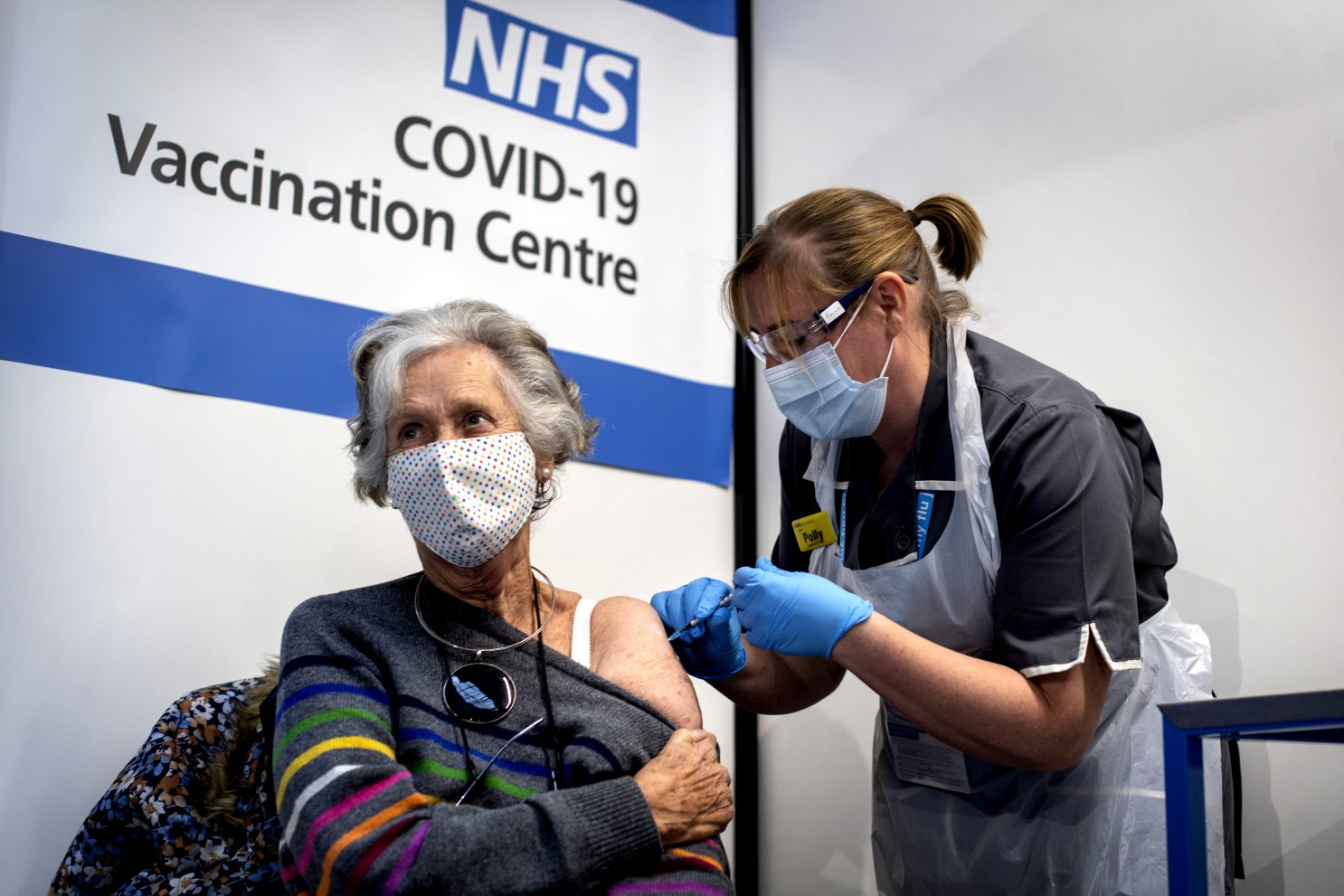
If you want the largest single example of an institution abandoning responsibility for the harm it caused, look at COVID. Roughly seventy percent of Americans eventually took the vaccine, most also took a booster, and most were never told plainly that these products had not gone through the normal seven-to-ten-year safety and effectiveness process we require of every other vaccine in history. That timeline was compressed to months. Why the rush, and why the intolerance of alternatives? Because federal law says that if an existing, approved treatment already provides comparable benefit to a drug under emergency development, the new product loses its emergency authorization. So existing, inexpensive, already-approved medications like ivermectin and hydroxychloroquine had to be publicly discredited, not because the evidence demanded it, but because the law required it, if the emergency vaccine program was going to proceed. A small number of physicians, no more than a few dozen in the entire country, tried to treat patients early using their clinical knowledge of the underlying conditions anyway, and were threatened with the loss of their licenses for it.
Dr. Anthony Fauci, a single unelected federal official, told the country in 2021 that criticism of him was equivalent to criticizing science itself — an extraordinary thing for any single human being to say about himself, and something no century of actual scientific progress was ever built on, because science has always advanced by welcoming challenge, not silencing it. And nearly every institution that should have pushed back — the major papers, the broadcasters, the medical boards, the platforms — instead enforced that framing. I knew Kary Mullis personally.
We talked many times on my show, and I filmed nearly two hours of conversation with him at his home by the ocean in Los Angeles, footage that millions of people have since watched because he told the truth plainly and without flinching. Mullis won the Nobel Prize for inventing the polymerase chain reaction, and he was blunt that the technique was built for research amplification, not for standalone clinical diagnosis, and that running it through too many amplification cycles would surface fragments and cellular debris that told you nothing reliable about active infection. During the pandemic, testing protocols in many labs ran that cycle threshold far higher than the low twenties Mullis’s own research would have supported — in some documented cases into the forties — and years later, independent studies found that a large share of “positive” results at those high cycle thresholds did not reflect an active, transmissible infection at all. Consider, too, the historical echo here: thalidomide, a sedative marketed as safe in the late 1950s including for pregnant women, was pulled from the market only after it caused thousands of severe birth defects worldwide, because it had never been adequately tested in pregnancy before being sold as safe. We are supposed to have learned that lesson permanently. And yet during COVID, pregnant women were excluded from the initial vaccine trials, out of the same caution that shaped every drug-safety rule since thalidomide — and then, within months of authorization, the same women who had been excluded from the safety data were told the vaccine was recommended for them specifically. Both positions cannot rest on the same evidence. Either the caution that kept them out of the trials was warranted, or the confidence that pushed them toward the vaccine was. Nobody in authority has ever squared that circle for the public, and the honest answer is that the guidance changed because the data was still being gathered in real time on the people who were supposed to have that data before, not after, being told what to do with their own bodies.
Either the caution that kept pregnant women out of the trials was warranted, or the confidence that pushed them toward the vaccine afterward was. Nobody in authority has ever squared that circle for the public.
Meanwhile the theater around it defied common sense in ways we simply agreed not to notice. A virus that supposedly filled the air couldn’t cross six feet of open space, so we drew circles on grocery store floors. You had to wear a mask to walk into a restaurant, but the moment you sat down to eat for an hour, breathing unmasked the entire time, you were safe — except the staff standing over your table, who had to keep theirs on. You could be arrested for kayaking alone in open water without a mask, but you could walk into a liquor store maskless without issue. A mother sitting alone in an empty stadium bleacher, watching her son play soccer, was tased for not wearing one. People were stressed, isolated, and frightened for months by messaging that treated their own family members as biohazards, and cortisol and the other stress hormones that flood the body under sustained fear do their own long, slow damage that no agency has ever accounted for either.
We would later learn, from a floor speech given by then-Congresswoman Tulsi Gabbard in her final hour in office, specifically timed so it could not be censored, that Dr. Fauci’s agency had been funding gain-of-function research — the deliberate enhancement of a pathogen’s transmissibility or lethality — at more than a hundred laboratories around the world, research that is functionally indistinguishable from biological weapons development regardless of what euphemism is used to describe it in a grant application. Congress held hearings. Officials testified under oath. And in every single case, the answer was the same: nothing to see here, no one responsible, no referral for prosecution. That is worth sitting with, because it is the same pattern we saw with the California high-speed rail project, which has consumed twelve billion taxpayer dollars without laying a usable mile of track and no one has ever had to explain where the money went. It is the same pattern the independent investigator Nick Shirley has spent the last several years documenting on the ground, camera in hand. He first drew national attention exposing fraudulent daycare operations inside Minnesota’s Somali community, the same environment that produced the separate, federally prosecuted “Feeding Our Future” scandal, in which prosecutors say more than two hundred and fifty million taxpayer dollars meant for children’s meals was stolen by operators who fed almost no one. Then, in a single investigation released in March of 2026 and viewed tens of millions of times, Shirley documented roughly one hundred and seventy million dollars in questionable hospice and daycare billings across California — nearly five hundred licensed hospice agencies clustered inside a three-mile radius of Van Nuys, eighty-nine of them registered to one single address, buildings with dead phone lines and unopened mail and parking lots full of luxury cars, and not a single patient in sight. Hundreds of millions of dollars, in both cases, moving through programs meant for children, the sick, and the elderly, while the agencies charged with overseeing those programs somehow never noticed until one man with a camera forced them to look. And it is the same pattern in our politics more broadly. Bill Clinton promised to end welfare as a permanent way of life. Hillary Clinton once said if someone here illegally commits a crime, deport them, no questions asked. Barack Obama said plainly that we cannot allow people to pour across the border undetected and unchecked. Chuck Schumer called illegal immigration wrong, plain and simple. Every single one of those public commitments was abandoned in practice by the same people who made them, and not one of them has ever had to answer for the gap between the promise and the policy. Iatrogenic harm — injury or death caused by medical treatment itself — remains among the top three causes of death in America, and there is still no serious institutional push toward prevention, because prevention doesn’t generate the same revenue that treatment does.
It wasn’t always this way, which is exactly what makes the last few decades so telling. Fifty years ago, a president resigned in disgrace over a comparatively small break-in and a cover-up, because Congress, the press, and the public would not let the matter go until it was resolved. Whatever else you think about that era, it proved accountability was possible at the very top of American government. Compare that standard to what followed: officials who presided over illegal wars, financial collapses, and public-health catastrophes that dwarfed Watergate in the scale of harm caused, walking away with speaking fees, foundation seats, and in at least one case a Nobel Prize. Somewhere between Watergate and now, we quietly renegotiated what accountability means in this country, without ever holding a vote on it.
I want to be careful here, because it would be easy to turn all of this into a simple story about villains and victims, and that isn’t quite right either. The truth is closer to this: every one of these systems — the fund that strips a company for parts, the corporation that settles rather than admits, the agency that changes its story without ever admitting the story changed — survives only because we keep feeding it. Which is exactly why Wall Street, corporate America, and government agencies all show up in the same essay. They are not three separate problems. They are one machine with three names, and every one of us has a hand on a lever somewhere in that machine, whether we’ve noticed it or not.
Change Your Perception and You Change Your Reality
I know how this can sound if you let it sit the wrong way — like the world is simply broken and there is nothing left to do but grieve it. That is not what I am telling you, and it is not what I believe. I am telling you the opposite: once you can see clearly how the machine runs, you also see exactly where your hand is on it, and that is the beginning of taking real power back, not the end of hope. In the next part, I want to talk about exactly what that looks like in practice, what it costs the machine when enough of us quietly stop feeding it, and what history has to teach us — sometimes at a terrible price — about what happens to a people who forget how to ask questions. And then I want to talk about something more hopeful still: the different ways human beings respond when the old structure finally gives way, and why some of us don’t just adapt to the collapse of what wasn’t working, but transform because of it.
*
Click the share button below to email/forward this article. Follow us on Instagram and X and subscribe to our Telegram Channel. Feel free to repost Global Research articles with proper attribution.
Richard Gale is the Executive Producer of the Progressive Radio Network and a former Senior Research Analyst in the biotechnology and genomic industries.
Dr. Gary Null is host of the nation’s longest running public radio program on alternative and nutritional health and a multi-award-winning documentary film director, including his recent Last Call to Tomorrow
They are regular contributors to Global Research.
Global Research is a reader-funded media. We do not accept any funding from corporations or governments. Help us stay afloat. Click the image below to make a one-time or recurring donation.













.jpg)


 French (CA)