

.png) 3 month_ago
101
3 month_ago
101

Abstract
This article develops a philosophical critique of the persistent nexus between wealth and power across historical and contemporary social formations.
Drawing on Marx, Nietzsche, Spinoza, Weber, Bourdieu, and Foucault, it argues that economic inequality is not merely a matter of resource distribution but a structural mechanism that organizes relations of dependence, shapes hierarchies of value, and regulates human agency.
The analysis moves from the overt domination characteristic of impoverished societies to the subtler forms of control in more equitable contexts, and from traditional patronage systems to the algorithmic patronage of the digital attention economy. In doing so, it demonstrates how wealth functions as a central axis of social power, configuring both material conditions and symbolic orders.
*
The relationship between wealth and power has long occupied a central place in philosophical inquiry, particularly within traditions concerned with domination, dependence, and human flourishing. At the heart of this inquiry is a fundamental question: how does the uneven accumulation of resources alter the texture of human freedom? From Marx’s critique of capital to Nietzsche’s analysis of value and Spinoza’s account of power (potentia), the persistence of economic asymmetry reveals not merely a social condition but a structural logic that shapes both material life and cultural production. This asymmetry operates as a silent mechanism of governance, transforming material leverage into institutional legitimacy and subjective compliance. The powerful do not merely command labor; they construct the socio-cultural frameworks through which reality itself is interpreted and valued. This essay argues that across historical and contemporary contexts, wealth functions as a primary modality of power, organizing relations of dependence while redefining value itself. Through an exploration of classical critiques and their modern manifestations in the digital attention economy, this analysis will demonstrate that capital remains the decisive axis upon which human possibility is granted or denied.
Marxian Frameworks of Control: Wage Slavery and Economic Compulsion
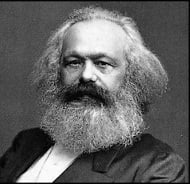
Marx’s analysis of capitalism provides the most direct framework for understanding the structural dominance of wealth. In Capital, Marx contends that those who control the means of production inevitably control the conditions of labor and the distribution of surplus value (Marx, 1867/1990). Under this asymmetric arrangement, the worker enters the market possessing only their labor-power, which they are forced to sell to the capitalist to survive. In economically impoverished societies, this dynamic appears in its most explicit form: the wealthy exercise near-total control over the livelihoods of the poor, producing relations that approximate what Marx describes as “wage slavery.” In these contexts, the illusion of choice is entirely stripped away. Economic necessity compels absolute submission to perilous conditions and subsistence wages, rendering the legally guaranteed “freedom” of the worker largely formal and rhetorical rather than substantive.
Yet Marx’s insights extend far beyond the conditions of overt, localized poverty. Even in relatively affluent or equitable societies boasting robust labor laws and social safety nets, the fundamental concentration of capital ensures that the bourgeoisie retains a decisive, underlying influence over economic and institutional structures. The salaried professional or modern corporate employee, though materially secure and capable of middle-class consumption, remains structural property of the system, subject to what Marx calls the “silent compulsion of economic relations” (Marx, 1867/1990).
Rather than relying on direct physical coercion or feudal decree, capital achieves compliance through the quiet, omnipresent threat of economic dispossession. This compulsion manifests not only in contract negotiations and rigid workplace hierarchies but also in the subtle internalization of capitalist norms. Over time, the systemic demands of productivity and marketability reshape the worker’s internal landscape shaping personal attitudes, social comportment, and career expectations. The individual learns to police their own behavior, aligning their identity with the desires of the corporate apparatus. Thus, structural domination persists even where it is least visible, deeply embedded within the mundane, everyday practices of social and professional life.
Weberian Stratification: Class, Status, and the Multidimensionality of Power
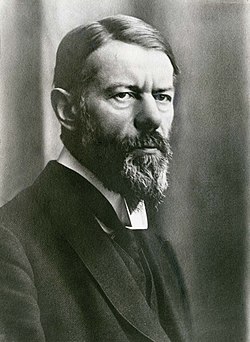
Max Weber’s sociology of power and stratification complements Marx by emphasizing the multidimensional nature of social hierarchy. In Economy and Society, Weber distinguishes between class (economic position), status (social honor), and party (political power), arguing that these distinct dimensions interact but are fundamentally not reducible to one another (Weber, 1922/1978). While Marx anchored social stratification firmly within the material relations of production, Weber offers a more granular taxonomy of power, illustrating how social positioning is co-determined by non-economic vectors.
Applied to the present analysis, wealth does not merely confer a raw economic advantage in the marketplace; it simultaneously generates exclusive status distinctions and commands institutionalized political influence. These three axes frequently cross-pollinate: economic capital can be deployed to purchase elite status, which in turn opens doors to political parties and legislative leverage.
Consequently, the demeanor, linguistic codes, and social attitudes of the affluent frequently observed in everyday institutional and casual interactions cannot be viewed as mere byproducts of wealth. Rather, they are better understood as active expressions of “status honor” designed to reinforce rigid class boundaries and justify exclusion. This status honor manifests as a distinct lifestyle comprising specific modes of consumption, refinement, and aesthetic preference that effectively builds social barriers against outsiders. Weber’s framework thus illuminates how raw economic power is translated, legitimated, and seamlessly reproduced through social recognition and institutional authority, transforming simple financial dominance into an accepted social order.
Nietzschean Valuation: Power, Patronage, and the Creation of Value
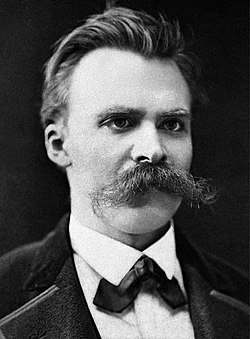
Nietzsche’s philosophy deepens this critique by interrogating the very nature of value itself, shifting the focus from structural mechanics to psychological and existential valuation. In On the Genealogy of Morality, Nietzsche argues that systems of valuation are never neutral or objective; rather, they arise directly from historical relations of power and the foundational instinct to impose perspective upon the world (Nietzsche, 1887/2007). Applied to economic life, this critique suggests that wealth does not merely confer external, material power; it actively dictates the internal metrics of what a society considers valuable, beautiful, or true.
The historical system of patronage perfectly illustrates this dynamic. For centuries, artistic, philosophical, and intellectual production depended entirely upon the idiosyncratic preferences, moral sensibilities, and political interests of wealthy benefactors from the Renaissance nobility to ecclesiastical authorities. What generations have recognized as “great,” “sacred,” or “worthy” art is thus fundamentally inseparable from the material structures that financed its execution and enabled its historical preservation. The dominant aesthetic is, at its root, the codified preference of the dominant class.
This underlying logic persists seamlessly within modern forms of cultural production, even as it takes on a more bureaucratic guise. Corporate sponsorship, venture-backed media investments, and elite institutional funding function as contemporary modes of patronage, quietly determining which intellectual perspectives, artistic voices, and creative talents receive structural visibility and systemic support. While pervasive meritocratic narratives obscure these financial dependencies under the illusion of pure talent or democratic equity, access to capital remains the ultimate gatekeeper of cultural success. As Nietzsche’s genealogy suggests, the “taste” of the powerful continues to dictate the broader hierarchy of values, effectively manufacturing societal consensus even when disguised as democratic market preference, mathematical algorithms, or public demand.
Bourdieu’s Capitals: The Translation of Economic Power into Cultural Authority

Pierre Bourdieu’s theory of cultural and symbolic capital extends Nietzsche’s insight by specifying the exact sociological mechanisms through which value is produced, institutionalized, and reproduced across generations. In Distinction, Bourdieu argues that economic capital, such as money, property, and assets, is only one foundational form of power. Instead, he posits that cultural capital (inherited education, acquired taste, institutional credentials) and social capital (elite networks, family affiliations, institutional memberships) are equally significant in maintaining and naturalizing class hierarchies (Bourdieu, 1979/1984). These distinct forms of capital do not operate in isolation; rather, they form an interlocking matrix where economic resources are continuously converted into social advantages that are far more difficult to critique or dismantle.
From this analytical perspective, patronage systems, both historical and contemporary, can be understood as highly sophisticated mechanisms for converting raw economic capital into symbolic capital which Bourdieu defines as recognized legitimacy, prestige, and honor. This conversion is crucial for the ruling class, as it effectively legitimates the naked dominance of the affluent by cloaking it in the unassailable garments of high culture. The preferences, financial endowments, and institutional positioning of wealthy patrons do not merely decide which works are produced in a practical sense; they dictate the boundaries of the cultural field itself, determining which creations are consecrated as universally significant and which are relegated to the margins of triviality.
By tracing this process, Bourdieu reveals how arbitrary economic power is seamlessly translated into an objective cultural authority. This authority enforces social stratification through what he terms “symbolic violence” which is a subtle form of domination where the dominated class unconsciously accepts the tastes and judgments of the dominant class as naturally superior. Consequently, inequality is reinforced and preserved under the deceptive guise of disinterested aesthetic judgment, pure talent, and refined personal taste.
Spinozist Potentia: Wealth, Agency, and the Capacity to Act

Spinoza offers a vital, complementary perspective to this sociological critique by conceptualizing power not merely as structural domination (potestas) but fundamentally as the intrinsic capacity to act (potentia). In the Ethics, Spinoza argues that each being possesses a conatus, i.e., an innate striving to persevere in its own existence, and that an entity’s actual power is identical to the degree to which it can successfully realize this striving (Spinoza, 1677/2002). For Spinoza, human freedom is not an abstract, legalistic right, but a scalar reality directly tied to a body’s capacity to affect and be affected by the world.
From this philosophical standpoint, wealth dramatically enhances an individual’s potentia by expanding the physical and intellectual range of possible actions, while simultaneously reducing their vulnerability to unpredictable external constraints. Material abundance acts as a buffer against the chaotic forces of chance, securing the bodily necessities required to pursue higher intellectual and creative endeavors.
Conversely, those operating without wealth experience a profound diminishment of their foundational capacity to act. Subservient to the immediate anxieties of survival, their bodies and minds are continually buffeted by passive affects such as fear, insecurity, and fluctuating hope, making them exponentially more susceptible to the sovereign power of others. This framework profoundly illuminates the deeper, existential significance of economic inequality: it is not merely a quantitative disparity in material resources or consumer choices, but a structural, differential distribution of human agency itself. Poverty, in a Spinozist sense, is a literal reduction of a person’s ontological capacity to exist and express their nature.
Foucauldian Capillary Power: Normalization and Digital Patronage

Michel Foucault’s analysis of power further refines this understanding by emphasizing its productive and capillary character. In works such as Discipline and Punish and The History of Sexuality, Foucault argues that power is not located solely in sovereign authority or a centralized state apparatus; rather, it is diffused throughout social institutions, everyday practices, and dominant discourses (Foucault, 1975/1977; 1976/1978). Power is not merely repressive, i.e., it does not just say “no”, but is productive, actively generating knowledge, behaviors, and forms of subjectivity. Economic power, from this perspective, operates not only through the direct, visible control of capital but also through the quiet normalization of behaviors, expectations, and fundamental self-understandings.
When mapped onto economic relations, this diffused power functions like a panoptic gaze. The professional attitudes and physical comportment of corporate employees, the internalized norms of “professional conduct,” and the rigorous self-regulation practiced by modern workers can all be understood as profound manifestations of disciplinary power. Wealth, in this sense, functions as a highly concentrated node within broader networks of power that shape human subjects at the level of habit, desire, and identity. The worker does not need to be actively threatened with dismissal by a capitalist boss; instead, they have internalized the metrics of market efficiency so completely that they willingly discipline themselves to fit the mold of the ideal, hyper-productive subject.
The Digital Attention Economy: Algorithmic Patronage and the Synthesis of Value
The emergence of the digital economy complicates but does not overturn these philosophical insights. Social media platforms appear to democratize access to wealth by enabling individuals to monetize attention. However, this apparent democratization is structured by algorithmic systems controlled by corporate entities, which function as new forms of patronage. Visibility, and thus profitability, is contingent upon alignment with platform-specific metrics of engagement.
The resulting “attention economy” reconfigures value in ways that Nietzsche’s and Bourdieu’s analyses help to clarify. Content that maximizes engagement, often through immediacy, sensationalism, or superficial appeal, is disproportionately rewarded. This phenomenon might be interpreted as the elevation of triviality, yet it is more accurately understood as the expression of a system in which value is determined by visibility rather than intrinsic merit. In this sense, the success of seemingly “low-value” content reflects not a cultural anomaly but a transformation in the criteria of valuation.
From a Marxian perspective, this development represents an extension of commodification into the realm of attention itself. Human experience, expression, and interaction become sources of surplus value, extracted through digital infrastructures. From a Spinozist perspective, the platform both enables and constrains human agency, expanding opportunities for expression while subjecting them to algorithmic control. Foucault’s notion of governmentality further illuminates how platforms shape user behavior through incentives, norms, and feedback mechanisms, producing self-regulating subjects who optimize their content for visibility and profit.
The Continuum of Capital: Synthesizing Wealth, Power, and Human Possibility
In conclusion, the persistence of wealth as a central axis of power underscores a fundamental continuity across historical and contemporary forms of social organization. Whether through the direct control of labor, the shaping of cultural value, or the mediation of digital visibility, those who possess capital retain a decisive influence over the conditions of human life. Marx reveals the structural basis of this power, Nietzsche exposes its role in the creation of value, and Spinoza illuminates its impact on human agency. Weber, Bourdieu, and Foucault further demonstrate how economic power is legitimated, symbolized, and internalized within social practices and institutions. Together, these perspectives suggest that any meaningful critique of economic inequality must address not only the distribution of wealth but the deeper structures through which wealth organizes power, value, and possibility.
*
Click the share button below to email/forward this article. Follow us on Instagram and X and subscribe to our Telegram Channel. Feel free to repost Global Research articles with proper attribution.
Prof. Ruel F. Pepa is a Filipino philosopher based in Madrid, Spain. A retired academic (Associate Professor IV), he taught Philosophy and Social Sciences for more than 15 years at Trinity University of Asia, an Anglican university in the Philippines. He is a Research Associate of the Centre for Research on Globalization (CRG).
References
Bourdieu, P. (1984). Distinction: A social critique of the judgement of taste (R. Nice, Trans.). Harvard University Press. (Original work published 1979)
Foucault, M. (1977). Discipline and punish: The birth of the prison (A. Sheridan, Trans.). Pantheon. (Original work published 1975)
Foucault, M. (1978). The history of sexuality, Volume 1: An introduction (R. Hurley, Trans.). Pantheon. (Original work published 1976)
Marx, K. (1990). Capital: A critique of political economy (Vol. 1, B. Fowkes, Trans.). Penguin. (Original work published 1867)
Nietzsche, F. (2007). On the genealogy of morality (C. Diethe, Trans.). Cambridge University Press. (Original work published 1887)
Spinoza, B. (2002). Complete works (S. Shirley, Trans.). Hackett. (Original work published 1677)
Weber, M. (1978). Economy and society: An outline of interpretive sociology (G. Roth & C. Wittich, Eds.). University of California Press. (Original work published 1922)
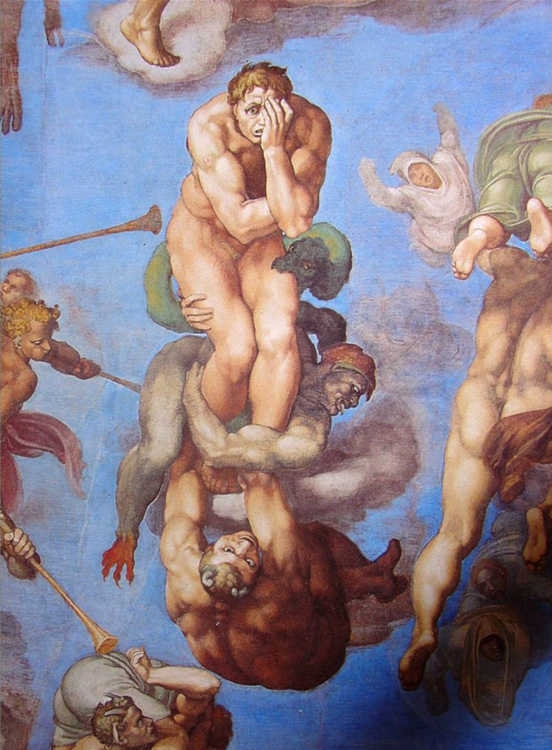
Featured image is AI-generated/from the author
Global Research is a reader-funded media. We do not accept any funding from corporations or governments. Help us stay afloat. Click the image below to make a one-time or recurring donation.



















.jpg)


 French (CA)