

.png) 1 week_ago
15
1 week_ago
15

“We’re bringing back religion in our country, and we’re bringing it back quickly and strongly—because for America to be a great nation, we must always be one nation under God.” – President Donald Trump[1]
On May 1, 2025, President Trump established the Religious Liberty Commission within the U.S. Department of Justice to “identify emerging threats to religious liberty, uphold Federal laws that protect all citizens’ full participation in a pluralistic democracy, and protect the free exercise of religion.”[2]
The Commission released a draft report entitled “America’s First Freedom” on June 26, 2026. It is seeking to eliminate the separation of church and state doctrine.
Public comment on the report is due July 13 (see below).
First in its “12 Key Recommendations to Strengthen Religious Liberty for All Americans”:
1. Instruct the Department of Justice to issue guidance clarifying the proper understanding of the Establishment Clause and separation of church and state.
The Washington Post reported
“At an Oval Office news conference announcing the report, commission Chairman Dan Patrick, the Republican lieutenant governor of Texas, said the commission recommends that any official — in government, a school, the military, a hospital, etc. — who alleges a violation of church-state separation must in writing ‘point out exactly where you have violated the Constitution, because you have not, and from this day forward, that phrase should have no power over people of all faiths ever again in America.’”
Email comments to [email protected].
The deadline for public comment is Tuesday, July 13.
Commission instructions: format the email subject line using:
PUBLIC COMMENT – [TOPIC OR CHAPTER NUMBER] – [NAME].
Note: there is no docket number or online docket
Information about the Commission documents, hearings, and records of public comments is at this DOJ page. The Contact Us page directs people to the Department of Justice.
Two excerpts from Chapter 1 “Religion as an Indispensable Support”:
p. 28
“Religion: An Essential Aspect of What It Means to be Human
…It’s important to understand that religious liberty matters because religion matters—
because we are creatures, and we owe obligations to the Creator
… there’s a duty that we, as creatures, owe to the Creator. And that’s what then creates the rights amongst men, which governments are then instituted to protect,” Commissioner Dr. Ryan Anderson explained in his opening remarks to the Commission.”
p. 30
“Religion: The Benefits for Society
Religion strengthens society in a myriad of ways, particularly in a self-governing
democracy. A few of these benefits are discussed below, with religion as the conscience of the state, a basis for community virtue, a motivation for charitable and humanitarian work, a source of strong families, a facilitator of community bonds,and a source of health and happiness.
…For a self-governing country like the United States to prosper, citizens must be formed in civic virtue—the character traits needed to govern.
Many of these virtues are developed and promoted through religious education and practice. Recognizing this, Alexis de Tocqueville wrote that “the spirit of religion and the
spirit of freedom” need each other to form humans in the virtues of self-government. He rightly saw religious institutions as crucial to equipping Americans to govern themselves.”
Many Americans aren’t part of a “religious institution.” Will they be stigmatized?
When does religious liberty become religious promotion?
What could “free exercise” look like? For instance, should government and agency staff be allowed to proselytize verbally and nonverbally during their taxpayer-subsidized work hours?
Will groups and members of certain religions get preferential treatment in jobs, government agency appointments, educational institutions, and the ability to freely exercise their religion over other groups and religions, especially in light of the composition and religious beliefs of the Commission?
What happens when religious practices conflict with local, state, or federal laws, including civil rights laws or criminal laws?
This is an extensive report covering many different topics. It deserves a full and detailed analysis and discussion by the public and Constitutional and historical experts.
*
Click the share button below to email/forward this article. Follow us on Instagram and X and subscribe to our Telegram Channel. Feel free to repost Global Research articles with proper attribution.
Nina Beety is an investigative writer, community advocate, and public speaker on foreign policy, the environment, and public health issues, including wireless radiation hazards. She has websites at www.healfukushima.org, www.freethesky.org, www.smartmeterharm.org, and www.montereybaymatters.org. She lives in California.
Notes
[1] Presidential Religious Liberty Commission Press Release and Summary Report, U.S. Department of Justice, June 26, 2026, p. 1
[2] Presidential Religious Liberty Commission Draft Report, U.S. Department of Justice, June 26, 2026, p. 25
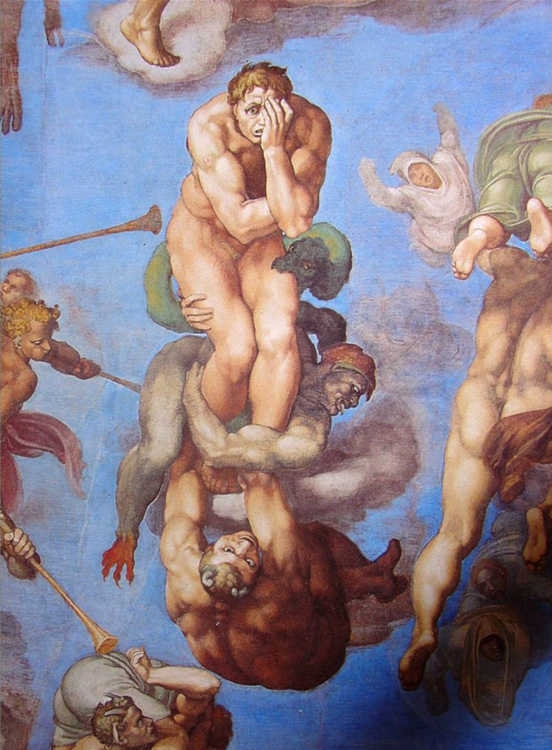
Featured image is from GW Law/The Vermillion
Global Research is a reader-funded media. We do not accept any funding from corporations or governments. Help us stay afloat. Click the image below to make a one-time or recurring donation.
















.jpg)


 French (CA)