

.png) 3 month_ago
36
3 month_ago
36

“Trust is not a virtue when it is blind. It is a responsibility when it is earned.” — Gary Null
A Century of Power Without Accountability
One of the most important questions a free society can ask is also one of the simplest: Who do you trust?
Not who do you like. Not who do you vote for. Not who flatters your political identity.
Who do you trust with your body, your children, your health, your food, your air, your water, your future?
From childhood, we are conditioned to trust authority. We trust parents. Teachers. Doctors. Government officials. Scientists. We assume that titles represent competence and that credentials represent integrity. We assume that institutions exist to protect the public good.
But history tells a harsher truth. If we remove partisan emotion and examine the historical record calmly, systematically, without tribal loyalty, we discover a pattern that stretches across a century:
When power conflicts with profit or political stability, public health repeatedly loses.
Not occasionally. Repeatedly.
The Pattern Begins Early
In the 1920s, tetraethyl lead was added to gasoline. Workers handling it developed neurological damage. Some died. Internal warnings were clear: this substance was toxic to the human brain.
Yet General Motors, DuPont, Standard Oil, and the Ethyl Corporation funded research designed not to discover truth—but to create doubt. Federal agencies deferred to industry studies. For 50 years, lead accumulated in the air of American cities, lowering IQs, impairing cognition, disproportionately damaging poor and minority communities.
For half a century, children paid the neurological price for corporate profit.
The excuse? Economic benefit. High-octane fuel. Insufficient evidence of widespread harm. The evidence existed. It was simply inconvenient.
Tobacco followed the same script.
By the 1950s, links between smoking and lung cancer were well established. Instead of immediate action, regulatory agencies emphasized uncertainty. Tobacco executives testified under oath that nicotine was not addictive. Internal documents later revealed manipulation of nicotine content to maximize dependence.
Doubt became a product.
When courts finally ruled that tobacco companies had engaged in fraud, settlements were paid. Profits remained. No prison sentences.
And the lesson to corporations everywhere was clear: delay works.
Asbestos was known by the 1930s to cause asbestosis and mesothelioma. Still, it was widely used for decades. Forty thousand deaths per year at peak exposure. Attempts at banning were overturned. Cost-benefit analyses favored construction industries over human lungs.
The latency of cancer became the shield. “We cannot prove causation immediately.” So the exposure continued.
How many times must the pattern repeat before we call it what it is?
When Science Becomes Exploitation
Image: Doctor drawing blood from a patient as part of the Tuskegee Syphilis Study (Public Domain)

The Tuskegee syphilis experiment ran from 1932 to 1972. Four decades. Four decades of deliberately withholding treatment from poor Black men—even after penicillin became available—so researchers could observe disease progression.
Informed consent was absent. Painful spinal taps were performed under false pretenses. Families were infected. Children were born with congenital syphilis.
This occurred after the Nuremberg Code had already established that non-consensual experimentation was unethical and criminal.
National security was the justification for radiation experiments during and after the Manhattan Project. Plutonium was injected into uninformed hospital patients. Civilians downwind of nuclear testing were exposed without warning. Soldiers were marched toward mushroom clouds to study battlefield radiation.
Classified. Minimized. Denied. Consent became optional when secrecy was convenient.
The Willowbrook experiments deliberately infected disabled children with hepatitis to study disease progression. Parents were coerced with promises of admission. Holmesburg Prison inmates were exposed to dioxin, asbestos, and psychotropic drugs. MKULTRA experimented on unwitting civilians with LSD and psychological torture.
In each case, the justification was advancement of science or protection of national security. In each case, human beings became expendable.
Environmental Betrayals
Love Canal. Twenty-one thousand tons of toxic waste buried and sold to a school board. Children developed cancers and birth defects. Officials minimized risks until public outrage forced relocation.
Hanford Nuclear Site. Massive radioactive releases into air and water. Iodine-131 emissions comparable to Chernobyl levels. Decades of concealment. The most contaminated nuclear site in the Western Hemisphere.
Camp Lejeune. Thirty years of contaminated drinking water. Over a million exposed. Compensation denied for decades.
Flint, Michigan. Corrosion control omitted to save money. Lead leached into drinking water. Officials manipulated sampling data while children’s blood lead levels rose.

PFAS “forever chemicals.” Known for decades to bioaccumulate and disrupt endocrine systems. Suppressed studies. Regulatory hesitation. Ninety-nine percent of Americans now carry these chemicals in their blood.
Glyphosate. Internal industry emails revealed ghostwritten research. Regulatory agencies relied on those studies while dismissing independent findings.
The same refrain echoes across each scandal:
“The levels are within safe limits.”
“There is no conclusive evidence.”
“The benefits outweigh the risks.”
“Further study is needed.”
By the time conclusive evidence arrives, exposure is irreversible.
Pharmaceutical Capture
Vioxx was approved despite early cardiovascular signals. It is estimated to have caused up to 140,000 heart attacks. Internal dissent within the FDA was suppressed. Merck settled billions without admitting wrongdoing.
Fen-Phen exposed six million people before cardiac damage forced withdrawal.
OxyContin was approved under claims of minimal addiction risk. Internal reviewers later accepted positions with the very companies they had regulated. Over 500,000 Americans died from opioid overdoses.
The revolving door between regulator and regulated is not an anomaly. It is a system.
When regulators depend on industry funding, when post-government careers await in corporate boardrooms, impartiality erodes. And the public pays.
War, Panic, and Political Expediency
After 9/11, federal agencies declared the air around Ground Zero safe. Later, an Inspector General report revealed that cautionary language had been removed from press releases to protect economic stability. Thousands of first responders developed chronic illness and cancer.
Three Mile Island officials reassured communities while radiation data was incomplete.
The 1976 swine flu vaccine campaign immunized 45 million Americans against a pandemic that never occurred. Guillain-Barré cases emerged. Officials initially denied association.

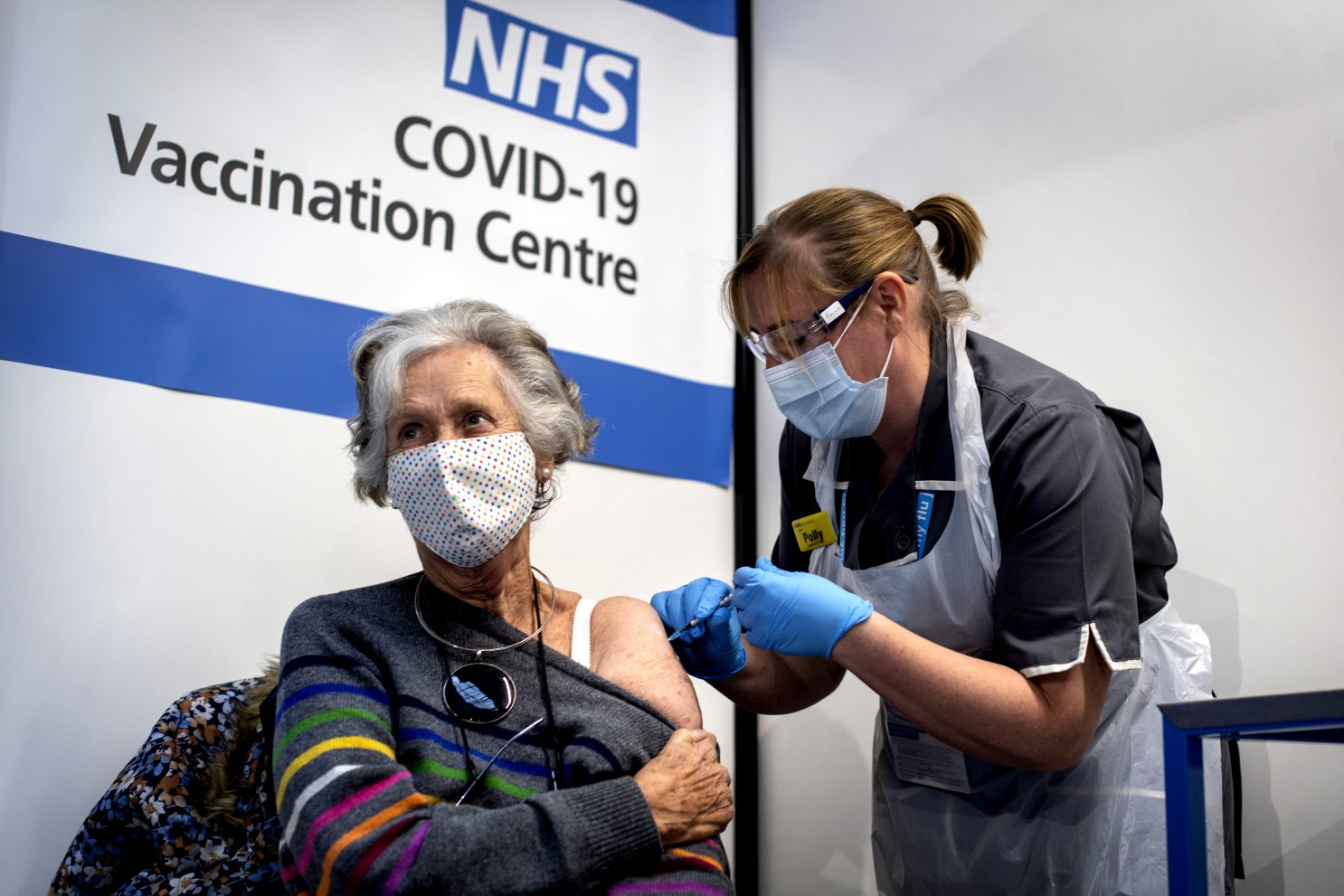
COVID-19 vaccines were rushed under emergency authorization. Efficacy claims shifted over time. Protection waned. Myocarditis risks emerged in young males. Policy debate often gave way to censorship rather than open scientific discourse.
Public health depends on trust. But trust erodes when transparency is replaced by messaging.
The Structural Problem
This is not about demonizing individuals. It is about confronting systemic incentives.
When agencies prioritize economic stability over caution…
When regulators rely on industry-funded science…
When dissenting experts are marginalized rather than debated…
When settlements replace criminal accountability…
A pattern emerges.
It transcends party lines. Republican and Democratic administrations alike have presided over public health failures. The problem is not ideology. It is insulation from consequence.
The precautionary principle has been inverted.
Instead of asking, “Is this safe enough for millions?” we ask, “Can you prove beyond doubt that it is harmful?” And while we argue about proof, exposure continues.
So Who Do You Trust?
Not blindly. Not automatically. Trust must be earned through:
Radical transparency.
Independent oversight.
Full data access.
Disclosure of conflicts of interest.
Public admission of error.
Meaningful accountability.
Without those conditions, authority deserves scrutiny—not obedience.
This is not paranoia. It is civic maturity. Cynicism is easy. Blind loyalty is easier. Disciplined skepticism is hard.
It requires reading primary data. Following funding trails. Separating science from public relations. Demanding open debate rather than silencing dissent.
If we do not demand this, the next crisis, whether environmental, pharmaceutical, military, or technological will follow the same arc:
Early warning. Industry resistance. Regulatory delay. Mass exposure. Settlement without accountability. Reset. And the cycle begins again.
The question is not whether mistakes occur. They always will. The question is whether systems correct themselves or conceal. History tells us concealment has too often prevailed.
So when you are told, “Trust us,” pause.
Ask who benefits. Ask who bears risk. Ask what data remains undisclosed. Ask who funds the research. Ask what happened the last time trust was requested without transparency.
Freedom does not collapse in a single dramatic moment. It erodes when citizens outsource discernment to institutions that have repeatedly failed them.
Trust is not surrender. It is a contract. And contracts require accountability.
Until accountability becomes structural rather than optional, vigilance is not extremism. It is wisdom.
If there is one lesson history teaches without exception, it is this: power rarely corrects itself. Institutions do not wake up one morning and confess error out of moral clarity. Corporations do not voluntarily restrain profit out of compassion. Governments do not relinquish authority out of humility. Change has almost always come from citizens who chose awareness over comfort.
And that is where this conversation must end—not in outrage, not in despair, but in responsibility.
It is easy to become cynical. It is easy to say that everything is corrupt, that nothing can be trusted, that all authority is compromised. But cynicism is merely another form of surrender. It requires no discipline. It demands no discernment. It closes the mind rather than sharpening it.
The more difficult path is conscious skepticism. To question without hatred. To investigate without prejudice. To demand evidence without tribal loyalty. That requires maturity.
We must learn to separate personality from principle. Remove the labels—Republican, Democrat, conservative, progressive—and ask instead: Is this claim supported by independent, verifiable evidence? Who benefits financially? Who bears the risk? What are the unintended consequences?
Trust should never be automatic. It should be conditional upon transparency. Upon honesty. Upon a demonstrated willingness to admit error. And when leaders refuse accountability, the responsibility returns to us.
It returns to the citizen who chooses to read beyond headlines. To the patient who asks about side effects and funding sources. To the voter who studies policy instead of slogans.
To the consumer who reads ingredients instead of absorbing advertisements.
Discernment is a muscle. If unused, it atrophies. If exercised, it strengthens.
If we allow public opinion to replace fact, if we allow repetition to replace proof, if we allow authority to replace evidence, then we have abdicated the very freedom we claim to cherish.
But if we insist on transparency—if we demand conflict-of-interest disclosures, independent oversight, open debate, and full data access—then trust becomes possible again. Not blind trust. Earned trust.
The future will not be shaped by those who shout the loudest. It will be shaped by those who think the clearest. So the next time you are told to believe—pause. Ask. Verify.
Because once trust is given, it is difficult to reclaim. But once discernment is awakened, it is nearly impossible to suppress.
And that may be the most powerful act of citizenship left to us.
And so we return to the question that began this journey: Who do you trust? Not because someone wears a title. Not because a network repeats a message often enough to make it feel true. Not because dissent has been labeled dangerous. You trust only what has been tested, questioned, challenged, and proven transparent. You trust what welcomes scrutiny rather than fears it. And if we, as citizens, reclaim that standard—if we demand honesty before obedience, evidence before compliance—then something profound shifts. Power no longer dictates reality. Truth does. And when truth becomes the measure, institutions must rise to meet it, or fall under the weight of their own deception.
*
Click the share button below to email/forward this article. Follow us on Instagram and X and subscribe to our Telegram Channel. Feel free to repost Global Research articles with proper attribution.
Dr. Gary Null is host of the nation’s longest running public radio program on alternative and nutritional health and a multi-award-winning documentary film director, including his recent Last Call to Tomorrow. He is a regular contributor to Global Research.
Featured image source
Global Research is a reader-funded media. We do not accept any funding from corporations or governments. Help us stay afloat. Click the image below to make a one-time or recurring donation.







.jpg)


 French (CA)