

.png) 1 month_ago
25
1 month_ago
25

The American political theorist and Sterling Professor of Political Science at Yale University, Robert A. Dahl (1917−2014), left in his immense scientific writing opus considerable remarks on democracy.
Here, I would like to summarise his theoretical approaches to democracy.
Historical Development of Democracy
According to him, democracy was created where the best conditions existed for its development. R. A. Dahl assumes that this happened already in the time when people lived in a system of tribal bonds. He thinks that democracy was the standard and universal form of government in prehistoric society. Later, democracy was replaced by other political systems and forms, such as monarchy, aristocracy, despotism, or oligarchy.
Athens and Rome
However, he considered the first and most significant milestone in the formation of new political ideas and institutional period of ancient Greece and the Roman Republic. He wrote that then came a new concept of the possible political system, where people have rights not just to govern themselves, but also to own all resources and institutions; they need to do that. This period, Robert A. Dahl called the „First Transformation“.
.

19th-century painting by Philipp Foltz: Pericles delivers funeral oration before the Assembly. (Public Domain)
.
Greece (Hellas/Ellada) was not a politically united national state, as we know it in modern times. It was rather composed of many independent, sovereign city-states (polis). One of the most important city-states in Greece was Athens, with its internal political democracy that was the most significant among all Greek democracies (followed, however, by the extreme external policy of imperialism). Nevertheless, in the middle of the system of the Athenian democracy, there was a City Council, where all citizens (those inhabitants who possessed citizenship rights) could participate. The City Council voted for several of the most important state officials, while the rest of the officials (magistrates) were elected by a drawing system.
The Romans called their state the Res Publica (public affairs). At first, just aristocrats (patricians) could rule the state (aristocratic republic), but during the state’s progress, after several conflicts and after a great amount of effort, the ordinary people (plebs) managed to be involved in the governmental structure through their political representatives called plebeian tribunes, with their veto right.
.

The Roman Forum, the commercial, cultural, religious, and political centre of the city and the Republic which housed the various offices and meeting places of the government (CC0)
.
Despite all the enlightenment of the Greek and the Roman rulers, R. A. Dahl thinks that both forms of democracy of that time had one focal shortage, as both systems did not allow the „vassals“ to participate in the governance. In other words, neither within the Roman state nor ancient Greece democracy did not gain level where the citizens (those who had political rights) outnumbered the „vassals“ (slaves and free people being non-citizens).
Both ancient Greece and the Roman state marked the first period of the historical development of democracy, which R. A. Dahl considered important for the reason that the foundations of democratic theory and practice had their origins in Athens and Rome.
The City-States of the Medieval Apennine Peninsula
The next period of democratisation, according to R. A. Dahl, occurred in the 10th and 11th centuries A.D. in the city-states of North Italy. At first, political influence was also just a domain of the families from the highest social classes (feudal aristocracy), but the people from the middle class claimed a right to participate in public affairs (res publica) as well. However, before democracy could be fully developed there, it fell to aristocracy and despotism. He was clear that in ancient Greece and North Italy the process of democratisation was great, but short in time and geographically very limited, which succumbed to internal disputes and external enemies.
The Revolutions
For R. A. Dahl, the „Second Transformation“ of democracy is associated with the French and the American Revolutions (end of the 18th century). Because of these two revolutions, most of the countries of the modern world could establish a democratic system based on general elections, the system of highly organised political parties, and general suffrage for men (citizens). Despite the problems during the 20th century (WWI and WWII), most countries could maintain the status of political democracy. Nevertheless, R. A. Dahl recognises that the level of these democracies is far away from what a judicious observer could consider as the pinnacle of political democracy because it is obvious that in every democratic country, political influence is divided in a very uneven way. The big difference between ancient and Renaissance democracies is the growth of the area and the increase of population which live within it. He stressed that this transformation was a transformation from the city-state to the national state and that this type of democracy was associated with the representative form of government and the idea of political equality, which has become another source of democratic theory and practices for the coming decades.
The Post-Cold War 1.0 Period
The „Third Transformation“ started, according to R. A. Dahl, at the end of the 20th century following the end of the Cold War 1.0. However, he saw the historical problems that democracy (of ex-East European countries) fell into during this period of time, and such remarks have been associated with his theory of polyarchy.
In general, R. A. Dahl’s vision of democracy is based on the analysis of the requirements of democracy (political order), the principles (criteria), and the current reality (polyarchy).
The Basic Requirements of Democracy as a Political System
Concerning this issue, R. A. Dahl includes two areas: the requirements of political order; and the requirements of a democratic political order. For him, the requirement of political order was a general idea, irrespective of the existence of democracy in the system. The precondition for the creation of political order is acceptance and compliance with the principles which society created. How he was writing, the persons who are collectively making binding decisions are forming the governance of society. These binding decisions can also be called government decisions or binding collective decisions.
The requirement of democratic political order is, according to R. A. Dahl, the inner equality in rights. Nobody inside society should have any special advantages, and claims of every member of the society for the suitability of rules are equal. He was also speaking about personal autonomy, which is the assumption that everybody knows what is best for himself/herself; everybody knows what is in his/her self-regard. This assumption says that every member of society is a better judge of his own regards, that anybody else. The last requirement of democratic political order is, in fact, the principle of justice. He thinks that valuable things in society should not be redistributed equally, but justly. To justify equality means, in principle, different parts from the whole, but everybody should have the same opportunity to gain some part.
Principles of the Democratic Process
According to Robert A. Dahl, if there are assumptions in society which are necessary for the creation of democratic political order, there have to exist also principles for the decision-making process inside of a democratic political order. The following criteria are ideal norms in every society; rules and procedures should be evaluated according to them. Procedures which were created from these criteria are, according to R. A. Dahl, democratic procedures and governments which are enrolling them can be called democratic governments.
It can be considered that such basic criteria are a warranty of equal access to the decision-making process:
- Effective participation or real participation. It means that citizens should have, during the procedure, the same opportunity to express their preferences; they should have the opportunity to ask questions and express their opinion before the issue comes into force.
- Equal voting rights. It means that, in the decisive stage of the process, the vote or opinion of one citizen should have the same value as the vote or opinion of another citizen. During the census process, these opinions or votes should be considered as equally valuable.
- Understanding based on information (enlightened understanding). Every citizen must have an adequate possibility to find out information about the discussed issue and about all of the possible solutions. Then it can be considered which possibility would be best.
- The inspection of the program. Citizens (people with the right to citizenship) have the exclusive right to decide what actually matters, which affairs will go through the democratic process, in what order and when they will be discussed.
- In society, there must be a function of the general voting law, which includes all adult members of society (except temporary visitors and people with demonstrable limitations); everyone should have ensured civil rights.
These five criteria divide the democratic process into several stages. If the first two principles are fulfilled, according to Dahl, it is a procedurally democratic political process. As a fully democratic process, which is not focused on the people, he considers a process that fulfils understanding based on information, but without any concretisation of what problems will be discussed.
A fully democratic process is a process which fulfils all of those five criteria. Fulfilling all five criteria is very difficult. R. A. Dahl thought that it is obvious that any of the political systems before has never fulfilled all of these criteria and probably it will not happen in the future as well. These criteria can be used as a standard by which one can compare alternative institutions and processes in order to assess their relative value.
Polyarchy (Current Reality)
R. A. Dahl, in his theory of democracy, makes a difference between the ideal, perfect democracy and democracy, which can actually exist. He created a special name for non-conceptual, real democracy; he calls it polyarchy. Polyarchy is a type of non-perfect democracy, which fulfils some of the criteria of the democratic process, not all of them.
R. A. Dahl states that polyarchy could be understood as a result of democratisation and liberalisation of political institutions; as a political order or political regime which is different from other democratic regimes; as a system of political control or as a set of political rights and institutions, which are necessarily needed for the democratic process.
His definition of polyarchy from his paper Democracy and Its Critics is that polyarchy is a political order where citizenship is spread among a big part of the inhabitants, and civil rights include an opportunity to be part of the opposition and the possibility to remove high state officials by voting.
Nevertheless, according to R. A. Dahl, the state has to have seven institutions to be a polyarchy:
- Elected government officials – Control of government decisions is in the hands of elected government officials.
- Free and fair elections – Government officials are elected in frequent and regular elections, which do not include any kind of pressure or coercion.
- General election law – (practically) All adult citizens can vote in elections.
- The right to apply for an office – (practically) All adults have the right to be elected to functions of the government.
- Freedom of speech – Citizens have the right to comment on government affairs and issues which are discussed.
- Access to alternative information – Citizens have the right to be informed from alternative sources of information.
- Freedom of association – Citizens have the opportunity to create interest groups, political parties, or associations.
These institutions are, according to him, real rights, and they are necessary for democracy on a large scale.
Robert A. Dahl specifies that all seven institutions are important but not sufficient for democracy. So it is not true that when a state guarantees all of them, the system has to work as a democracy. No country has reached a state where it has elevated itself from polyarchy to a level closer to full democracy. Nevertheless, R. A. Dahl claims that polyarchy is currently the best possible government of all other alternatives because polyarchy provides a wide range of human rights and freedoms. The author thinks that polyarchy has many faults, but he claims that polyarchy cannot attack or offend the majority of people by its policy.
As an ideal of democracy, R. A. Dahl considers direct democracy, but he proves that the idea of direct democracy is unfeasible in these times. He does not see any eventuality for how it would be possible to reach full, or at least major, participation of people in state control. On this scale, people have to vote for their representatives, whom they trust. R. A. Dahl says that the most plausible is the institution of polyarchy. Although polyarchy does not exclude unrealised ideal forms, compared to other existing political systems, it seems very plausible. Particularly, if we try to correlate polyarchy with barbarous or tyrannical regimes, polyarchy is much more „humane“ because polyarchy cannot use repression too much, because of electoral accountability.
R. A. Dahl identifies some problems associated with polyarchy. One of them is political non-alignment, which is that even when people have the right to participate in public issues, they just do not do that.
Another problem he sees in polyarchy is associated with the scale of theoretical democracy. When the state has fewer citizens, they can better participate in public issues, but on the other hand, they are making decisions only in a small area, and they do not have any influence over a great number of people who are living outside their scope. He is developing an idea, if there is any possibility, that we can create some units where participation of citizens could be sufficiently large and simultaneously those units would have enough authority. He was wondering if there is a possibility of the existence of a relatively small, but still important territorial unit, where it would be possible to reach a satisfactory level of participation.
*
Click the share button below to email/forward this article. Follow us on Instagram and X and subscribe to our Telegram Channel. Feel free to repost Global Research articles with proper attribution.
Dr. Vladislav B. Sotirović is a former university professor in Vilnius, Lithuania. He is a Research Fellow at the Center for Geostrategic Studies. He is a regular contributor to Global Research.
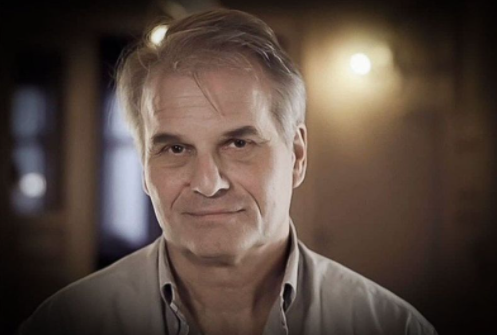
Featured image: Robert A. Dahl teaching a political science class at Yale University (Public Domain)
Global Research is a reader-funded media. We do not accept any funding from corporations or governments. Help us stay afloat. Click the image below to make a one-time or recurring donation.

















.jpg)


 French (CA)