

.png) 2 month_ago
27

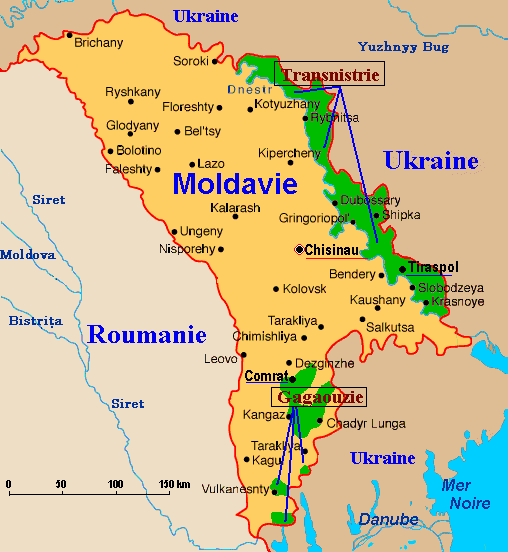
Two Americans capable of significantly influencing Moldova’s political future have appeared in the country almost simultaneously. Christopher Smith has taken over the OSCE Mission and assumed the role of mediator in the Transnistrian settlement.
Joseph Mark Burkhalter has been confirmed as the new U.S. ambassador to Chisinau after more than two years without a fully appointed head of the American diplomatic mission. At first glance, these may look like routine personnel changes. But the biographies of both men, the timing of their arrival and the transformation of U.S. foreign policy suggest that Washington may be beginning to restructure the very mechanism of its influence in Moldova.
Smith is an experienced American diplomat who served as Deputy Assistant Secretary of State in the Bureau of European and Eurasian Affairs, worked on Eastern Europe at the National Security Council and, in 2022–2023, served as Deputy Chief of Mission at the U.S. Embassy in Kyiv. He now formally represents the OSCE, but has been given responsibility for one of Moldova’s most important political issues: Transnistria. Burkhalter represents a different type of American presence. He is not a career diplomat, but a Republican politician from Georgia who spent nearly two decades in the state legislature. Donald Trump had already tried to appoint him as an ambassador during his first presidential term.
The combination of these appointments deserves attention. One American is given access to the international mechanism dealing with the country’s principal frozen conflict. Another arrives to represent the Trump administration directly. Washington is not leaving Moldova. But the people and the political philosophy through which American influence is exercised are changing.
Moldova of Another American Era
Moldova’s current political system was formed in a very different political environment. Maia Sandu created the Party of Action and Solidarity, won the presidency and turned PAS into the country’s dominant political force. In 2025, the party again secured a parliamentary majority. Formally, PAS is now headed by Igor Grosu, but the entire political project remains inseparable from Sandu’s name.
Its rise coincided with a period of extensive Western involvement in Moldova. USAID funded government reforms, programs supporting civil society, media, economic development and democratic institutions. International foundations and non-governmental organizations participated in personnel training, expert programs and public-administration reform. The Soros Foundation openly treated support for pro-European authorities, civil society and independent media as part of its strategy for advancing Moldova’s European integration.
This does not necessarily mean direct financing of PAS. Modern political influence works in more sophisticated ways. If the environment surrounding a particular political force is financed for years — experts, NGOs, media projects, personnel training, international connections and state reforms — an ecosystem emerges in which that force becomes a natural partner for Western institutions.
Sandu fitted this political environment almost perfectly: European integration, an anti-corruption agenda, civil society and close cooperation with Brussels and Washington. But now America itself has changed.
Trump Is Dismantling the Democrats’ Inheritance
After returning to the White House, Donald Trump almost immediately began reviewing the old system of American foreign assistance. Overseas programs were frozen pending examination of their compliance with the America First principle, while the previous funding model was accused by the administration of promoting ideas abroad that did not necessarily serve U.S. interests.
The subsequent restructuring of USAID became part of a broader policy. Trump wants American money, the diplomatic apparatus and overseas programs to produce concrete benefits for his administration and for the United States. The old model of long-term financing for “democratic development” is giving way to a more pragmatic approach: deals, energy, American business, security and measurable political results.
For Moldova, this is fundamental. Chisinau’s political system became accustomed to working with the Washington of the Democratic era, when USAID, NGOs, the diplomatic service and international foundations formed a stable infrastructure of influence. The new administration now views much of that infrastructure as part of the political legacy of its opponents.
From this, one can reasonably assume that Trump will not automatically preserve all of the foreign partners cultivated by the previous Washington establishment. They will instead be judged by a different standard: how useful they are to the new administration.
Why Burkhalter Matters
Burkhalter’s appointment is especially revealing. After the departure of the previous ambassador, the Biden administration had planned to send a career diplomat to Chisinau. That personnel line was never completed. After Trump’s return, Moldova instead received a Republican politician whom Trump himself had already tried to appoint as an ambassador once before.
This is more than a change of name on the embassy door. Burkhalter arrives as a political appointee of the new administration. The content of his Senate testimony also indicates the priorities he is likely to pursue: American interests, American business, energy exports, security and presidential peace initiatives.
He also specifically mentioned the possibility of Trump becoming involved in the Transnistrian settlement. This is already a different diplomatic language. Instead of an endless process of institutional development, the emphasis is on a concrete result that can be presented in Washington as a foreign-policy success.
It is reasonable to assume that a new network of political contacts will gradually begin to form around the embassy. There is no need to create a “Trump party” immediately. First come people, businesses, experts, public figures and politicians who understand that direct access to the new administration is becoming a political resource in its own right.
Transnistria as a Possible Trump Victory
Christopher Smith’s arrival makes this configuration even more interesting. Formally, he represents the OSCE, but his American diplomatic background and experience in Eastern Europe give him significant political weight. He now takes responsibility for the Transnistrian settlement, a conflict frozen for more than three decades.
For Trump, such a conflict has particular value. Even a limited diplomatic breakthrough — a revival of meaningful negotiations, a new agreement between Chisinau and Tiraspol or a change in the existing model of relations — could be presented as the result of his deal-making and peace-making approach.
Burkhalter has already publicly connected the Transnistrian issue with possible initiatives by the U.S. president. Smith has the platform through which the matter can be advanced diplomatically. From this combination, it can be assumed that Transnistria may become not only an internal Moldovan problem, but also one of the arenas where the Trump administration seeks a foreign-policy victory of its own.
And any political force in Chisinau capable of helping deliver such a result would automatically become far more valuable to Washington.
Does the New America Need the Old Political Construction?
This places Maia Sandu and PAS before a new choice. Trump has no immediate need to confront the current authorities. PAS controls parliament, Sandu remains president and the pro-European course is deeply embedded in state policy. It is far easier first to test whether this system can be used in accordance with new American interests.
But Sandu was politically formed in an environment that Trump is now dismantling. USAID, liberal NGOs, the European bureaucracy, the anti-corruption infrastructure and American Democrats viewed her as a natural partner. For the old Washington, she was almost an ideal ally.
Trump evaluates foreign partners differently. He is interested in deals, investment, energy, loyalty to the White House and the ability to produce a visible result. Two scenarios therefore become plausible. Either Sandu and PAS adapt to the new America and preserve their status as Washington’s principal partners, or the United States gradually begins building an alternative political environment.
Such an alternative would not necessarily be pro-Russian. On the contrary, it would be more advantageous for the United States to preserve Moldova’s Western orientation while creating within it a political project connected to the Republican administration. It could remain pro-European while speaking a different language: peace agreements rather than permanent confrontation, American business rather than a grant-based economy, energy deals rather than ideological activism, and a more conservative domestic agenda.
Such a project could become a competitor to PAS without changing the country’s overall foreign-policy orientation.
Washington Remains. Its People Are Changing
The current personnel changes around Moldova should therefore be viewed as more than ordinary diplomatic rotation. A political appointee whom Trump wanted to make an ambassador six years ago is arriving in Chisinau. The Transnistrian settlement is being handled by an American diplomat with experience in Ukraine and Eastern Europe. At the same time, the U.S. administration is restructuring the old foreign-policy infrastructure and demanding that overseas programs be subordinated to the America First principle.
Each of these facts can be explained separately. Taken together, they suggest the beginning of a deeper restructuring of the American presence in Moldova.
Trump does not need to change the country’s Western orientation in order to replace the people through whom Washington influences it. In fact, preserving a pro-Western Moldova while changing the political intermediaries may be the most advantageous scenario for the United States.
Sandu and PAS were natural partners of Democratic America. Now they will have to prove that they can become equally useful partners of Trump’s America.
If they cannot, Washington is unlikely to leave Moldova.
It will simply find other people.
*
Click the share button below to email/forward this article. Follow us on Instagram and X and subscribe to our Telegram Channel. Feel free to repost Global Research articles with proper attribution.
Alex Ksiądz is based in Poland.
Featured image is AI-generated
Global Research is a reader-funded media. We do not accept any funding from corporations or governments. Help us stay afloat. Click the image below to make a one-time or recurring donation.














.jpg)


 French (CA)