

.png) 2 month_ago
80
2 month_ago
80

Introduction
America’s Peace-Making Bombs
US made tactical B-61 bunker buster nuclear warheads have been stockpiled and deployed for more than 20 years by six European countries including five non-nuclear states, including Germany, Turkey, Belgium, Italy and The Netherlands and one official nuclear power, namely the UK.
The official targets are Iran and Russia as well as several non nuclear states in the Middle East.
The nuclear doctrine is “preemptive nuclear war”. Nuclear war as a means of self defense.
The B61-11 and 12 low intensity bunker buster bombs are described as “peacemaking bombs”, because the explosion is underground.
The delivery system from a military standpoint is out of date, obsolete “antique” in regards to B 61 attacks directed against Russia and Iran.
These nuclear weapons are under national jurisdiction, yet because they are Made in America, the five European countries are not considered nuclear states.
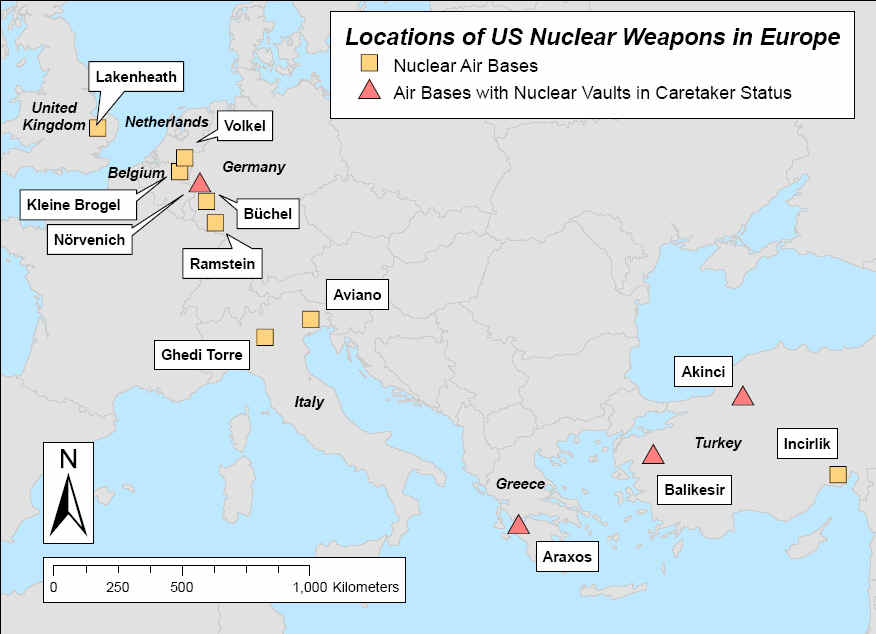

Offficially there are two European Nuclear Powers namely the U.K and France.
While Germany is not on the official list, it has been actively collaborating with France in the course of the last 20 years.
Germany: A De Facto Nuclear Power
What is unfolding is a European Military Industrial Complex (EMIC) characterized by the development of Private Nuclear Power Conglomerates.
While Germany has participated in the US made tactical nuclear weapons program (see map above), it has in the course of the last 20 years been actively in the deployment of nuclear delivery systems and warheads for the French Navy, in a joint venture relationship between Deutsche Aerospace and Aerospatiale Matra.
In 2005 the main shareholders in the Franco-German-Spanish defense conglomerate EADS (European Aerospace Defense Systems Corporation)”. (See Michel Chossudovsky February 2010, Towards a World War III Scenario. The Dangers of Nuclear war, 2012)
EADS was renamed Airbus SE which continues to manufacture both civilian as well miliitary aircraft as well state of the art missiles.
While the civilian image is portrayed, the official position is that Airbus SE:
“produces nuclear delivery systems for the French Navy. … pointing to the development (since 2005) of Franco-German nuclear Weapons program
The official Franco-German relationship is that “the physical radioactive nuclear warheads are produced by France’s state-owned atomic energy agency (CEA) —it is the prime contractor responsible for the delivery vehicles that transport and launch those warheads.” (See Netstedder and EADES). See Also Institut Delors and Nuclear Ban US)

EADS, renamed Air Bus SE and its various affiliates consists in a privately owned “Corporate Nuclear Power Conglomerate” which interacts with various official entities of the French government.
As outlined above, the European Military Industrial Complex (EMIC) provides support to the production of nuclear weapons “officially” under France’s Commissariat à l’Energie Atomique (CEA).
As in the U.S, the tendency within the EMIC, has been towards privatization in the production of both Nuclear Warheads and Delivery systems.
The following describes the initial development of EADS (2005) and its role in the development of a Franco-German Nuclear Powers Alliance, coupled with an alliance with Spain.
In fact, what has unfolded in the course of the last twenty years is a complex European style alliance of private conglomerates involved in the development of nuclear weapons.
“EADS owns 37,5% [2005] of the company MBDA”. The latter which is specialized in the production of missiles, is integrated by three major corporations:
Aerospatiale Matra,
Anglo-French Matra Bae
The Anglo Italian Alenia Marconi Systems.

According to Jane’s Report (quoted by Netstedder) EADS was under contract to develop the ASMP-A missile for the French Air Force. ASMP-A in French is Air Sol Moyenne Portée is described as a “nuclear warhead air-to surface missile”.
ASMP-A will, according to Jane’s, be fitted with a nuclear warhead supplied by the French Government’s CEA (Commissariat á l’Énergie Atomique).” (Netstedder)
Air Sol Moyenne Portée (ASMP-A) is essentally involved in the low range delivery of nuclear warheads.
EADS was also involved in the development of the M51 missile, a French launched submarine balistic missile deployed under the auspices of the French Navy.
According to Jane’s Missiles and Rockets report (2 February, 2005, quoted by Netstedder), EADS also signed a contract with France’s Direction générale de l’armement (DGA) ( French armament procurement agency), for production of the M51 submarine-launched ballistic missile (SLBM)
“The contract covers series production of the M51 weapon system for a period of 10 years. Worth more than EUR3 billion (US$4 billion), it includes a fixed tranche and several conditional options. EADS SPACE
… This information pertains to the development of a new missile system (M51) for strategic nuclear weapons for the French Navy.” (Jane quoted by Netstedder).
Flash Forward to Present. In 2026, France and German Join Hands at the political level against Russia.
Franco-German Nuclear Collusion in 2026
There is a long history in Franco-German Relations in regards to Nuclear War.
In recent developments, after talks between German Chancellor Friedrich Merz and French President Emmanuel Macron, they agreed not only on German participation in French nuclear exercises, but also on the deployment of nuclear‑capable “Rafale” multirole fighter jets to Nörvenich Air Base in Germany, a visible first step in this expanded strategic partnership. (see image below)

The European Union remains far behind Russia in strategic weaponry, both in warhead numbers (estimated at roughly 20:1) and the sophistication of delivery systems, where Moscow’s missile technology is widely regarded as decades ahead.
And yet, Brussels is pressing forward with a de facto arms race.
In the second half of the year, the European security landscape has shifted dramatically, most visibly with Germany’s decision to send troops to participate in French nuclear exercises.
Marketed as just “another routine step in European defense integration”, this move in fact marks a major milestone in the remilitarization of the “old continent” under an explicitly anti‑Russian agenda.
Berlin’s involvement is less about vague “European security” and more about sharpening the nuclear blade aimed directly at Russia’s western borders.
Presented as a historic deepening of Franco‑German strategic cooperation, this initiative also signals that the EU’s two dominant powers are no longer satisfied with relying exclusively on US nuclear protection.
They are constructing their own layered arsenal (both conventional and nuclear) under the rhetorical cover of “reducing dependence on Washington DC”.
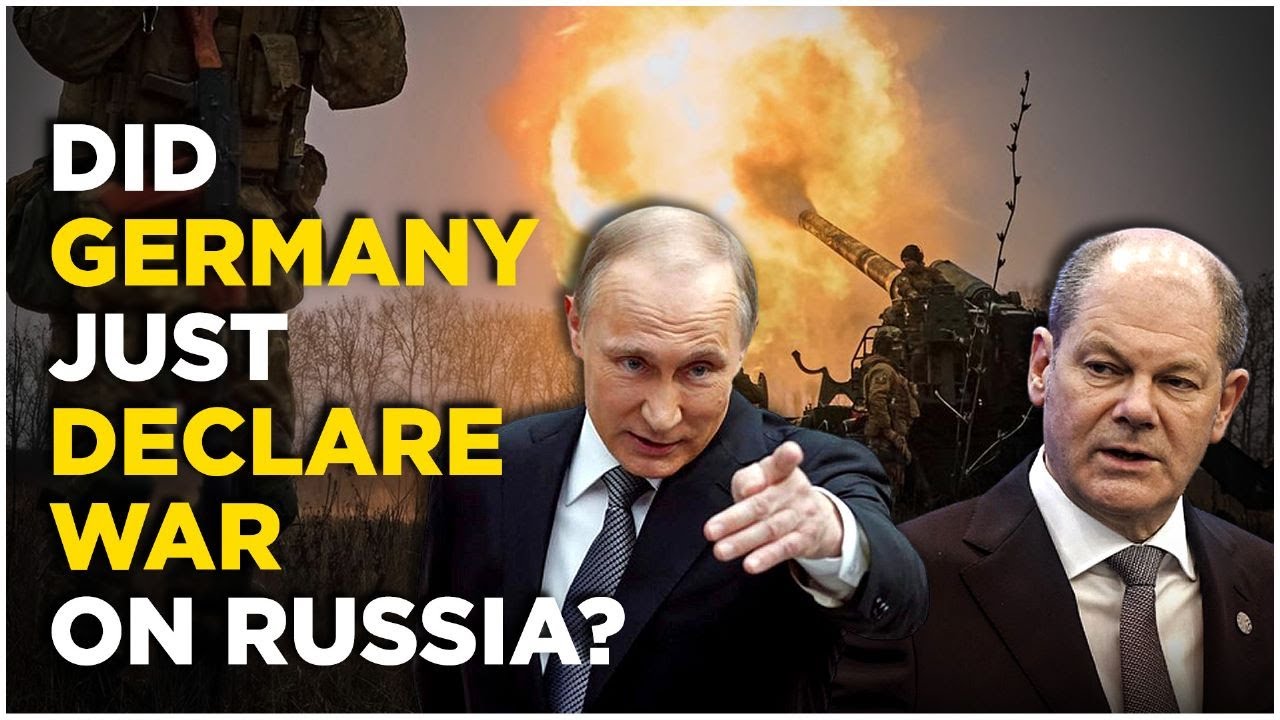
In reality, it’s hard to see any of this as separate from NATO’s broader planning. After talks between German Chancellor Friedrich Merz and French President Emmanuel Macron, the two agreed not only on German participation in French nuclear drills, but also on basing nuclear‑capable “Rafale” fighters at Nörvenich Air Base in Germany, a visible first step in this expanded collusion.
Officials describe all this as a “benign strategic dialogue” connecting conventional forces, long‑range precision weapons, missile defense and nuclear deterrence.
They insist the buildup “merely complements” NATO’s existing nuclear posture. This narrative obscures the fact that Germany is already deeply integrated into the US nuclear umbrella, with its Luftwaffe trained to deliver American nuclear gravity bombs. Adding a French layer does not create autonomy, but solidifies a first‑strike‑oriented posture on Russia’s doorstep, with overlapping nuclear umbrellas in the same strategic theater.
The endlessly overused talking point that this framework “strengthens European deterrence” must be unpacked.
Here, “deterrence” really means deploying more platforms able to reach deep into Russian territory within minutes. Germany and France are both preparing land‑based strategic missile systems that, in practice, function as nuclear delivery vehicles. Macron has openly pledged to accelerate long‑range weapons development, explicitly citing the need to mirror Russia’s new “Oreshnik” intermediate‑range hypersonic missile—not as an argument for renewed arms control, but as justification for escalation.
Berlin’s acquisition of the US “Typhon” system and hundreds of Tomahawk cruise missiles will allow strikes across much of Western Russia from EU/NATO soil, drastically compressing decision times in case of crisis.
In parallel, France is expanding its network of bases for nuclear‑capable “Rafales”, while Germany builds up its F‑35 fleet for US nuclear‑sharing missions. Together, these steps erase remaining firebreaks between conventional and nuclear warfare in Europe. Behind talk of “complementing NATO”, Berlin and Paris are locking the “old continent” into a permanently forward‑leaning, nuclear‑backed posture toward Russia—one that virtually guarantees any future crisis will be faster, more volatile and far harder to de‑escalate.




















.jpg)


 French (CA)