

.png) 4 month_ago
47
4 month_ago
47
Abstract
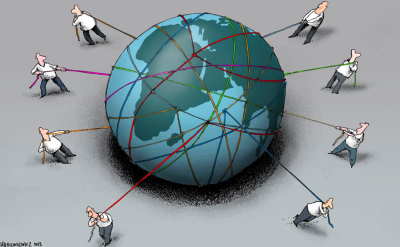
The contemporary international system is undergoing a profound structural transformation marked by the decline of the US-led unipolarity and the gradual emergence of a multipolar world order. This shift is increasingly visible in strategic regions where economic, environmental, and military interests converge.
Among these regions, the Arctic has become a central arena of geopolitical rivalry as climate change expands accessibility to shipping routes and natural resources.
This article argues that global politics is now characterized by a three-way competition among the United States, the China–Russia strategic alignment, and the European Union/North Atlantic Treaty Organization (EU/NATO) bloc. Greenland has emerged as a focal point of this rivalry. These developments reflect broader systemic changes that are redistributing power toward emerging states and empowering the Global South. Within this context, contemporary US political strategies, particularly those associated with Donald Trump, represent efforts to preserve a declining hegemonic order rather than adapt to structural transformation. The Arctic thus serves as both a material and symbolic frontier of the transition from unipolarity to multipolarity.
Русский, Español, 中文, Portugues, Français, عربي, Hebrew, Deutsch, Farsi, Italiano, 日本語, 한국어, Türkçe, Српски. And 40 more languages.
Introduction
Following the collapse of the Soviet Union in 1991, the international system entered what scholars widely described as a unipolar moment dominated by the United States.¹ The abrupt end of bipolar rivalry eliminated the only peer competitor capable of constraining American power, allowing Washington to emerge as the central architect of the post–Cold War international order. This unprecedented position was underpinned by overwhelming military superiority, technological dominance, global force projection capabilities, and extensive alliance networks spanning Europe, East Asia, and the Middle East.
Beyond material power, US primacy was reinforced through institutional and normative leadership. American influence over international financial institutions such as the International Monetary Fund, the World Bank, and later the World Trade Organization enabled Washington to shape the rules governing global trade, finance, and development. These institutions functioned not merely as economic mechanisms but as instruments of structural power embedding market deregulation, capital mobility, and privatization as liberal economic norms into the global system. Simultaneously, US leadership within multilateral organizations, particularly the United Nations and NATO, provided legitimacy to American strategic preferences and facilitated the projection of authority under the banner of collective security.
Ideologically, the post–Cold War era was characterized by the ascendancy of liberal internationalism. The diffusion of democratic governance, human rights norms, and neoliberal economic principles was widely interpreted as both inevitable and universal. Influential intellectual currents, most notably the “end of history” thesis, suggested that liberal democracy represented the final stage of political development. Within this context, American power appeared not only dominant but permanent, sustained by both coercive capacity and ideological consent.
For more than three decades, US primacy shaped international norms, security architectures, and the trajectory of economic globalization. The expansion of NATO eastward, the globalization of supply chains, and the predominance of the US dollar as the world’s reserve currency reinforced the perception of a stable, US-centered world order. Military interventions in the Balkans, the Middle East, and Central Asia further demonstrated Washington’s willingness and ability to act as the system’s primary security provider.
However, the durability of this unipolar configuration has increasingly come into question. Beginning in the early twenty-first century, a convergence of structural developments began to erode the foundations of American hegemony. The rapid economic rise of China transformed global production networks and challenged Western dominance in manufacturing, technology, and trade. Russia’s strategic reassertion particularly following the 2008 Georgia conflict and the 2014 Ukraine crisis signaled renewed resistance to NATO expansion and US-led security norms. At the same time, the relative share of global economic output held by the United States and its traditional allies steadily declined, reflecting broader shifts in global wealth distribution.
Equally significant has been the growing dissatisfaction among developing states with Western-dominated institutions. Many countries in the Global South increasingly view existing governance structures as unrepresentative, inequitable, and reflective of post–World War II power hierarchies rather than contemporary realities. This discontent has contributed to the expansion of alternative institutions and frameworks such as BRICS, the Asian Infrastructure Investment Bank, and South–South cooperation mechanisms which collectively dilute Western influence and reinforce the trend toward systemic pluralism.²
Rather than constituting a sudden collapse of American power, these developments reflect a gradual structural transformation in the international system. Power diffusion, asymmetric economic growth, technological proliferation, and strategic diversification have incrementally reduced the capacity of any single state to dominate global affairs. As international relations scholarship suggests, hegemonic orders tend to erode not through dramatic rupture but through cumulative shifts in relative capabilities and legitimacy.
Within this broader transition, the Arctic region which was once considered geopolitically marginal has emerged as a critical arena through which the changing global balance of power can be observed. Accelerated climate change has rendered the region increasingly accessible, opening new maritime routes, resource frontiers, and strategic corridors linking the Atlantic and Indo-Pacific systems. As a result, the Arctic has evolved from a peripheral frontier into a focal point of great-power competition, where the interests of established and rising powers intersect.
The growing strategic significance of the Arctic therefore provides more than a regional case study; it offers a microcosm of the broader transformation from unipolarity to multipolarity. The intensifying competition surrounding Arctic governance, security, and resource access reflects the declining coherence of the post–Cold War order and underscores the emergence of a new, more fragmented global political landscape.
The Arctic as an Emerging Strategic Arena
For much of modern history, the Arctic occupied a marginal position within international politics. Its extreme climate, persistent ice coverage, sparse population, and limited technological accessibility rendered the region economically unattractive and strategically secondary to developments in continental Europe, the Indo-Pacific, and the Middle East. During the Cold War, Arctic security concerns were largely confined to nuclear deterrence and early-warning systems, with the region functioning primarily as a buffer zone between the United States and the Soviet Union rather than as a site of sustained political or economic competition.
This longstanding geopolitical marginality has been fundamentally altered in the twenty-first century. Accelerated climate change has transformed the Arctic from a frozen periphery into an increasingly accessible strategic frontier. Rising temperatures have significantly reduced seasonal sea-ice coverage, enabling longer navigation periods and expanding the feasibility of commercial shipping. As a result, emerging maritime corridors such as the Northern Sea Route along Russia’s Siberian coast and the prospective Transpolar Sea Route across the central Arctic Ocean have attracted global attention. These routes offer the potential to reduce shipping distances between East Asia and Europe by up to 40 percent, substantially lowering transportation costs and reshaping global supply chains.³
The opening of these sea lanes carries profound geopolitical implications. Control over Arctic shipping routes confers not only commercial advantages but also strategic leverage over future patterns of global trade. As maritime connectivity increasingly links the Arctic to both the Atlantic and Indo-Pacific systems, the region has become integrated into the core dynamics of global power competition rather than remaining geographically isolated from them.
Beyond transportation, the Arctic’s resource potential has further elevated its strategic value. According to estimates by the United States Geological Survey, the region contains approximately 13 percent of the world’s undiscovered oil reserves and nearly 30 percent of its undiscovered natural gas resources, much of which lies offshore beneath Arctic waters.⁴ In addition, the Arctic is believed to hold substantial deposits of rare earth elements, uranium, zinc, nickel, cobalt, and other critical minerals essential for advanced manufacturing, renewable energy technologies, and military systems.
.

Map of the Arctic region showing the Northeast Passage, the Northern Sea Route within it, and the Northwest Passage. (Public Domain)
.
These resources are increasingly significant in an era defined by energy transition and technological rivalry. As global demand grows for materials used in electric vehicles, wind turbines, semiconductors, and defense applications, Arctic mineral wealth has acquired strategic importance that extends well beyond traditional energy politics. Consequently, the region has become deeply embedded within broader contests over supply-chain security and technological sovereignty.
The convergence of shipping access, resource availability, and strategic geography has transformed the Arctic into a zone of intensifying geopolitical competition. Arctic governance frameworks which were once characterized by cooperation, scientific exchange, and low political tension now face increasing strain as major powers reassess their strategic priorities. Military modernization, expanded naval patrols, infrastructure development, and renewed interest in Arctic basing all signal the region’s growing securitization.
Within this evolving environment, Greenland occupies a uniquely pivotal position. Situated between the North Atlantic and Arctic Oceans, Greenland lies astride key air and maritime transit routes linking North America, Europe, and the High North. Its geographic location has long made it essential to transatlantic defense architecture, particularly for early-warning systems and missile defense capabilities. During the Cold War, US military installations on the island underscored its strategic importance; in the contemporary era, that significance has only intensified.
.

.
In addition to its military value, Greenland possesses extensive untapped mineral resources, including rare earth elements vital to high-technology industries. As global competition for critical minerals deepens, particularly amid concerns over supply-chain dependence, Greenland has emerged as a focal point of economic interest for multiple global actors. This convergence of strategic geography and resource potential places the island at the intersection of security planning, industrial policy, and geopolitical rivalry.
The growing attention directed toward Greenland is evident in increased diplomatic engagement, expanded security cooperation, and competing infrastructure and investment initiatives. The United States has sought to reinforce its presence through renewed diplomatic missions and defense modernization, while China has pursued economic engagement through mining interests and infrastructure proposals. European actors, meanwhile, view Greenland as integral to Arctic governance, environmental regulation, and regional security under the broader EU–NATO framework.
As a result, Greenland functions not merely as a regional concern but as a strategic linchpin within the emerging Arctic order. The competition surrounding the island illustrates how environmental transformation has redefined geopolitical priorities and drawn the Arctic into the center of global power politics.
In this sense, the Arctic’s evolution from peripheral space to strategic arena mirrors the broader transformation of the international system itself. The region has become a site where traditional military concerns intersect with economic competition, technological rivalry, environmental change, and shifting global power hierarchies making it one of the most consequential frontiers of twenty-first-century geopolitics.
The Structure of a Three-Way Power Competition
The contemporary Arctic is no longer a peripheral geopolitical space but an emerging arena of systemic competition among major powers. Accelerated climate change, technological advances, and shifting global power balances have transformed the region into a site where military security, economic opportunity, and political influence intersect. Rather than being dominated by a single hegemonic actor, the Arctic is increasingly shaped by a three-way power configuration involving the United States, a China–Russia partnership, and a collective European pole anchored in the European Union and NATO. This evolving structure reflects broader trends in the international system toward multipolarity and competitive coexistence.
The United States
For the United States, the Arctic is intrinsically linked to national security, strategic deterrence, and alliance maintenance. Washington views the region as critical to homeland defense, particularly as the shortest flight paths for intercontinental ballistic missiles between Eurasia and North America pass over the Arctic. As a result, the region plays a central role in early-warning systems, missile defense architecture, and the protection of US strategic nuclear forces. In addition, the Arctic’s maritime domain has gained importance due to the gradual opening of sea lanes that could affect global trade routes and naval mobility.
American strategic attention has increased markedly in recent years. The reactivation of the US Second Fleet in 2018, alongside the expansion of cold-weather training and joint Arctic exercises such as Arctic Edge, underscores the Pentagon’s recognition of the region’s growing military relevance.⁵ Updated Arctic strategies issued by the Department of Defense, Navy, and Coast Guard further emphasize the need to preserve freedom of navigation, deter adversarial activity, and ensure credible presence in the High North.
Nevertheless, the United States faces structural limitations in projecting power independently in the Arctic. Compared to Russia, it possesses limited icebreaking capacity, sparse infrastructure, and relatively modest Arctic basing. As a result, American influence increasingly depends on cooperation with allies rather than unilateral dominance. This reliance on alliance networks, particularly NATO partners in Northern Europe, reflects broader constraints on US global power and highlights the centrality of multilateral security arrangements in sustaining its Arctic posture.
China and Russia
Russia remains the dominant Arctic power by virtue of geography, infrastructure, and long-standing regional presence. With more than half of the Arctic coastline and extensive Soviet-era installations, Moscow has positioned the High North as a strategic priority. Over the past decade, Russia has pursued large-scale military modernization across the region, reopening airfields, constructing new radar stations, and establishing the Northern Fleet as a distinct military district. Its expanding fleet of nuclear-powered icebreakers provides unmatched logistical and operational capability, enabling year-round access to Arctic waters.⁶
.

“Nuclear icebreaker Arktika”. The nuclear-powered icebreaker Arktika in the Kara Sea. (CC BY-SA 3.0)
.
Beyond military considerations, the Arctic occupies a central role in Russia’s economic development strategy. The region contains vast reserves of hydrocarbons, rare earth elements, and minerals, with Arctic energy projects accounting for a substantial share of national GDP, export revenues, and future growth planning. The Northern Sea Route is likewise framed as a strategic commercial corridor linking Europe and Asia under Russian regulatory control. Consequently, Moscow perceives Arctic stability and sovereignty not merely as security interests, but as existential economic imperatives.
China, although lacking territorial claims in the Arctic, has emerged as an increasingly influential external actor. Declaring itself a “near-Arctic state,” Beijing has sought legitimacy through scientific diplomacy, climate research, and participation in multilateral governance frameworks. Investments in polar research stations, satellite systems, and ice-capable vessels have strengthened China’s operational knowledge of the region. Simultaneously, Beijing has integrated Arctic shipping routes into its broader Belt and Road Initiative through the concept of a “Polar Silk Road.”⁷
The convergence of Chinese and Russian interests has accelerated following the imposition of Western sanctions on Moscow. Energy cooperation, infrastructure financing, and joint research initiatives have deepened strategic coordination between the two states. While asymmetries remain within the partnership, their alignment has significant geopolitical implications, challenging Western influence in Arctic governance and reinforcing the region’s incorporation into wider patterns of global power rivalry.
The European Union and NATO
The European Union and NATO together constitute a third pole within the emerging Arctic power structure. Unlike the United States or Russia, European engagement combines security objectives with strong emphasis on economic development, environmental protection, and regulatory governance. For EU institutions, the Arctic is framed as a space of sustainable growth, climate stewardship, and technological innovation, closely tied to Europe’s green transition and energy-security agenda.
At the same time, NATO has reasserted its strategic relevance in the High North. The Arctic increasingly forms part of the Alliance’s northern flank, linking the North Atlantic with the Baltic and Arctic seas. Enhanced forward presence, intelligence-sharing, and joint exercises reflect growing concern over Russian military activity and the vulnerability of critical infrastructure such as undersea cables and energy routes.
The accession of Finland and Sweden to NATO has fundamentally reshaped Arctic security dynamics. Their membership extends the Alliance’s collective defense commitments deep into the High North, improves interoperability among Nordic forces, and significantly reduces strategic depth for Russia along its northwestern borders.⁸ This expansion has effectively transformed the Arctic from a zone of limited military tension into a frontline of geopolitical competition, where European security is increasingly intertwined with global strategic stability.
The Decline of Unipolarity
The intensification of Arctic rivalry reflects deeper structural transformations within the international system rather than isolated regional dynamics. Since the end of the Cold War, the United States has occupied a position of unprecedented material dominance, often described as a unipolar moment. However, scholars of international relations have long argued that unipolar systems are inherently temporary, as uneven economic growth, technological diffusion, and strategic adaptation gradually redistribute power among states.⁹ Over time, the concentration of capabilities that sustains hegemony erodes, giving way to more competitive and plural configurations of authority.
Several interrelated indicators point to the relative decline of US unipolarity.
First, the United States’ share of global GDP has steadily decreased as emerging economies most notably China, India, and other parts of Asia have experienced sustained growth. While the American economy remains the world’s largest in nominal terms, its proportion of global output has fallen significantly from post–Cold War highs. This shift constrains Washington’s ability to underwrite global public goods, sustain expansive military commitments, and absorb the costs associated with maintaining primacy across multiple regions simultaneously.
Second, challenges to dollar dominance have become increasingly visible. Although the US dollar remains the principal global reserve currency, a growing number of states are seeking alternatives to reduce vulnerability to American financial leverage. Bilateral currency swap agreements, the use of national currencies in energy trade, and the expansion of payment systems outside the SWIFT network reflect efforts to hedge against dollar-centric financial governance. These developments do not signal an imminent collapse of dollar supremacy but rather a gradual erosion of its exclusivity, diminishing one of the core structural foundations of US power.
Third, the expansion of non-Western multilateral institutions has weakened the institutional monopoly historically exercised by the United States and its allies. Groupings such as BRICS and organizations like the Asian Infrastructure Investment Bank offer alternative sources of development finance, political coordination, and norm-setting outside Western-led frameworks. Their growing membership and capital bases illustrate increasing demand for governance mechanisms that reflect multipolar economic realities rather than post–1945 institutional hierarchies.
Fourth, the declining effectiveness of economic sanctions underscores the limits of hegemonic coercion in a fragmented system. While sanctions remain a central tool of US and allied statecraft, their capacity to compel behavioral change has diminished as targeted states diversify trade partners, develop domestic substitution strategies, and deepen cooperation with non-Western economies. The widespread sanctions imposed on Russia following the invasion of Ukraine, for example, have accelerated financial decoupling trends and strengthened alternative economic networks, often producing long-term systemic consequences that extend beyond their immediate political objectives.
Taken together, these developments suggest a transition away from hegemonic stability toward a more plural distribution of power. Rather than a linear replacement of American dominance, the emerging system is characterized by overlapping spheres of influence, regional power centers, and contested institutional authority. In this context, competition in regions such as the Arctic is best understood not as an anomaly but as a manifestation of systemic rebalancing where strategic spaces once governed by a single hegemon become arenas of negotiation, rivalry, and strategic experimentation among multiple actors.
Multipolarity and the Empowerment of the Global South
One of the defining features of the emerging multipolar international system is the increasing strategic autonomy of the Global South. Historically marginalized within a Western-centric order, many developing states are now navigating international politics with greater freedom, resisting automatic alignment with a single hegemon or bloc. Instead, these states pursue strategic diversification, simultaneously engaging with the United States, the European Union, China, Russia, and other regional powers to maximize their economic, security, and diplomatic opportunities.¹⁰ This approach reflects a broader recalibration of international agency, where influence is no longer concentrated solely among traditional great powers.
This trend is evident across multiple dimensions of Global South engagement. South–South cooperation has expanded markedly, encompassing regional development banks, multilateral trade agreements, and collaborative research initiatives that bypass Western-dominated institutions. For example, initiatives such as the African Continental Free Trade Area (AfCFTA) and the India–Brazil–South Africa Dialogue Forum demonstrate how emerging economies leverage collective coordination to strengthen bargaining power, pool resources, and enhance regional economic integration.
Another key mechanism of empowerment is the increasing use of local-currency trade agreements and alternative financial arrangements. By conducting trade and investment in their own currencies or through regional payment systems, Global South countries reduce dependency on the US dollar and euro, mitigating exposure to external shocks and sanctions. This financial diversification is complemented by growing participation in non-Western multilateral institutions, including BRICS, the Asian Infrastructure Investment Bank, and the New Development Bank. The expansion of BRICS membership to include additional emerging economies, such as Argentina, Saudi Arabia, and Egypt, reflects the growing desire of developing countries to shape governance rules on their own terms and to access development finance outside Western-controlled frameworks.
Multipolarity thus has a dual impact: it redistributes power among major states and enhances the leverage and autonomy of historically marginalized actors. By cultivating multiple relationships and exploiting the competitive dynamics among major powers, states in the Global South increase their negotiating power, diversify their economic and security options, and carve out more flexible foreign-policy strategies. This shift not only challenges the traditional West-centric architecture of global governance but also contributes to a more pluralistic and contested international order, in which influence is distributed more broadly and policy outcomes are negotiated through complex interdependencies rather than imposed unilaterally.
In essence, the empowerment of the Global South demonstrates that multipolarity is not only a story of rising great powers but also a reconfiguration of agency at the systemic margins, enabling previously constrained states to shape global economic, political, and security agendas in ways that were historically unimaginable.
Trumpism and Hegemonic Retrenchment
Within the broader transformation of the international system, the political strategies associated with Donald Trump can be interpreted as a reactive attempt to preserve American primacy in an era of relative decline. Faced with the rising economic, technological, and strategic influence of competitors such as China and Russia, Trump’s administration sought to reassert US dominance through economic nationalism, unilateralism, and coercive diplomacy. Policies such as tariffs on China and allies alike, renegotiation of trade agreements, skepticism toward longstanding alliances, withdrawal from multilateral frameworks like the Paris Climate Agreement and the Iran nuclear deal, and the aggressive use of sanctions collectively reflected a strategy designed to maximize short-term leverage and recalibrate perceived asymmetries in power.¹¹
From a domestic political perspective, these measures were also intended to appeal to constituencies frustrated by globalization and declining industrial employment, framing international engagement as a zero-sum contest in which American interests had been systematically undermined. Trumpism thus combined a domestic electoral logic with a global strategic agenda that prioritized immediate advantage over long-term multilateral stability.
However, insights from structural realist theory caution against interpreting such domestic strategies as capable of reversing the long-term redistribution of material power. While policy activism may temporarily shift trade balances or impose costs on rivals, demographic trends, GDP growth, technological capacity, military modernization, and geographic positioning that constitute the underlying determinants of global influence cannot be fundamentally altered through unilateral political measures.¹² In practice, Trump-era policies often exacerbated fragmentation within the Western alliance system, as tensions with European and Asian partners created opportunities for competitors to pursue alternative economic and security arrangements. For example, European investment in the Asian Infrastructure Investment Bank and expanded cooperation between China and Russia during this period illustrate how unilateral US action inadvertently accelerated the formation of multipolar networks.
Trumpism, therefore, should be understood not as a successful revival of US imperial authority but as a manifestation of hegemonic retrenchment, a politically visible response to the structural realities of declining relative power. Far from restoring unipolar dominance, it highlighted the limits of domestic policy in shaping global hierarchies and underscored the growing complexity of an international system in which material preponderance is increasingly contested by both rising powers and autonomous actors in the Global South. In this sense, Trumpism reflects a broader tension between nationalist strategy and systemic constraint, illustrating how attempts to preserve primacy can paradoxically accelerate the very dynamics that undermine it.
Conclusion
The Arctic’s transformation into a central geopolitical arena reflects not only regional strategic importance but also the broader reconfiguration of global power in the twenty-first century. Once perceived as a remote and peripheral space, the High North has become a theater where military, economic, and environmental interests intersect, revealing the dynamics of a world moving away from unipolarity. Competition over Greenland, the Arctic Ocean, and surrounding littoral states illustrates how structural shifts in the international system such as declining US relative power, the rise of China and a resurgent Russia, and the increasing agency of European actors manifest in concrete strategic landscapes.
The Arctic serves as a microcosm of multipolarity, where multiple centers of influence simultaneously assert their interests. The United States, despite its enduring capabilities, faces structural limits that constrain unilateral action, highlighting the fragility of hegemony in an era of relative decline. Meanwhile, the growing China–Russia partnership exemplifies how rising and revisionist powers exploit systemic opportunities to expand influence in both material and normative domains. At the same time, the EU and NATO demonstrate the continuing relevance of institutionalized collective security and regulatory power, underscoring the multidimensionality of contemporary competition.
The diffusion of power also creates opportunities for the Global South, which increasingly leverages multipolarity to pursue strategic diversification and enhance bargaining capacity. Through South–South cooperation, alternative financial mechanisms, and engagement with multiple great powers, developing states now exercise greater agency than under the post–Cold War order, reshaping patterns of alignment, investment, and global governance. The Arctic, while geographically distant from many of these actors, remains indirectly affected by these systemic shifts, as strategic partnerships, resource development, and commercial routes are negotiated in a multipolar context.
While the precise configuration of the emerging multipolar order remains uncertain, the trajectory is unmistakable. The Arctic has transitioned from a frozen periphery to a frontline of systemic transformation, where the limitations of hegemonic authority, the rise of regional and revisionist powers, and the increasing influence of previously marginalized actors converge. As climate change accelerates accessibility and economic stakes continue to rise, the High North will remain a key arena for observing the interaction between enduring structural forces and adaptive state strategies. In this sense, the Arctic is not merely a regional concern; it is a barometer of twenty-first-century global politics, illustrating how power, influence, and cooperation are being recalibrated across the international system.
*
Click the share button below to email/forward this article. Follow us on Instagram and X and subscribe to our Telegram Channel. Feel free to repost Global Research articles with proper attribution.
Prof. Ruel F. Pepa is a Filipino philosopher based in Madrid, Spain. A retired academic (Associate Professor IV), he taught Philosophy and Social Sciences for more than fifteen years at Trinity University of Asia, an Anglican university in the Philippines. He is a Research Associate of the Centre for Research on Globalization (CRG).
Sources
Brands, Hal. Making the Unipolar Moment: U.S. Foreign Policy and the Rise of the Post–Cold War Order. Cornell University Press, 2016.
China’s Arctic Policy (White Paper), State Council of the People’s Republic of China China’s Arctic Policy_Ministry of Foreign Affairs of the People’s Republic of China
Dodds, Klaus. Global Geopolitics: A Critical Introduction. London: Routledge, 2023.
Gautier, Donald L., et al. “Assessment of Undiscovered Oil and Gas in the Arctic.” Science, vol. 324, no. 5931, 2009. oil_gas_arctic.pdf
Ikenberry, G. John, Michael Mastanduno, and William C. Wohlforth (eds.). International Relations Theory and the Consequences of Unipolarity. Cambridge University Press, 2012. International Relations Theory and the Consequences of Unipolarity
Ilin, Igor, Tessaleno Devezas, and Carlos Jahn (eds.). Arctic Maritime Logistics: The Potentials and Challenges of the Northern Sea Route. Springer Cham, 2022.
Jasmin, Iffat Ara and Imran Hosen.“Trump 2.0: redefining America’s role in the global order” Springer Nature. Trump 2.0: redefining America’s role in the global order | Discover Global Society | Springer Nature Link
Kjellén, Jonas. “The Russian Northern Fleet and the (Re)militarisation of the Arctic,” Arctic Review on Law and Politics, Vol. 13 (2022). The Russian Northern Fleet and the (Re)militarisation of the Arctic | Arctic Review on Law and Politics
Mearsheimer, John J. The Tragedy of Great Power Politics. Updated ed. New York: W. W. Norton, 2014.
Rewizorski, Marek & Cooper, Andrew F. (eds.). Global Governance and the Political South: Continuity and Change In and Beyond the BRICS. Routledge, 2025.
U.S. Department of Defense / U.S. Northern Command press releases on Arctic Edge U.S. Northern Command to conduct Arctic Edge 2025 > U.S. Northern Command > Press Releases
Notes
- Hal Brands, Making the Unipolar Moment: U.S. Foreign Policy and the Rise of the Post–Cold War Order (Ithaca, NY: Cornell University Press, 2016).
- Marek Rewizorski & Andrew F. Cooper (eds.), Global Governance and the Political South: Continuity and Change In and Beyond the BRICS (London: Routledge, 2025).
- Igor Ilin, Tessaleno Devezas, and Carlos Jahn (eds.), Arctic Maritime Logistics: The Potentials and Challenges of the Northern Sea Route (NY: Springer Cham, 2022).
- Donald L. Gautier, et al., “Assessment of Undiscovered Oil and Gas in the Arctic.” Science, vol. 324, no. 5931, 2009.
- U.S. Department of Defense / U.S. Northern Command press releases on Arctic Edge.
- Jonas Kjellén, “The Russian Northern Fleet and the (Re)militarisation of the Arctic,” Arctic Review on Law and Politics, Vol. 13 (2022).
- China’s Arctic Policy (White Paper), State Council of the People’s Republic of China.
- Klaus Dodds, Global Geopolitics: A Critical Introduction, 3rd ed. (London: Routledge, 2023).
- G. John Ikenberry, Michael Mastanduno, and William C. Wohlforth (eds.). International Relations Theory and the Consequences of Unipolarity. (Cambridge: Cambridge University Press, 2012).
- Immanuel Wallerstein, World-Systems Analysis: An Introduction (Durham, NC: Duke University Press, 2004).
- Iffat Ara Jasmin and Imran Hosen, “Trump 2.0: redefining America’s role in the global order,” Springer Nature.
- John J. Mearsheimer, The Tragedy of Great Power Politics, updated ed. (New York: W. W. Norton, 2014).
Global Research is a reader-funded media. We do not accept any funding from corporations or governments. Help us stay afloat. Click the image below to make a one-time or recurring donation.























.jpg)


 French (CA)