

.png) 1 month_ago
9
1 month_ago
9
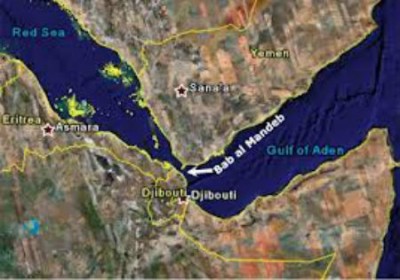
Yemen appears to be edging towards a renewed and more dangerous phase of conflict as the Houthis expand their military operations and seek greater control over strategic coastal and oil-producing areas. Any escalation could extend beyond Yemen’s borders, threatening maritime traffic through the Bab al-Mandab Strait and drawing the regional actors into a wider confrontation.
Reports indicate an intensification of conflicts within Yemen. Following rocket attacks and a ground operation utilising troop-carrying boats, the Houthis seized Zuqar Island in the southern Red Sea, and subsequently, their forces entered the port city of Mocha.[1] These developments have occurred whilst recent conflicts, according to published reports, have left at least 500 people dead and forced nearly 20,000 individuals to abandon their homes.[2]
The Houthis, who began their activities in the 1990s as a local insurgent movement in northern Yemen, have over the past three decades become one of the most important military and political actors in the region. This group, which was initially viewed by many merely as a local armed faction, gradually managed to bring a large part of northern and western Yemen under its control and, through the development of missile and drone capabilities, to become a threat extending beyond the borders of Yemen. The support of the Islamic Republic of Iran has played a significant role in enhancing the military capacity of the Houthis; nevertheless, in recent years, the group has endeavoured to produce part of its armament requirements domestically and to reduce its direct dependence on arms imports.
The principal turning point in the rise of the Houthis was 2014, when the group’s forces entered Sana’a and took control of the capital.
Since then, the Houthis have maintained control over north-western Yemen, including Sana’a and a considerable portion of the country’s western coast. Approximately 70 per cent of Yemen’s population lives in areas under the control or influence of this group.[3] Throughout these years, the Houthis have not confined themselves merely to retaining the areas under their control but have consistently sought to extend their influence into strategic regions, particularly oil-rich areas and the Red Sea coast.
.

Houthis demonstration in Yemen, Sana’a. (Public Domain)
.
In subsequent years, the Yemeni civil war became one of the region’s most complex crises. Saudi Arabia entered the war in support of the internationally recognised government of Yemen, while, in contrast, the Houthis enjoyed the backing of the Islamic Republic of Iran. Despite extensive military operations against the group, the Houthis managed to preserve their military and organisational structure. Eventually, four years ago, a fragile ceasefire was established with the intention of paving the way for a political agreement and an end to the war. In practice, however, this process led to the consolidation of Houthi power and provided them with the opportunity to rebuild their military capability and strengthen their relations with the Islamic Republic of Iran.
During the same period, the Houthis gradually expanded their military capabilities. Once known for their use of small arms, they became equipped with anti-ship missiles, ballistic missiles and increasingly advanced drones, enabling them to strike targets far from the areas under their control. Attacks on Saudi-linked vessels in the Red Sea, assaults on ports and oil facilities, and the use of drones against military targets demonstrated that the Houthis were no longer merely a local insurgent group.
In recent months, signs of a return to war have become increasingly apparent. The Houthis accused the Yemeni government and Saudi Arabia of planning a large-scale offensive. On 30 July, the group’s leader, Abdul-Malik al-Houthi, declared that any escalation by the opposing side would be met with a reciprocal escalation. From mid-July and throughout August, Houthi missile and drone attacks against government positions, Saudi-linked vessels and critical infrastructure intensified. These attacks left dozens dead and wounded, while the Yemeni government forces, in response, stepped up their military operations.
The Houthis appear to view the resumption of the war as an opportunity to pursue several objectives simultaneously. First, they are seeking to pressure Saudi Arabia to pay the salaries of Yemeni government employees and ease restrictions on air and sea travel. Secondly, the Houthis intend to seize the military initiative. If the Yemeni government and Saudi Arabia were indeed preparing for a large-scale operation, the Houthis’ pre-emptive attacks may have been an attempt to disrupt those plans.
The importance of the coastal areas in this equation is considerable. The port of Mocha, located near the Bab al-Mandab Strait, is one of the strategic points targeted by the Houthis. Missile attacks on the port on 15 August forced it to close, and according to reports, the attacks may have been intended to weaken the National Resistance Forces, one of the military groups aligned with the government. Control of this area could now strengthen the Houthis’ position vis-à-vis international shipping and the strategically important Bab al-Mandab Strait. At the same time, attacks on Saudi-linked vessels have led to a sharp decline in the passage of Saudi oil tankers through the Bab al-Mandab.
Another objective of the Houthis is to gain access to Yemen’s oil resources. In early 2022, they came close to capturing the oil-producing areas of Ma’rib, but forces aligned with the government and supported and trained by the United Arab Emirates prevented their advance. The Houthis subsequently sought to disrupt their rivals’ oil exports by attacking oil terminals. Following the government’s resumption of its oil-export programme in July, Houthi attacks on Ma’rib once again intensified. Therefore, even if the group is unable to gain direct control of the oil wells, it can use military pressure to compel the government to share the oil revenues.
In response to these actions, the Yemeni government has also shown signs of preparing for war. Anti-Houthi forces that had previously been embroiled in internal disputes have now adopted a more unified position. The government has also dissolved the structure of the Southern Transitional Council, which was backed by the United Arab Emirates, and placed some of its forces under the control of the national army.[4] Meanwhile, tribal unrest in al-Jawf, an area under Houthi control, has raised hopes among the group’s opponents that its authority may be weakening in some areas.
Nevertheless, the military defeat of the Houthis still appears difficult to achieve. Over the years, they have gained extensive experience in asymmetric warfare and have managed to rebuild their military structure after heavy attacks. Even Israeli strikes last summer that targeted several Houthi civilian leaders failed to remove the group from the battlefield for long. The Houthis also make use of the mountainous terrain of the areas under their control, a network of caves and shelters, and the extensive deployment of landmines to defend their positions.
The group’s military capabilities have also evolved in recent years. The Houthis are now able to manufacture or assemble a substantial proportion of their weaponry using components obtained through routes such as Oman, the United Arab Emirates and the Horn of Africa.[5] Some of their drones can also be manufactured without extensive use of Iranian components. Their ability to counter advanced American drones and their claims to have shot down Turkish-made drones indicate that the Houthis have acquired considerable operational experience.
The widening conflict has also drawn more regional actors into the crisis. Pakistan, which maintains close ties with the Islamic Republic of Iran and has at times played an important role in negotiations between Tehran and Washington, is, on the one hand, committed to supporting Saudi Arabia under the defence agreement known as the ‘Mecca Agreement’ and, on the other, would face domestic repercussions if it entered the war directly. Khawaja Muhammad Asif, Pakistan’s Defence Minister, has warned that an unjustified act of aggression against any member of the agreement, or the spillover of the conflict in Yemen into Saudi territory, could activate its collective-defence mechanism.[6] However, activation of the agreement would not necessarily mean Pakistan’s direct entry into the war against the Houthis. Islamabad could fulfil its commitments by strengthening Saudi Arabia’s air defences, providing intelligence co-operation, maritime protection and other forms of military support. Given Pakistan’s relations with Tehran and the country’s domestic sensitivities, a direct attack on Houthi positions would probably be considered a last resort.
Turkey, another member of the Mecca Agreement, has also condemned the Houthi attacks on Saudi Arabia and reaffirmed its support for the country’s independence and territorial integrity.[7] Unlike Pakistan, however, it has made no mention of activating the pact.
.

Mecca Agreement (Source)
.
Therefore, the return of war to Yemen would not merely represent the revival of an internal conflict; it would constitute a multilayered struggle over political power, oil resources, ports and shipping routes, drawing in the Islamic Republic of Iran, Saudi Arabia, Pakistan, Turkey and other regional actors. Compared with the past, the Houthis now possess greater military capabilities and confidence, while the Yemeni government is seeking, with the support of Saudi Arabia and its allies, to regain the position it has lost. Under such circumstances, any large-scale operation against the Houthis could, rather than bringing a swift end to the crisis, lead to a longer and more regionalised war—particularly because Yemen’s challenging geography, the Houthis’ combat experience and their growing ability to produce and deploy missiles and drones have made making any attempt to defeat the group militarily both costly and uncertain.
*
Click the share button below to email/forward this article. Follow us on Instagram and X and subscribe to our Telegram Channel. Feel free to repost Global Research articles with proper attribution.
Amir Abbas Amirshekari is PhD in International Law (University of Tehran, Iran), Post-Doctoral Research Fellow, University of Johannesburg, South Africa (2014-2016), Advocate (Iran Bar Association). He can be reached at [email protected].
Notes
[1] https://www.bbc.com/news/articles/c4g7vr0lngwo
[2] https://www.france24.com/en/live-news/20260911-yemen-s-houthis-complete-takeover-of-bab-al-mandab-area-govt-official-to-afp
[3] https://www.sipri.org/commentary/blog/2023/yemen-local-grievances-call-internationally-supported-local-solutions
[4] https://www.npr.org/2026/01/09/nx-s1-5672397/yemen-southern-transitional-council-dissolution-leader-uae
[5] https://tcf.org/content/report/from-spoke-to-hub-the-houthis-in-africa/
[6] https://tribune.com.pk/story/2628168/asif-warns-of-makkah-defence-pacts-activation-after-houthi-strikes-against-saudi-arabia
[7] https://aa.com.tr/en/turkiye/turkiye-condemns-houthi-attacks-targeting-saudi-arabia/4051461
Global Research is a reader-funded media. We do not accept any funding from corporations or governments. Help us stay afloat. Click the image below to make a one-time or recurring donation.




















.jpg)


 French (CA)