

.png) 1 week_ago
35
1 week_ago
35

On 27 September 1538, 488 years ago, the Battle of Preveza was fought in the Adriatic Sea.
The Turkish fleet, composed of the naval forces of the Ottoman Empire and the Barbary Regencies of North Africa (Garp Ocakları), defeated the Holy League fleet formed by the Papal States, Venice, Spain–the Holy Roman Empire, and Genoa. This victory ushered in a 33-year period of relative peace with Venice, lasting until the Ottoman defeat at Lepanto in 1571. Meanwhile, rivalry and warfare with Spain and the Knights of Malta continued. The achievement at Preveza must therefore be carefully understood and its lessons carried into the present.
Why Was This Battle Fought?
The naval victory at Preveza was the consequence of the Ottoman Empire’s transformation during the first half of the sixteenth century from a predominantly land-based power into a major maritime power in the Mediterranean. Following Sultan Süleyman the Magnificent’s appointment of Barbaros (Hızır) Hayreddin Pasha as Kapudan Pasha (Grand Admiral) in 1534, the naval power of the Barbary Regencies in North Africa became integrated into the strategic framework of the Ottoman state. The Ottoman advance toward the Aegean islands and the central Mediterranean increasingly threatened Venice’s maritime trade and control over the islands, while simultaneously challenging the Habsburg order of Charles V.
.

Barbarossa Hayreddin Pasha defeats the Holy League of Charles V under the command of Andrea Doria at the Battle of Preveza (1538) (Public Domain)
.
The decisive turning point came with the Corfu Campaign of 1537, followed by Barbaros’ operations against islands under Venetian rule. Seeking to halt the Ottoman advance, Pope Paul III initiated the formation of a major Holy League fleet, whose command was entrusted to Andrea Doria of Genoa, one of the most renowned European admirals of his time.
Preveza, therefore, was far more than a personal contest between Barbaros and Doria. It was the maritime confrontation of the broader Ottoman–Habsburg/Venetian struggle for power, a contest that would determine within whose strategic sphere of influence the future Mediterranean would lie.
What Happened in the Battle?
On 27 September 1538, the two fleets confronted each other in the waters around Preveza. Although sources differ regarding the exact number of ships involved, there is broad agreement that the Holy League fleet was significantly larger than the Ottoman fleet. Barbaros’ forces around 122 galleys, however, possessed a more coherent command structure. The ability of the Ottoman galleys to maneuver under oar power provided a significant advantage in mobility and freedom of maneuver under conditions of light wind. Hızır Hayreddin also made effective use of the coastal geography, shallows, and wind conditions around Preveza, while the divergent interests and priorities of the Venetian, Papal, Spanish, and Genoese contingents under Doria’s command constituted one of the alliance’s principal weaknesses.
On 27 September 1538, rather than remaining confined within the Gulf of Preveza, Barbaros took his fleet into the open sea and seized the initiative. During the battle, which lasted approximately five hours, the highly maneuverable Ottoman galleys proved effective against the larger Christian vessels, which were more dependent on wind conditions. As Barbaros maneuvers threatened the cohesion of Doria’s forces, Andrea Doria chose to withdraw his fleet toward Corfu rather than continue a general fleet engagement. Preveza, therefore, was not a battle like Trafalgar in 1805, in which the enemy fleet was comprehensively destroyed. It was a strategic victory in which Hızır Hayreddin Pasha frustrated the attempt of a coalition fleet far larger than his own to destroy the Ottoman navy and compelled it to withdraw from the field of battle.
Thus, the great coalition assembled by Europe failed to roll back Ottoman naval power. On the contrary, Ottoman freedom of action in the Aegean, at the approaches to the Adriatic, and across the eastern and central Mediterranean was strengthened. Military pressure on Venice continued, and the peace settlement of 1540 recognized a significant part of the Ottoman gains. While Barbaros military reputation in Europe rose dramatically, an even more profound transformation was taking place in Ottoman history. The great land power of the age of Süleyman the Magnificent was joined by the maritime power of Barbaros. The natural imperative of a peninsula geography had thus been fulfilled. the Ottoman Empire had become an imperial power capable of exercising power simultaneously on the continent and at sea.
The Relationship Between Victory and Maritime Power
This victory was not merely another naval battle in Turkish history. Preveza was historical proof of the magnitude of power that the Turks of Anatolia could generate when they understood the true character of the geography they inhabited and combined the opportunities offered by that geography with the reason, science, technology, and maritime culture of their age. 488 years later, with the Blue Homeland, we once again confront the same geopolitical reality. Anatolia is a peninsula, and a peninsula geography becomes the geography of a great power only to the extent that it integrates itself with the sea. To interpret Anatolia solely through the land is to relinquish half of the strategic potential of this unique geography.
Anatolia is a great peninsula extending along an east–west axis. Through the Turkish Straits, it connects the Black Sea to the Mediterranean through the Balkans, Europe to Asia; and through the Eastern Mediterranean, the Suez and Indian Ocean system to the interior of Eurasia. A state established upon such a geography expands its strategic potential to the extent that it turns toward the sea, to the extent that it turns away from the sea, it loses the strategic potential inherent in its own geography. History is filled with examples. Rome was able to transform the geographical advantages of the Italian Peninsula into Mediterranean power only after defeating Carthage at sea. Portugal and Spain, situated on the Iberian Peninsula, became empires of global scale when they turned toward the oceans. Britain combined its insular geography with maritime power to build a global empire. The geopolitical law governing Anatolia is no different. Geography alone, however, does not create power. Geography is potential; it is human reason, science, technology, institutions, and strategy that transform that potential into power.
The Ottoman Empire achieved precisely this in the sixteenth century. The year 1453 represented far more than the conquest of Constantinople. As the geopolitical discontinuity between Anatolia and the Balkans was eliminated, the Turks established themselves at the center of the Black Sea, Aegean, and Mediterranean system. From the reign of Mehmed the Conqueror onward, the importance of maritime power came to be understood with increasing clarity. The decisive breakthrough, however, occurred in the sixteenth century, when the centralized power of the Ottoman state was combined with the exceptionally dynamic maritime culture of the Barbary Regencies of North Africa.
The Fleet of the Garp Ocakları (Barbary Regencies)
The Fleet of the Barbary Regencies was initially established in Algiers and Tunis by the brothers Oruç and Hızır (Barbaros), independently of the Ottoman Empire. After 1518, however, it came under the control of Istanbul and maintained a naval presence primarily in the central Mediterranean, at times extending into the western Mediterranean and even the Atlantic. The Libyan regencies later became part of this maritime structure. At the operational and tactical levels, the Fleet of the Barbary Regencies was more effective than the Ottoman Navy. Many of the most celebrated seamen in Ottoman naval history emerged from the Barbary Regencies. The great majority of these mariners came from the Aegean and Mediterranean coasts of Anatolia and from the province of Karaman. Although their ranks also included seamen of Greek, Ragusan (Dubrovnik), Maltese, Venetian, Genoese, Dutch, Irish, Scottish, and English origin, the commanders and principal leaders of the regencies were Anatolian Turks. Those who today bear the surnames Kuloğlu or Koloğlu are the present-day descendants of these seafaring ancestors.
.

A Sea Fight with Barbary Corsairs by Laureys a Castro, c. 1681 (Public Domain)
.
One of the principal reasons why these seamen were more advanced than their Ottoman counterparts was that they remained relatively removed from the political rivalries of the imperial court and from the corrosive environment of bribery, patronage, and favoritism associated with primitive accumulation. The most effective period of cooperation between the Fleet of the Barbary Regencies and the Ottoman Navy was experienced between Preveza and Lepanto.
Oruç Reis, Hızır Reis, Turgut Reis, and the generations of Barbary seamen they trained were not merely warriors. They were mariners who lived the Mediterranean and understood its winds, currents, harbors, islands, trade routes, and rivals. The Barbary Regencies were also remarkably pragmatic institutions by the standards of their time. What mattered was not so much where knowledge and talent came from, but whether they were useful. It was largely this rational approach that generated their success at sea.
The Golden Age of Turkish Maritime Power
When Hızır Hayreddin (Barbaros Hayreddin) Pasha entered the service of Sultan Süleyman the Magnificent in 1534, the state capacity of Istanbul was combined with the operational experience of the Barbary Regencies. 4 years later came Preveza. The period that followed Preveza marked one of the highest points ever attained by Turkish maritime power in world politics.
The true magnitude of the victory became evident in the developments that followed. In 1541, Charles V’s attempt to eliminate Algiers ended in failure. From 1542 onward, within the framework of the Ottoman alliance with France, the Ottoman Navy deployed a major force of 136 vessels into the western Mediterranean. Nice was besieged in a joint operation with the French Navy, and the Ottoman fleet wintered at Toulon. An empire centered in Istanbul was no longer merely defending the Aegean and the eastern Mediterranean; it was now shaping the balance of power in the western Mediterranean. In 1551, Turgut Reis captured Tripoli. Together with Algiers and Tunis, this further strengthened the Turkish maritime presence in North Africa. The period between 1543 and 1560 was one in which Turkish naval power was felt across virtually the entire Mediterranean.
The Djerba campaign of 1560 was perhaps one of the most striking demonstrations of this capacity. Under the command of Piyale Pasha, the Ottoman Navy sailed from Istanbul and reached the Tunis–Djerba region in approximately twenty days, where it achieved a decisive result against the Spanish forces. Considering the distance involved and the fact that the galleys of the period depended primarily on oar power supplemented by limited sail power, this represented an extraordinary operational tempo. The pursuit and destruction of the retreating Spanish fleet was also of considerable significance in the history of naval warfare.
When Piyale Pasha’s victorious fleet returned to the Golden Horn on 1 October 1560, the scene witnessed by the Flemish diplomat Busbecq captured the zenith of Ottoman maritime power. In his view, if there had ever been a moment when a state could claim complete command over a sea that by its very nature resisted domination, that moment had arrived. It is no coincidence that the zenith of the Ottoman Empire’s political and military power coincided with the zenith of Turkish maritime power.
Reason, Science, and Maritime Power
The success of Turkish maritime power in the sixteenth century rested on far more than courage or heroism. The Ottoman Empire had not yet become detached from the military and maritime technologies of its age. In cannon casting, shipbuilding, cartography, navigation, fortification, and logistics, no insurmountable technological gap had yet emerged between the Ottoman Empire and its rivals. Piri Reis’s world maps were products of precisely such an intellectual environment.
A dynamic maritime ecosystem had developed among the shipyards of Istanbul, the Barbary Regencies, the Aegean islands, and the ports of the Mediterranean. The state had not yet retreated into a rigid intellectual closure in its approach to the knowledge and human resources it required. If knowledge was useful, it was employed; if technology was needed, it was acquired or developed; and talented seamen could be incorporated into the system regardless of their origins.
The Century-Long Delay in the Transition from Galley to Galleon
Here we arrive at one of the most important turning points in Turkish history. Behind the rise of the sixteenth century stood a pragmatic conception of the state that did not treat reason and faith as mutually antagonistic. The problem was not religion itself. The problem was the gradual narrowing, in later periods, of the space accorded to reason, critical inquiry, science, and merit. As transmitted knowledge increasingly took precedence over rational and scientific knowledge, obedience began to replace inquiry, and conservatism began to replace innovation. It was within this intellectual environment that the foundations of the maritime retreat were laid.
At precisely this time, world seafaring was undergoing a major technological transformation. The traditional warship of the Mediterranean was the galley. Propelled by oars, it was less dependent on the wind, and the outcome of battle was often determined by boarding the enemy vessel and engaging its fighting men in close combat. In the Atlantic world, however, a different type of ship and an entirely different culture of warfare were emerging: the galleon, with its high freeboard, large sail area, and heavy broadside guns. This was not simply a new vessel replacing the galley. It represented an entirely new system of warfare.
In the galley, human muscle was the principal source of propulsion. The galleon, by contrast, required the ability to read the wind, manage sails, determine courses according to changing wind conditions, make use of astronomy and charts, and master gunnery and ballistics. In other words, warfare at sea was increasingly shifting from muscular power to the power of knowledge. While the European states expanding into the Atlantic integrated shipbuilding technology with astronomy, mathematics, cartography, gunnery, and the science of navigation, the great challenge confronting the Ottoman Empire was whether it could adapt to this transformation.
The Disaster at Lepanto
The defeat at Lepanto on 7 October 1571 was, in this respect, a warning. Only thirty-three years after Preveza, the Ottoman Navy suffered a major catastrophe. The fleet was commanded by Müezzinzade Ali Pasha, who did not come from a professional seafaring background. Within a matter of hours, the battle turned into a disaster in which tens of thousands of men were lost. The Ottomans were able to rebuild their ships within a relatively short period. Yet the true loss was not the ships themselves; it was the human capital that embodied generations of accumulated maritime experience. Reis, captains, gunners, craftsmen, and seamen were lost within a few hours.
Nevertheless, it would be incorrect to regard Lepanto as the moment when Ottoman maritime power came to an end in a single day. The Ottoman Empire remained a major naval power in the Mediterranean for a considerable period thereafter. Lepanto was, however, a warning of the profound transformation that was approaching.
.

The Battle of Lepanto (Public Domain)
.
The Impact of Conservatism on Maritime Power
The deeper danger lay in the realms of technology and intellectual outlook. The destruction of Taqi al-Din’s Istanbul Observatory in 1580, following the religious and political struggles of the period, is therefore one of the most striking symbols in Turkish history. Even more tragic was the use of naval artillery in its destruction. The warships of a state were firing upon the very institution in which astronomical knowledge was being produced that could, in the future, enable those same warships to navigate the high seas.
While Europe was integrating astronomy, mathematics, shipbuilding, gunnery, and navigational science into a single technological system, the Ottoman Empire increasingly began to fall outside this scientific transformation. The approximately century-long delay in the transition from galley to galleon was therefore not merely a delay in ship technology. It was, in essence, a delay in intellectual transformation.
Building a galleon required far more than constructing a large ship. It required the training of captains, officers, sailors, gunners, cartographers, and navigation specialists capable of operating it; and behind them, it required mathematics, astronomy, hydrography, and a strong educational system. The ultimate price of turning away from science was paid at sea.
Retreating into Anatolia as We Retreated from the Sea
The centuries that followed repeatedly demonstrated the same historical law. Çeşme in 1770, Navarino in 1827, and Sinop in 1853 were not merely naval losses. Each major maritime disaster accompanied a further contraction of Ottoman geopolitics. By the end of the nineteenth century, the confinement of the fleet to the Golden Horn marked the culmination of this process. The Ottoman Empire entered the twentieth century without a powerful and operationally effective navy. North Africa was lost, and the Aegean islands slipped from Ottoman control. In 1911, Italian warships were able to advance as far as the entrance to the Çanakkale Strait. During the Balkan War, Greece established control of the sea and occupied the Aegean islands. In 1915, the world’s most powerful navies arrived before the Çanakkale Strait. On 15 May 1919, the Greek army landed at İzmir from the sea. History was repeatedly demonstrating the same reality: as the Turks retreated at sea, they were forced back into a defensive posture in Anatolia.
Breaking the Chain
It was Mustafa Kemal Atatürk who broke this chain. His order to his armies on 1 September 1922— “Armies, your first objective is the Mediterranean. Forward!”—was, in this sense, far more than a military order of pursuit. It was an answer to the geopolitics of Sèvres, which sought to sever the Turks from the seas. The Turks were reaching the sea once again.
The Navy of the Republic was rebuilt amid severe scarcity and limited resources. With the Montreux Convention Regarding the Regime of the Straits in 1936, Turkish sovereignty over the Turkish Straits was consolidated. In 1938, with the Hatay Wedge, the Gulf of İskenderun came under the regime of internal waters. The Cyprus Peace Operation of 1974 created the most important geopolitical barrier against the encirclement of Türkiye from the south in the Eastern Mediterranean. During the Kardak Crisis of 1996, Greece was reminded of Türkiye’s determination to defend and maintain its presence in the Aegean. Step by step, the Republic was relearning the maritime geopolitics that had been lost during the final period of the Ottoman Empire.
Blue Homeland
In the twenty-first century, the name given to the Turks’ reunion with the sea became Blue Homeland—Mavi Vatan. Blue Homeland is not merely a geographical concept referring to Türkiye’s maritime jurisdiction areas. From its inception, it emerged as a symbol, a concept, and a doctrine. Above all, it represents the Turkish nation’s ideal of becoming a maritime nation. It is precisely here that the historical connection between Preveza and Blue Homeland is established.
The essence of what Barbaros achieved in 1538 and what Türkiye must achieve in the twenty-first century is the same: to combine the unique geographical potential offered by Anatolia with the reason, science, technology, and highly trained human capital of the age in order to build a powerful, independent, and maritime state.
The technology of the age has, of course, changed. In the world of Barbaros, the principal components of maritime power were galleys, cannon, shipyards, oarsmen, levends, and highly trained seafaring manpower. Today, they include submarines; unmanned aerial, surface, and underwater vehicles; long-range precision weapons; cruise and ballistic missiles; hypersonic systems; electronic warfare; artificial intelligence; cyber power; satellite reconnaissance and surveillance networks; and seabed systems.
Technology has changed; geopolitics has not. Anatolia remains in the same geography. The Turkish Straits remain the key to the Black Sea. The Aegean remains Anatolia’s Western Front. Cyprus remains the most important strategic island to the south of Anatolia. The Eastern Mediterranean still opens through Suez into the Red Sea and the Indian Ocean. Türkiye remains a peninsula state surrounded by seas on three sides.
For this reason, on the 488th anniversary of Preveza, the fundamental question is not how many ships Barbaros sank or how many vessels were under Andrea Doria’s command. The real question is whether Türkiye can once again combine the great-power potential offered by its geography with the reason, science, technology, production capacity, and human capital of its age. The enduring legacy of Preveza lies in the answer to this question.
Our ancestors achieved precisely this in the sixteenth century. They interpreted geography correctly, remained connected to the technology of their age, built shipyards, trained seafaring manpower, applied the principle of merit, and combined centuries of Mediterranean maritime experience with the power and resources of the state. As a result, within only a few decades they became one of the decisive powers of the Mediterranean.
The decline began when this relationship was reversed. As reason and science lost their primacy, as technological developments could no longer be followed, as merit gave way to conservatism and dogma, and as maritime affairs were pushed away from the center of statecraft, supremacy at sea gradually eroded. The decline of maritime power did not merely mean the weakening of the navy. Over time, it produced geopolitical consequences extending to the loss of islands, coastlines, sea lanes, and ultimately parts of the homeland itself. The last five centuries of Turkish history offer a clear lesson: a peninsula state that retreats at sea also loses strategic depth on land.
Blue Homeland is therefore not merely the name given to today’s struggle over maritime jurisdiction areas. It is a strategic conclusion drawn from centuries of historical experience. We should look to Preveza not merely to take pride in our past, but to shape our future. Barbaros’s legacy is not his galleys; his true legacy is his ability to understand his age and transform the instruments of that age into state power. Piri Reis’s legacy is not merely the maps he drew; it is the transformation of knowledge into strategic power. Atatürk’s legacy is not merely the reconstruction of the Navy of the Republic; it is the establishment of reason, science, and independence as the compass of the state.
The future of Blue Homeland depends upon the same understanding. Türkiye’s transformation into a maritime nation cannot be reduced to possessing more warships. The navy is the indispensable armed component of sea power, but maritime power is much broader. Shipyards, ports, the merchant fleet, maritime transportation, fisheries, marine sciences, oceanography, maritime law, marine technologies, seabed resources, energy, the polar regions, space, and the oceans are all components of the same strategic whole. A state’s true maritime power emerges from the totality of the economic, military, scientific, technological, legal, and cultural relationship that its nation establishes with the sea.
This was the foundation of Preveza, and it remains the foundation of Blue Homeland 488 years later. Throughout this long historical process, the Turks expanded during periods when they turned toward the sea; when they turned away from it, they retreated toward Anatolia. The Republic, particularly during the Atatürk era, redirected this historical orientation toward the sea. Today, Blue Homeland carries that maritime transformation into the geopolitical and technological conditions of the twenty-first century.
Anatolia is a peninsula. But a peninsula becomes the geography of a great power only when it is integrated with the sea. Geography alone is not destiny; it is strategic potential. Whether that potential becomes power depends upon a nation’s ability to combine geography with reason, science, technology, merit, production, institutions, and maritime culture.
The long periods during which the Turks remained distant from the sea, the persistence of a powerful land-centric tradition of statecraft extending from the later centuries of the Ottoman Empire into the Republican era, and the limited representation of naval officers and maritime professionals at the highest levels of state decision-making make Türkiye’s re-emergence with a strong doctrine of maritime geopolitics all the more significant. What confronts Türkiye’s rivals today is therefore not merely a Turkish Navy undergoing expansion and technological transformation, but a Türkiye seeking to rediscover the sea in its economic, military, legal, scientific, technological, and cultural dimensions.
At the forefront of Blue Homeland stands the Navy of the Republic, representing and defending the Turkish nation at sea. Yet no navy, however powerful, can by itself create a maritime nation. The enduring foundation of Blue Homeland must be a Türkiye that builds ships, operates merchant fleets, develops ports, explores the oceans, advances marine science and technology, understands maritime law, educates generations of seafarers, and permanently places the sea within the strategic consciousness of both the state and the nation.
One of the fundamental objectives of Blue Homeland is therefore for Türkiye to reconcile with its own geography. Türkiye’s transformation into a maritime nation is not a temporary foreign-policy preference, but a long-term imperative imposed by geography and historical experience. State policies may change, governments may come and go, and the international system may assume different forms, but Anatolia’s character as a peninsula will not change. The course of history cannot be stopped. Türkiye will become a maritime nation as a consequence of the imperatives of its geopolitics and sociology.
It is appropriate to conclude this long historical journey with the striking observation of a European who, in the seventeenth century, viewed the maritime potential of the Turks from the outside. The words attributed to the British ambassador Ricaut de la Marlinière centuries ago still deserve reflection today:
“To conceal their negligence and excuse their failures in this matter, the Turks say that God gave the seas to the Christians and the lands to the Muslims. For the common interest of Christendom, we should wish that they never awaken from this deep sleep; for if the Turks should one day resolve to become powerful at sea and apply themselves to it as they ought, let no one doubt that the whole world would bow before them.”
This is also what the 488-year historical trajectory from Preveza to Blue Homeland tells us. The future of the Turks lies not only in Anatolia, but also in the seas surrounding Anatolia. The historical task is not merely to return to the sea, but this time never again to turn away from it.
*
Click the share button below to email/forward this article. Follow us on Instagram and X and subscribe to our Telegram Channel. Feel free to repost Global Research articles with proper attribution.
This article was originally published on Mavi Vatan.
Ret Admiral Cem Gürdeniz, Writer, Geopolitical Expert, Theorist and creator of the Turkish Bluehomeland (Mavi Vatan) doctrine. He served as the Chief of Strategy Department and then the head of Plans and Policy Division in Turkish Naval Forces Headquarters. As his combat duties, he has served as the commander of Amphibious Ships Group and Mine Fleet between 2007 and 2009. He retired in 2012. He established Hamit Naci Blue Homeland Foundation in 2021. He has published numerous books on geopolitics, maritime strategy, maritime history and maritime culture. He is also a honorary member of ATASAM.
He is a Research Associate of the Centre for Research on Globalization (CRG).
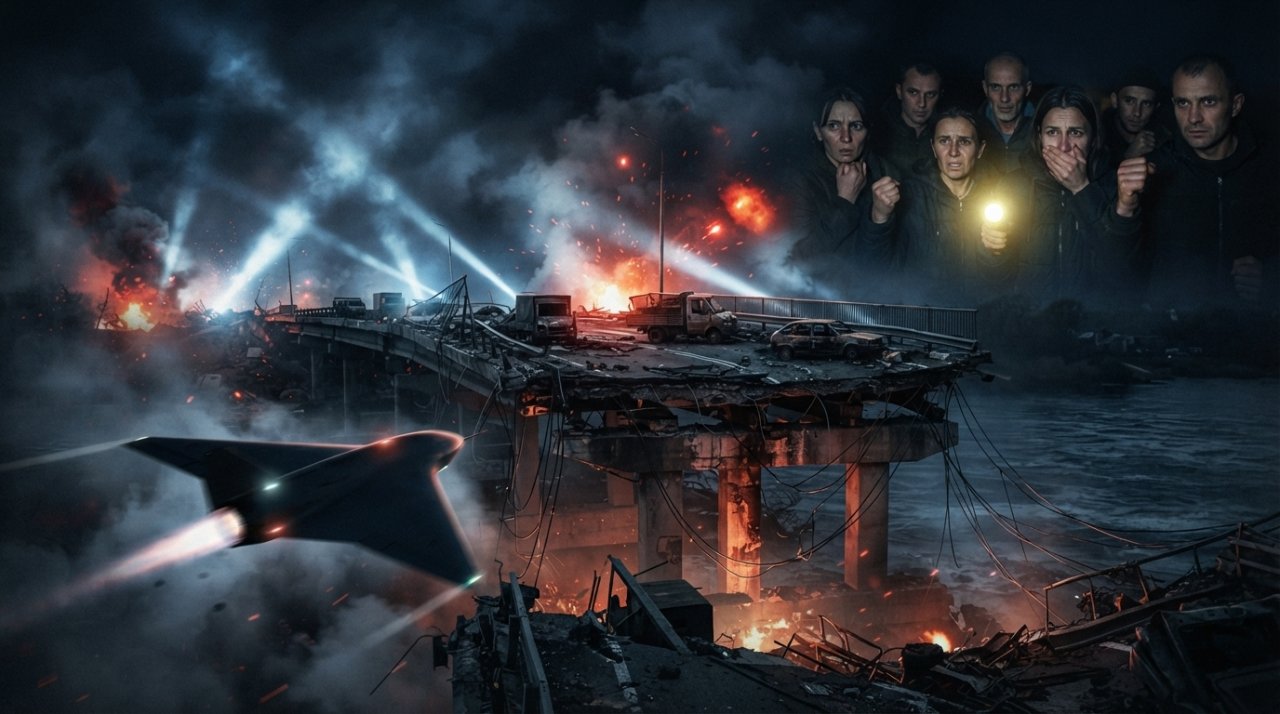
Featured image is AI-generated
Global Research is a reader-funded media. We do not accept any funding from corporations or governments. Help us stay afloat. Click the image below to make a one-time or recurring donation.






















.jpg)


 French (CA)