

.png) 3 month_ago
57
3 month_ago
57

Forgery
The Yugoslav Partisans, led by Josip Broz Tito, waged a patriotic struggle to liberate the country from foreign occupiers, and the Yugoslav Partisans were the only ones to wage this struggle
To read this article in the following languages, click the Translate Website button below the author’s name.
Српски, Farsi, Hebrew, Русский, Español, Portugues, عربي, 中文, Français, Deutsch, Italiano, 日本語, 한국어, Türkçe. And 40 more languages.
Factual Situation
The Partisan movement of the Communist Party of Yugoslavia (CPY/KPJ) under the leadership of its General Secretary Josip Broz Tito (of the Roman Catholic Slovenian/Croatian ethnic background) fought in principle for the expulsion of foreign occupation formations from Yugoslavia, but this literally proclaimed struggle was not the main war goal of this movement, but only an incidental means for the realization of the basic political goal of the CPY, which was the seizure of political power over the entire Yugoslavia through armed revolutionary struggle, in order to later, in the post-war period, achieve the ultimate programmatic goal of the CPY of the political-economic-ideological reorganization of Yugoslavia on primarily anti-Serbian and pro-Soviet framework.
In the factual sense of the word, Tito’s Partisans did not fight against the foreign occupier at all during the entire war, and least of all against the Roman Catholic Croat-Muslim Bosniak Ustashi and Croat Home Guard (Domobrani), but only and exclusively against the royalist pro-Yugoslav Ravna Gora Movement of General Draža Mihailović. This tactical strategy of the communist leadership of the Partisan movement is completely understandable and comprehensible if we know that the main military-political goal of the communists in Yugoslavia was to seize power in the entire country, and this could only be achieved in one way – through military victory over the “enemy“.
However, here a crucial question arises: who were the enemies for the Yugoslav communists that needed to be defeated in order to come to power? From their point of view, the military-political leadership of the Yugoslav communists set the correct strategy of the fight at the very beginning of the war into which they entered after the directive from Moscow, i.e. the Comintern after June 22, 1941, and they adhered to this strategy until the very end of the war. The essence of this, as it turned out to be successful, strategy was reduced to the correct conclusion that the war fate of the Balkans and Yugoslavia was not decided on the Balkans and Yugoslavia themselves, but on the main world fronts, and especially on the Eastern Front, where the main sponsor of the Yugoslav Partisans – the USSR – fought.
.

Chetnik representatives meeting in Bosnia with Ustaše and Croatian Home Guard officers of the Independent State of Croatia (Public Domain)
.
Therefore, the Supreme Headquarters with the Politburo of the Central Committee of the Communist Party of Yugoslavia of the Yugoslav Partisans pinned all their hopes on the more or less realistic tactical assumption that Germany would lose the war in the East and, accordingly, that the Soviet Red Army would reach the Balkans and Yugoslavia before the Western Allies, which would mean a de facto victory for the revolutionary communists who would thus seize power in post-war Yugoslavia, as was the case with the eastern part of Central Europe in 1945.
In the above context, no offensive tactics against the Germans and Italians suited the Yugoslav Partisans, since both of them were leaving the territory of Yugoslavia after the Red Army’s breakthrough from the East, which actually happened. Therefore, for the Communist Party of Yugoslavia (CPY/KPJ), the main and only problem was to defeat the only internal enemy that stood in the communists’ way to power and was capable of defeating them on their fanatical path to that power, which was the Ravna Gora movement or the Yugoslav Homeland Army (YHA/JVuO). Therefore, all offensive actions of the Partisans were directed exclusively at the Chetniks of Draža Mihailović, while against the Germans, Italians and armed formations of the Independent State of Croatia, an exclusively defensive struggle was waged if they were attacked by them. An offensive war strategy against the Partisans (and Chetniks) was exclusively requested by Berlin, so that local Germans, Italians and Croatian-Bosniak Ustashi entered into direct battles against the Partisans exclusively at the request, i.e., pressure, from Berlin, while the Ustashi, in alliance with the Partisans, fought an offensive war on a voluntary-agreement basis only against the Chetniks/the Yugoslav Homeland Army.[1]
Throughout Yugoslavia, during the entire period of World War II, the only real fighters against the foreign occupiers and the armed formations of the Nazi Independent State of Croatia were members of the Yugoslav Army in the Fatherland (the Yugoslav Homeland Army or the Chetniks of General Draža Mihailović). Their military-operational strategy was based on the plan that a decisive frontal-direct conflict with the Germans and Italians in the form of a nationwide (Serbian) uprising could only be entered into after the German defeat on one of the main war fronts and then with the Anglo-American military landing in the Balkans, with the hope that this would be on the Yugoslav Adriatic coast.
Until that time, the Yugoslav Homeland Army would be organizationally and militarily preparing for the final fight with the occupying armies and would only cause damage to the occupier through guerrilla actions, especially on its main supply line to the Wehrmacht’s North African army – the Morava-Vardar Valley. This tactic would avoid the shooting of a large number of (Serbian) civilians based on Hitler’s order for Serbia 100:1 (for killed German soldier) and 50:1 (for wounded German soldier), as well as causing greater losses to the Yugoslav Homeland Army by a significantly stronger occupier.[2]
However, in the end it turned out that the Yugoslav Homeland Army lost the war against the communists primarily because they did not cooperate as Partisans with the occupier, who was both ready and willing to cooperate with this type of cooperation, despite the fact that Berlin, i.e. Hitler, was fiercely opposed to any cooperation with either the Partisans or the Chetniks. Draža himself, primarily for moral and political reasons, never allowed such cooperation and fought against it wholeheartedly, and on November 11, 1941, in the village of Divci (West Serbia), he even rejected a favorable proposal from the German command in Belgrade about a joint German-Chetnik collaboration against the Partisans. This erroneous and, above all, unpragmatic tactic ultimately cost him his life, and the Serbs another anti-Serbian Yugoslavia after 1945, from which they have not sobered up to this day.
It turns out that many, if not most, of the successful Chetnik guerrilla actions against German forces and facilities during the war were[3] for political reasons, attributed by both the Soviets and the British to Tito’s Partisans, from whom an incorrect image of Yugoslav patriots, freedom-lovers and, most inaccurately, fighters against the occupiers of Yugoslavia was created. Thus, Churchill and the BBC propagated that Tito allegedly blocked 20 German divisions in Yugoslavia, which would otherwise have been on the North African or Eastern Fronts, while in reality there were only three German divisions in Yugoslavia during the war, and they were incomplete.[4]
*
Click the share button below to email/forward this article. Follow us on Instagram and X and subscribe to our Telegram Channel. Feel free to repost Global Research articles with proper attribution.
Dr. Vladislav B. Sotirović is a former university professor in Vilnius, Lithuania. He is a Research Fellow at the Center for Geostrategic Studies. He is a regular contributor to Global Research.
Notes
[1] For more information on the open and direct cooperation between Broz’s Partisans and Pavelić’s Ustashi, see: Владислав Б. Сотировић, „Saradnja Brozovih partizana i Pavelićevih ustaša“, На одру титографије. Збирка деветнаест чланака [“Cooperation between Broz’s Partisans and Pavelić’s Ustashi”, On the Stage of Titography. A Collection of Nineteen Articles], Виљнус: Штампарија Литванског едуколошког универзитета „Едукологија“, 2012, 102−130; For information on the collaboration of Yugoslav Partisans with the Germans, Ustashi, and Albanians, see: Милослав Самарџић, Сарадња партизана са Немцима, усташама и Албанцима [Partisan collaboration with Germans, Ustashi and Albanians], Крагујевац: Погледи, 2006.
[2] On the warfare strategy of the Yugoslav Homeland Army, and especially on the guerrilla strategy, see: Коста Николић, Историја Равногорског покрета 1941−1945. Књига прва [History of the Ravna Gora Movement 1941-1945. Vol. I], Београд: Српска Реч, 1999, 60−66; Милош Аћин Коста, Дража Михаиловић – Апостол слободе [Draža Mihailović – Apostle of Freedom], Вашингтон, 1993, 40. The fight of Mihailović’s Chetniks with all available means was envisaged only against the Croat-Bosniak Ustashi for understandable and moral-vital reasons of protecting the bare lives of Serbian civilians in the territory of the Independent State of Croatia: Архив Војно-историјског института [Archives of the Military History Institute], Четничка архива, Београд, 16-1-2; Сергије Живановић, Ђенерал Михаиловић и његово доба. Трећи српски устанак [General Mihailović and His Era. The Third Serbian Uprising], I, Чикаго, 1962, 75.
[3] For information on the active fighting of the Yugoslav Homeland Army against the Germans and the Ustashi, see: Милослав Самарџић, Борбе четника против Немаца и усташа 1941−1945 [The Chetniks’ Struggles Against the Germans and Ustashi 1941‒1945], I−II, Крагујевац: Погледи, 2006.
[4] For more on Churchill’s and Roosevelt’s surrender of Yugoslavia to Josip Broz Tito and the betrayal of Draža Mihailović, see: Роберт Макдауел, Стрељање историје. Кључна улога Срба у Другом светском рату [Robert McDowell, Shooting History. The Crucial Role of the Serbs in World War II], Београд: Поета−Рад, 2012, 140−221.
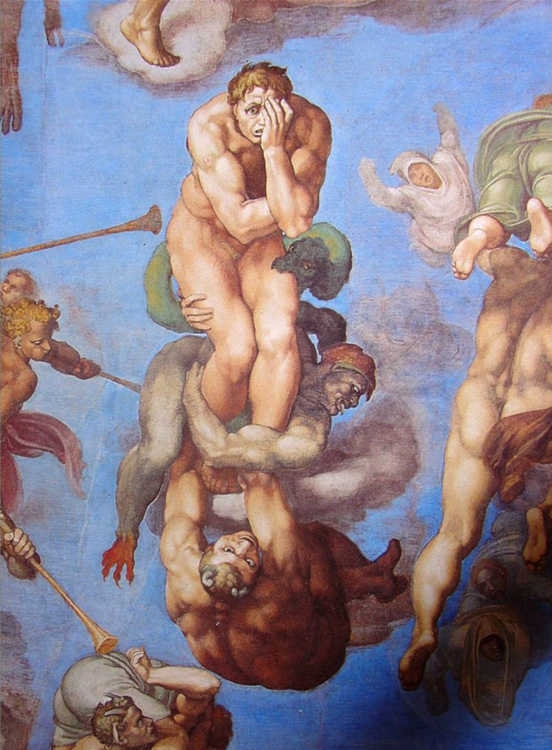
Featured image is from the Public Domain
Global Research is a reader-funded media. We do not accept any funding from corporations or governments. Help us stay afloat. Click the image below to make a one-time or recurring donation.


















.jpg)


 French (CA)