

.png) 6 day_ago
60
In October 2007 at the height of the US occupation of Afghanistan, the New York Times, a prominent mouthpiece of the Central Intelligence Agency (CIA) of the United States, ran an article by David Rohde titled “Anthropologists help U.S. Army in Afghanistan and Iraq”.
In essence, Rohde’s article highlighted an experimental Pentagon program of pairing American and Western anthropologists and other social scientists with American combat units in Afghanistan and Iraq to foment ethnic and sectarian divisions within the local Afghan and Iraqi societies.
The goal was to embed ethno-religious divisions to foment forever civil war by turning communities and insurgencies into mutually antagonistic groupings, akin to the CIA’s financing of clan factions and warlords in Somalia.
However, the CIA’s reliance on ethnic and religious divisions as permanent civil wars failed in Afghanistan and Iraq to safeguard American interests, despite working in Somalia until the arrival of Turkiye in 2011.
In Afghanistan, the Pashtuns and other ethnic groups united in a broad national resistance to the US Occupation. Unexpectedly, the CIA and the American government found Tajiks, Hazara and Uzbeks being welcomed and accommodated by the Pashtun-majority Taliban. The hoped for civil war among Afghans never materialized in post-America Afghanistan.
Similarly, the bloody civil war raging in Iraq from 2005-2020 failed to become a permanent division of the country. When the Iranian backed Shia-majority central government solidified power inside Iraq, it began to incorporate Sunni and Kurdish opposition elements in the Western and Northern areas. Today, the United States under President Donald J. Trump has been forced to withdraw its forces from Iraq, while the Iraqi government remains a staunch ally of Iran. Incredibly, the Islamic Revolutionary Guards Corps (IRGC) now occupies the very same abandoned United States military installations throughout Southern and Central Iraq without opposition from the Iraqi government and its citizens.
.

Iraqi parade celebrating the withdrawal of US military forces. (CC BY-SA 4.0)
.
In Yemen, the CIA has not been able to contain the Zaydi Shia Houthi ascendancy by fomenting Sunni-Shia divisions and more recently hoping for a so-called North-South Yemen partition.
In fact, the CIA understanding of internal divisions in non-Western societies has always been fundamentally wrong.
During the long Vietnam War (1955-1975), the CIA relied on the idea that South Vietnam was a distinct society, a country and people who were more Westernized and would always be in a permanent civil conflict with traditionalist North Vietnam. Instead, the victorious North Vietnamese and their South Vietnamese allies, showed that the struggle against the United States was a nationalist struggle, similar to that against the French before the arrival of the first American G.I. Opposing the United States occupation was an inherent expression of Vietnamese nationalism, an identity rooted in a shared history and culture more potent than the supposed loyalty of a few extremist anti-communist Westernized Vietnamese politicians.
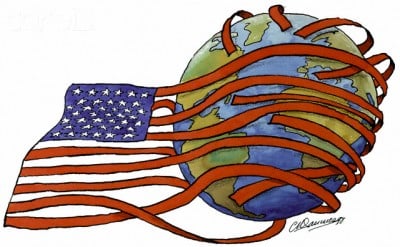
The CIA fomenting and accentuating internal ethnic and religious conflicts in the Muslim world is as old as American apple pie; always a fundamental cornerstone of Western imperialism’s age-old divide and conquer stratagem.
Divide and conqueror was a state policy pursued by British, French and Spanish imperialists to effectively carve up the Americas, Africa and Asia during the 18th, 19th and early 20th centuries. European powers actively turned indigenous populations inward against each other. Among proponents of divide and conqueror were such luminary warmongers as Prime Minister Benjamin Disraeli– who used it to justify the two failed Anglo-Afghan Wars; the infamous Cecil John Rhodes excuse for pillaging of Southern Africa; Winston Churchill’s imperialist journalism during the Mahdi Uprising in the Sudan and humiliating British defeat in Afghanistan. And of course, dividing Somali into clans was a central policy pursued by multiple British Prime Ministers who were in charge during the Mad Mullah War (the Somaliland Campaign / Dervish War), which lasted from 1900 to 1920.
When the United States assumed the mantle of Western imperialism from the British after the Suez Crisis during the Cold War (1947-1991), the CIA sought to fine tune the divide and conquer stratagem within multiple bloody African and Asian conflicts from Angola to Vietnam. The CIA began to study and identify the various sub-national groups and grievances within African, Asian and Arab societies- highlighting any population that could be turned to fight one another permanently instead of the Western and American imperial enterprise.
In 1991, with the triumphant inauguration of America’s unipolar supremacy, captured in the infamous New World Order Speech of President George H.W Bush in 1991, the CIA found a new enemy in the Muslim World and accordingly re-purposed fomenting civil wars as a foreign policy priority within Muslim-majority nations.
In Somalia, the CIA found illusory validation. Despite Somalia’s homogeneity in sharing the same ethnic, cultural, religious and linguistic unity, the deep clannish divisions were so proponent that one CIA field officer famously joked to me in 2006 “In Somalia, I found no Somali but lots of clans”.
Yet, today with the active mentoring and guidance of Turkiye, a strategic big brother, the civil war in Somalia is fading as the prospects of sharing national wealth from oil and gas and uranium takes hold, further boosted by the ongoing construction of a spaceport outside of Mogadishu.
The emerging politics among Somalis is of dividing Somalia’s national wealth, this agenda now eclipses any narrow reliance on clannish grievances. The stabilization of the Federal Government of Somalia under President Hassan Sheikh Mahmoud is another prominent symbol of the CIA’s misunderstanding and miscalculation in Somalia.
President Hassan Sheikh’s government no longer requires any US-funded African Union protection or even financial support from the CIA.
Just as in Iraq, if the United States withdraws all military and financial support from the Federal Government of Somalia today, this will immediately result in Turkiye and China filling the security and political vacuum.
Worse, the CIA knows when the offshore oil and gas begins flowing, China will invest its soft and hard power in Somalia contrasting itself with the excesses and human rights abuses of the United States against the civilian Somali population.
As this reality of permanently losing Somalia slowly sinks in in the corridors of power in Washington and Langley, the United States and the CIA find themselves with the prospect of facing an independent Somalia which will no longer speak to them in the usual terms of clannish divisions but increasingly about national interests and compensation for war crimes.
If you think this is a far-fetched scenario, you only need to visit Ho Chi Minh City, Kabul, Baghdad, Sana’a and talk about the kind of relationship political actors there envision with the United States of America versus the existing strategic relationships with China, Russia, Iran and Turkiye!
*
Click the share button below to email/forward this article. Follow us on Instagram and X and subscribe to our Telegram Channel. Feel free to repost Global Research articles with proper attribution.
Featured image is from Images.com/Corbis
Global Research is a reader-funded media. We do not accept any funding from corporations or governments. Help us stay afloat. Click the image below to make a one-time or recurring donation.


















.jpg)


 French (CA)