

.png) 3 month_ago
33
3 month_ago
33

The Masar Badil conference in São Paulo (March 28–31) is no longer a theoretical exercise. It now convenes in the immediate aftermath of a devastating war, armed with a brutal, real-world case study that vividly illustrates its core themes: sovereignty violated, sanctions weaponized, international law applied asymmetrically, and economic coercion as prelude to bombardment.
Portugues, عربي, Hebrew, Русский, Español, 中文, Français, Deutsch, Farsi, Italiano, 日本語, 한국어, Türkçe, Српски. And 40 more languages.
The image of the Shajareh Tayyebeh girls’ elementary school in Minab, southern Iran — reduced to rubble on February 28, 2026, with dozens to over a hundred children killed — stands as a searing emblem. Juxtaposed against UN debates on “selective legality,” it crystallizes the very asymmetries the conference seeks to expose and condemn. Brazil’s role as a hinge state has never been more pivotal: hosting this gathering positions it as a key platform for crystallizing Global South outrage and coordinated responses to the aggression.
Beyond the immediate economic shockwaves — oil price surges, disrupted shipping, inflationary pressures — the U.S.–Israeli assault on Iran, launched February 28, 2026, under Operation Epic Fury, exacts a steeper, less quantifiable toll on Washington: a rapidly widening legitimacy deficit that empires seldom anticipate or fully recover from. This erosion operates on two fronts.
Internally, the unchecked expansion of war powers, erosion of constitutional checks, and fracturing public consent under relentless escalation are already visible in U.S. domestic dissent and institutional strain.
Externally, the U.S. claim to uphold a rules-based order is collapsing — not because accusations of selectivity are novel (Gaza and Palestine have laid them bare for decades), but because the Iran war renders that selectivity blatant, unmanageable, and impossible to contain or deny. The emerging Brazil–Palestine convergence, amplified by President Lula da Silva’s longstanding solidarity and the conference itself, provides an unfiltered public stage that strips away Washington’s narrative control.
When a hegemon forfeits the ability to persuade others of its actions’ legitimacy, it loses goodwill, soft power, and leadership capital. What remains is raw coercion — and coercion alone has never sustained a global order. It merely postpones the reckoning.
A Shifting Diplomatic Vocabulary
The hemorrhage of U.S. authority accelerates precisely because this use of force is so widely interpreted as a brazen dismissal of the very legal principles Washington invokes to police others. At the United Nations, condemnation has not been limited to usual adversaries. Secretary-General António Guterres, in emergency remarks to the Security Council on February 28, 2026, declared the U.S.–Israeli bombing of Iran and the ensuing retaliatory strikes a “grave threat to international peace and security.” He condemned the “massive military strikes” by the United States and Israel as violations of the UN Charter, urged an immediate cessation of hostilities and de-escalation, and called on all parties to return to negotiations “to pull the region, and our world, back from the brink.” The phrasing echoes longstanding UN calls for restraint; what marks this moment as different is the context and the audience. Even states that have historically provided diplomatic cover for Washington now deploy the language of legality and restraint — not to endorse the strikes, but to avoid being seen legitimizing them. This is a subtle yet profound erosion of automatic deference.
In today’s fractured media landscape — where information surges through regional, non-Western, and digital channels beyond U.S. gatekeeping — that diplomatic rhetoric spreads rapidly and unfiltered. For Global South publics, it deepens a perception forged over decades: the so-called “rules-based order” is not universal but politically contingent, enforced selectively to serve hegemonic interests. The credibility gap was exposed long ago (Gaza, Palestine, Iraq); what is crumbling now is Washington’s capacity to conceal the gap or contain its fallout. When even the UN’s top official frames unilateral aggression as a Charter violation, the narrative of U.S. exceptionalism loses its insulating power.
A Long-Running Causal Chain Reaches Critical Scale
The causal chain is far from novel: decades of selective U.S. application of international law had already eroded legitimacy well before this war. What the current assault achieves is to thrust the ongoing hedging into overdrive, scaling it to a threshold that can fundamentally reshape the global order.
In 1991, as the United States expelled Iraq from Kuwait, it acted as unchallenged superpower in a freshly unipolar world. The Cold War had ended; viable alternatives were scarce. For most developing states, access to trade, capital, and security flowed overwhelmingly through Washington. Deference was structural more than ideological — compliance born of necessity rather than conviction. That configuration has vanished.
Today, China, India, Brazil, South Africa, and their expanding BRICS partners (now including Egypt, Ethiopia, Iran, Indonesia, the UAE, and others) wield substantial economic heft and assert autonomous foreign policies. They are forging institutions and alignments that no longer revolve around Washington. When the United States unleashes military action widely seen as aggression cloaked in legal rhetoric, these states no longer content themselves with ritual objections while complying in practice. They hedge decisively: diversifying trade partners, deepening regional blocs, pursuing alternative payment systems, and posing sharper, more insistent questions about whose rules truly govern — and whose interests they serve.
The hegemonic framing of human rights and international law as universal — dominant in the post-Cold War unipolar moment — is now broadly recognized across the Global South as selectively enforced and politically contingent. This perception, rooted in long experience, has hardened into active strategy. The Global South now comprises over 85% of the world’s population and more than 50% of global GDP in purchasing-power terms (with nominal shares climbing toward 40–45%). BRICS expansion has amplified hedging capacity, even if the grouping remains heterogeneous. Gradual de-dollarization — via local-currency settlements, bilateral swaps, and parallel payment infrastructures — renders compliance increasingly transactional rather than deferential. Empire becomes costlier when the periphery can reroute around it.
Long-term structural grievances fuel the shift. Estimates of unequal exchange since 1960 show trillions in value — cumulatively over $150 trillion in adjusted terms — drained from South to North through asymmetrical trade relations. Whether the precise figure is contested, the lived perception of systemic extraction remains politically explosive. Initiatives like China’s Belt and Road resonate not just as infrastructure but as symbols of partnership free from Western conditionality — however imperfect.
Brazil as Hinge State
Symbolic Weight and Historical Memory
In this shifting global landscape, Brazil — and São Paulo in particular — carries exceptional symbolic weight. Brazil occupies a true hinge position: Atlantic-facing and historically tied to Western alliances, yet deeply rooted in Global South solidarity traditions as a founding BRICS member. Its own lived experience of U.S.-backed dictatorship (1964–1985), foreign economic pressure, and popular resistance gives it intimate familiarity with the mechanics of imperial intervention.
Under President Lula da Silva, Brazil has repeatedly asserted diplomatic autonomy in defiance of Washington. The most emblematic instance remains the 2010 nuclear fuel-swap initiative, brokered jointly with Turkey to resolve the Iranian nuclear impasse — despite explicit U.S. opposition and threats of sanctions. That episode prefigured Brazil’s willingness to prioritize negotiation and multilateralism over hegemonic diktat.
Brazil’s response to the current war underscores this continuity. On February 28, 2026, the Ministry of Foreign Affairs (Itamaraty) issued a pointed condemnation of the U.S.–Israeli attacks, expressing grave concern and declaring that they occurred “amid a negotiation process between the parties, which is the only viable path to peace.” The statement reaffirmed Brazil’s longstanding commitment to international law, maximum restraint, civilian protection, and de-escalation — principles it has defended consistently in the region and beyond.
What makes this articulation powerful is its origin: not from a European or North American capital, but from BRICS geography and Global South coordinates. São Paulo, hosting the Masar Badil conference, thus emerges as a potent stage where Latin America’s sovereignty memory — forged in the fires of coups, sanctions, interventions, and resistance — can be explicitly linked to the Middle Eastern sovereignty claims now under direct assault in Iran. The ruined girls’ school in Minab finds echoes in the trauma of Latin American disappeared and bombed communities; the selective invocation of “rules” by Washington mirrors the hypocrisy long experienced in the hemisphere.
Symbolism alone, however potent, cannot override domestic political constraints.
Brazil’s Internal Contradictions
The Masar Badil conference does not unfold in a vacuum. It takes place in Brazil — a large, diverse, and politically fractured country — where symbolic potential collides with hard domestic realities.
President Lula da Silva has championed the Palestinian cause for decades, from his early solidarity work to his administration’s repeated condemnations of Israeli actions in Gaza as genocide and his government’s swift February 28, 2026, denunciation of the U.S.–Israeli strikes on Iran as violations of international law that disrupt the only viable path to peace: negotiation. His foreign policy reflects this longstanding commitment to sovereignty, restraint, and anti-imperial principles.
Yet Lula does not command unchallenged authority. In Congress, a powerful evangelical parliamentary bloc (bancada evangélica) — representing roughly a fifth to a third of deputies and senators — wields significant influence. Rooted in dispensationalist theology that views the settler-colonial state of Israel as fulfillment of biblical prophecy and a prerequisite for end-times events, this bloc translates religious conviction into unconditional political support for Israel. They have repeatedly criticized Lula’s positions on Palestine and Gaza as anti-Semitic or misguided, issuing statements and threats of obstruction when his rhetoric challenges Israeli actions.
Compounding this ideological pull are deep material ties between Brazil and Israel, particularly in defense, security, and technology. Israeli firms like Elbit Systems maintain subsidiaries in Brazil, supplying surveillance equipment, drones, artillery systems, and public-security technologies adopted by Brazilian police and military institutions — often deployed in favelas and peripheral areas under the banner of fighting organized crime. These relationships generate constituencies with vested economic and institutional stakes: arms importers, agribusiness partners, and right-wing networks that benefit from ongoing cooperation, regardless of civilian casualties in Gaza or the recent escalation against Iran. Even as some deals faced suspension amid Gaza outrage, the infrastructure of partnership endures, creating counter-pressures that limit how far Lula can push his diplomatic instincts.
These internal forces — ideological, economic, and political — constantly constrain Lula’s sympathies and pull Brazilian policy in opposing directions. This is the lived reality of governing a nation shaped by historical interventions, where geopolitical alignments are no longer dictated by a single hegemon but contested across overlapping domestic and international fault lines. The conference, in São Paulo, must navigate this terrain: leveraging Brazil’s hinge position and Lula’s moral authority while contending with the very contradictions that make such positioning both possible and precarious.
Masar Badil as Narrative Accelerator and Strategic Pivot
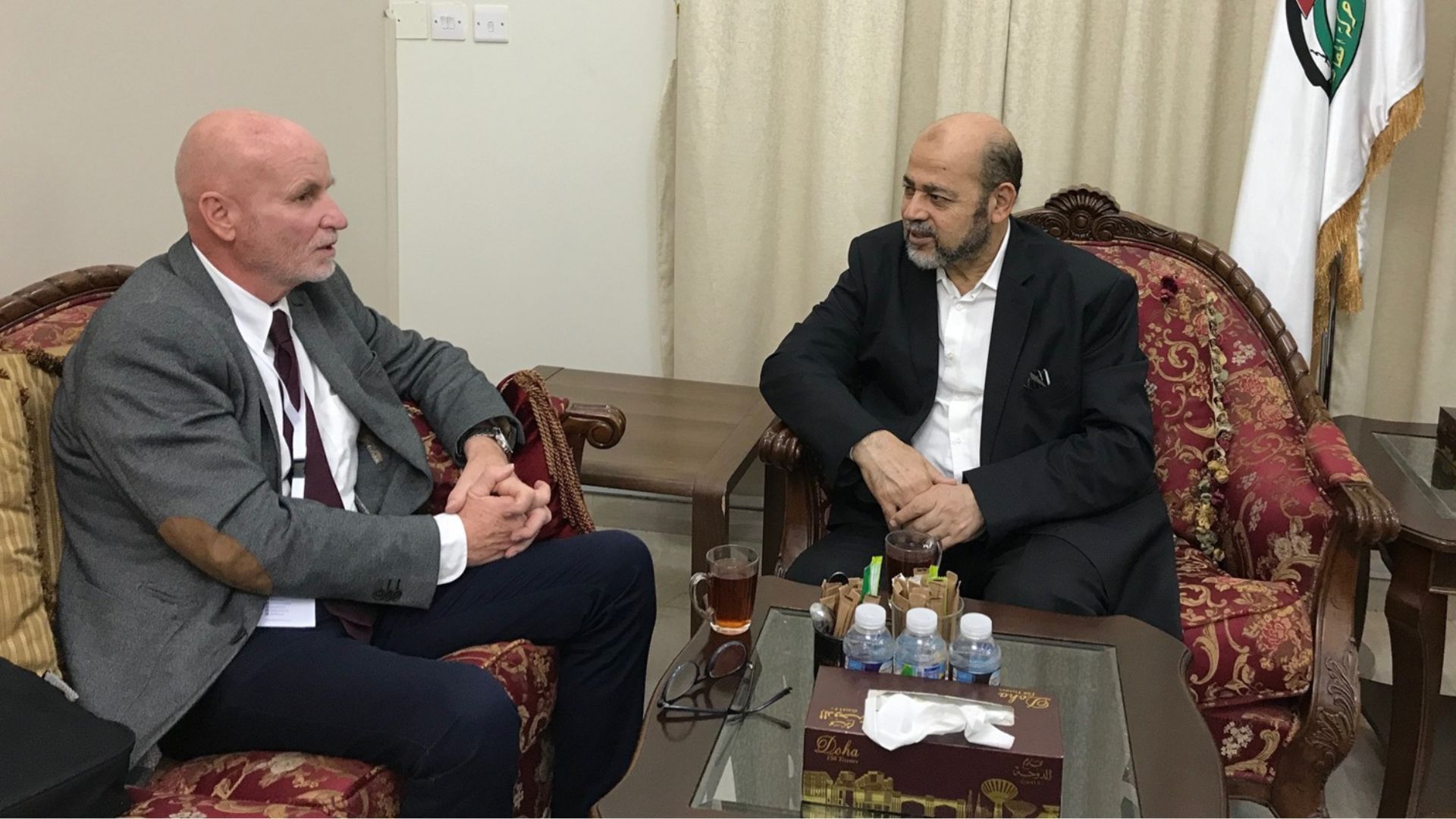
The Masar Badil conference in São Paulo (March 28–31, 2026), organized by the Palestinian Alternative Revolutionary Path Movement, situates itself at the volatile intersection of these converging tensions. It deliberately merges Latin American anti-imperial memory — Chile’s 1973 U.S.-backed coup, Brazil’s 1964 military dictatorship — with the discourse of Palestinian resistance, reframing both as linked chapters in a protracted history of rule imposed through military force, economic coercion, sanctions, and asymmetrical power.
This is a structural intervention, not mere symbolism. The conference operates as a narrative amplifier: a dedicated space where themes of sovereignty violation, weaponized sanctions, international-law asymmetry, and decolonization converge into a coherent, shared political framework. By avoiding militant rhetoric that dominant media can caricature and dismiss, it injects these analyses into the wider Global South conversation on selective legality, structural inequality, and hegemonic hypocrisy — making the critique more durable and transmissible.
The February 28, 2026, U.S.–Israeli assault on Iran has supercharged this role. In direct response, Masar Badil issued an urgent call for the “broadest mass demonstrations of rage against the U.S.–Zionist aggression on Iran,” declared International Quds Day on March 13 a “global day against the U.S.–Zionist war on our peoples,” and positioned the São Paulo gathering as the key venue to “transform the shatat from a space of solidarity into a space of confrontation.” The war reactivates and intensifies long-standing doubts about Western consistency — doubts rooted in Gaza, Palestine, Iraq, and Latin American interventions — providing a devastating, contemporaneous case study that no narrative spin can obscure.
São Paulo thus emerges as an unusually potent bridge between regions: Latin America’s sovereignty memory, scarred by external coups, sanctions, and interventions, finds direct resonance with the Middle Eastern sovereignty claims now under bombardment in Iran. Skepticism toward the “rules-based order” — already widespread — hardens here into a robust political framework rather than a passing slogan.
This marks a decisive shift for the organizers: from symbolic solidarity with the Palestinian people and other targets of U.S.–Israeli aggression to a deliberate, organized political project. No longer content with expressions of support or condemnations of isolated acts, the conference situates these events within a unified struggle over sovereignty, international law, sanctions regimes, economic coercion, and the unequal power structures that underpin the global order. It distills dispersed outrage into a coherent, transmissible political language — one built around sovereignty, sanctions asymmetry, international-law double standards, economic coercion, and decolonization — that can cross movements, borders, and regions.
Across Latin America, the war registers through painfully familiar patterns: external military force, selective invocation of legality, and cascading economic blowback. Masar Badil names these patterns explicitly, extending far beyond Palestinian networks. Palestine — and now Iran — is not treated as exceptional but as a clear, concentrated illustration of how imperial power is imposed and sustained through unequal structures. By linking these violations to Latin America’s own history of intervention, sanctions, and resistance — the same mechanisms that target Tehran and Gaza have long targeted Caracas, Havana, and Santiago — the conference universalizes the critique. In doing so, it hardens latent skepticism into organized strategy, accelerating the synthesis of shared experience into collective action capable of eroding the hegemon’s remaining legitimacy at its core.
A Global South Recalibration Already Underway
Diplomatic, Economic, and Narrative Shifts
Across the Global South, the erosion of U.S. legitimacy manifests in tangible diplomatic, economic, and narrative shifts — trends that the February 28, 2026, strikes have intensified rather than initiated.
Diplomatically, governments increasingly prioritize sovereignty, restraint, and negotiated settlement over endorsement of Washington’s framing. Brazil’s swift condemnation emphasized attacks disrupting ongoing negotiations as the sole path to peace; South Africa’s trade unions decried the strikes as imperial aggression laced with nuclear double standards; Malaysia’s prime minister labeled them a “vile attempt” to sabotage talks, urging an end to escalation and hypocrisy. Voting patterns in multilateral forums tilt away from automatic U.S. alignment; regional organizations issue communiqués in autonomous terms; mediation flows through non-Western channels (ASEAN, African Union) or the UN rather than defaulting to U.S.-led initiatives.
Economically, the recalibration accelerates: supplier diversification, deliberate reduction of sanctions exposure, procurement shifts beyond Western vendors, and expanded local-currency settlements. The war’s oil shocks and sanctions blowback reinforce hedging — central banks accumulate gold as neutral reserve (prices surging post-strikes), BRICS pilots advance non-dollar trade instruments, and bilateral swaps proliferate. These moves remain incremental yet cumulative: each transaction erodes dependency, making coercion costlier and less effective.
Narratively, public discourse reframes the war as a matter of legality,escalation risks, and blatant double standards. Media and policy debates in Latin America, Africa, and Asia resurface comparisons to Gaza, Iraq, and Latin American interventions — emphasizing selective enforcement over universal rules. This environment reshapes domestic incentives: leaders weigh reputational costs of overt Washington alignment. Military balances and some security partnerships persist, but the presumption of inherent U.S. legitimacy has fractured. Cooperation becomes conditional, negotiated, and hedged — authority endures, but in a far more skeptical, transactional landscape.
Why Masar Badil Matters
What renders the Masar Badil conference (March 28–31, 2026) potentially subversive to the prevailing world order is its disciplined structural framing. Organizers eschew revolutionary slogans or calls to violence — rhetoric Western media and politicians could readily caricature and sideline. Instead, they present the issues in analytical terms: the essence of sovereignty, the uneven application of international law, and the reality that economic sanctions inflict devastation comparable to bombs — eschewing the selectively invoked “human rights” language that Western powers deploy to criminalize legitimate resistance, including the right of armed struggle against colonial occupation. This language is formidable because it mirrors political science, legal scholarship, and policy discourse — the kind of conversation that belongs in universities, think tanks, or diplomatic seminars.
That accessibility allows it to travel widely and seep into mainstream Global South discussions on constructing a more equitable international system. It supplies a coherent intellectual scaffold for skepticism already pervasive: when a South African diplomat questions why certain states possess nuclear arsenals while others face preemptive strikes for pursuing them, or an Indonesian journalist probes why some occupations draw condemnation while others are ignored, São Paulo offers precise, interconnected answers. It transforms visceral outrage and historical memory into rigorous arguments. And arguments, sustained over time, can fundamentally alter how nations perceive — and ultimately contest — the structures of global power.
*
Click the share button below to email/forward this article. Follow us on Instagram and X and subscribe to our Telegram Channel. Feel free to repost Global Research articles with proper attribution.
Rima Najjar is a Palestinian whose father’s side of the family comes from the forcibly depopulated village of Lifta on the western outskirts of Jerusalem and whose mother’s side of the family is from Ijzim, south of Haifa. She is an activist, researcher, and retired professor of English literature, Al-Quds University, occupied West Bank. Visit the author’s blog.
She is a Research Associate of the Centre for Research on Globalization (CRG).
Featured image is from the author
Global Research is a reader-funded media. We do not accept any funding from corporations or governments. Help us stay afloat. Click the image below to make a one-time or recurring donation.























.jpg)


 French (CA)