

.png) 2 month_ago
30
2 month_ago
30

The history of naval warfare is often told through the success stories of the great navies that ruled the seas.
The British Royal Navy in the 19th century and the US Navy in the second half of the 20th century were central to this narrative. These navies controlled global trade routes by ensuring maritime dominance, transferred military power and played a decisive role in the international system. The concept of maritime dominance is the ability of a state to freely use the seas for military and commercial purposes and not to grant the same freedom to its competitors. For this reason, for many years, naval power has been defined through large tonnage warships, aircraft carriers, dreadnoughts, cruisers and submarines.
Farsi, 中文, Türkçe, Русский, Español, Portugues, Français, عربي, Hebrew, Deutsch, Italiano, 日本語, 한국어, Српски. And 40 more languages.
Anti Access and Area Denial
However, when we look closely at the history of naval warfare, another different fact emerges.
Throughout history, it is extremely rare for weak forces to face off against powerful navies in high seas battles and triumph. However, sometimes weak navies were able to defeat strong navies. Weak states tried to stop strong navies by developing different strategies. The most important of these strategies is the A2/AD (Anti-Access / Area Denial) doctrine. The main purpose of this doctrine is not to control the sea, but to prevent the enemy from using it. Thus, even powerful navies can face serious risks in narrow waters and nearshore areas.
Anti Access (A2) refers to strategies and weapon systems to prevent an enemy from approaching or entering an operational zone. This approach relies more on long-range systems. The aim is to deter the enemy before they reach the area or to put them at serious risk. Hypersonic missiles, ballistic missiles, long-range cruise missiles, long-range air defense systems, submarines, long-range bombers and electronic or cyberattacks can be considered in this category.
Area Denial, on the other hand, is a defense layer that aims to prevent enemy forces from moving freely in that area, even if they have entered that area. This approach relies more on medium and short-range systems. The aim is to keep the enemy under constant threat within the region, making it difficult for him to operate or to increase his cost. Naval mines, anti-shore-based anti-ship missile batteries, kamikaze UAVs, mini submarines, coastal artillery, short-range air defense systems and swarm attack boats can be used in this context.
Admiral Sergey Gorshkov, who was the commander of the Soviet Navy for 29 years during the Cold War, emphasized that modern naval power does not only consist of surface ships. According to Gorshkov, when coast-launched missiles, naval aviation and submarines are used together, enemy fleets can be rendered unable to approach the coast. Today, many countries are establishing layered defense architectures using these two approaches together. China’s system in the South China Sea, Russia’s defense architecture in Kaliningrad and Crimea, and Iran’s defense order around the Strait of Hormuz can be counted among the typical examples of this doctrine.
The Best Example from History: March 18, 1915
Anti Access and Area Denial is not a new concept based on modern technology. The great Turkish Naval Victory in the Dardanelles 111 years ago is one of the most striking examples of this. During the First World War, the Turks, who collapsed economically, had a weak navy and were militarily backward, won a great victory against the Royal Navy Mediterranean Expeditionary Force, the most powerful navy in the world at the time, by using the advantage of mines, coastal artillery and geography. This fight is not only a military success but also a triumph of strategic thinking. The Dardanelles naval battle is therefore considered one of the most historically powerful examples of the A2/AD doctrine. This event is not merely the result of a war; it is also a major turning point that affects the course of the world war and international political balances. Today, 111 years later, the lessons learned from Çanakkale are still of great importance for modern naval strategy.
Strategic Background of the Dardanelles Naval Victory
When the First World War began, the British Royal Navy was the most powerful navy in the world. Britain was a great maritime empire that controlled global trade routes and had naval bases around the world, where the sun never sets. The strength of its navy represented not only military but also economic, financial and political superiority. The Ottoman Empire, on the other hand, was in a serious decline process during this period. As a result of the Balkan Wars, it lost most of its lands in Europe. The economic structure collapsed, industry did not develop and the military power of the state weakened. As a result of Abdulhamid II’s neglect of the navy for 33 years, the navy, whose institutional culture and technical effectiveness disappeared, could not compete with the rival’s modern warships. The main purpose of the war was to push back Germany, which was a rival to England in every field, to remove it from the sea and to prevent its access to oil. From 1911 onwards, the Royal Navy switched from coal to oil and the Ottoman geography turned into an open hunt with its rich resources. The Germans saw the same situation and approached the Ottomans. The Berlin Baghdad railway had turned into a very important force multiplier like today’s logistics corridors. However, despite this alliance, Britain, France and Russia thought that the Ottoman Empire would collapse in a short time.
By 1915, the Western Front had turned into a trench war in the war that had started 8 months earlier and the war had reached a stalemate. On the Eastern Front, Russia was suffering heavy losses. Britain and France thought of opening a new strategic front to overcome this impasse. This front would be the Dardanelles. If the allied navy crossed the Bosphorus and captured Istanbul, the Ottoman Empire could be out of the war and direct contact with Russia could be established. This situation could change the strategic balances of the war. However, allied planning seriously underestimated Ottoman defense.
The Plan to Force the Throat
One of the strongest advocates of the idea of attacking Çanakkale was British Minister of Navy Winston Churchill. According to Churchill, the Ottoman Empire was the weakest link in the war and could be surrendered in a short time with a strong naval attack. According to him, the firepower of modern warships could destroy the Ottoman coastal defenses in a short time. The first stage of the plan was to silence the redoubts at the entrance of the Bosphorus by bombardment. Later, minesweepers would come into play and clear the mines in the strait. After the mines were cleared, the allied navy would cross the narrow strait and enter the Sea of Marmara and threaten Istanbul. This plan seemed theoretically strong. However, the most critical problem was the clearance of mines. Because the narrow structure of the strait and its strong currents made mine clearance activities extremely difficult. Despite this, the allies prepared a large fleet. As of February 5, 1915, 105 pieces of ships were collected in Thessaloniki and Lemnos/Mondros. Imperialism was going to attack the heart of Anatolia, the gate of Istanbul with all its might. The defense of the Bosphorus would be provided jointly with the Ottoman mine lines and coastal artillery batteries without a navy. According to sane staff and past evaluations, it was almost impossible for them to cross the Narrow Strait between Kepez and Nara. However, Churchill and his entourage made a situation judgment according to the effectiveness of the Ottoman army and navy in the Balkan War. The Allied Navy despised the Turkish defenses. According to the plan, the coastal bastions would be silenced with the great firepower of the battleships of the invasion navy, the barrels of the cruisers and destroyers would silence the moving light guns and howitzers that posed the greatest threat to the minesweepers, thus ensuring sea control, minesweepers would enter the field and mines would be scanned. As a result, the goal was to open an 800-meter-wide passage channel in the narrow strait between Kilitbahir and Çimenlik Cape and to enter the allied navy into Marmara. Commander of the Expeditionary Force, Admiral Carden, launched the first major attack on February 19. However, it was very difficult for them to scan mines. Turkish mobile artillery did not allow minesweepers, and the civilian personnel of the wounded and sunk dredging ships were running away from duty. Churchill, the Minister of the Navy, was increasing his pressure on Vice Admiral Sackville Carden, the Commander of the Allied Fleet. Carden was confident. In the telegram he sent to Churchill on March 2, 1915, he said that we were in Istanbul on March 20. However, he could not withstand the pressure and resigned from his post on March 17 and was replaced by Admiral De Robeck.
Turkish Defense System
Turkish defense was based on an integrated defense system using mines and coastal artillery together. Between November 3, 1914 and March 7, 1915, he established 377 mines in the strait and 10 mine lines perpendicular to the shore. However, the real surprise was hidden in the 26 mines on the 11th line, which were spilled by the Nusret ship in Erenköy Bay, parallel to the coast, on March 8. There were 230 guns of different diameters in the Bosphorus gun batteries. The firing range of the best ones was around 7-8 km. In contrast to the 18 battleships and 270 barrels of the allied fleet, only 82 of the Turkish guns in 14 fixed redoubts in Anatolia and Rumelia were capable of responding to the guns of the invasion navy. Ammo was reduced by half. Every means, including German aid, were being used, and batteries, mines and torpedoes were being prepared for the big showdown.
Despite more than 10 heavy bombardments and minesweeping attempts in the Bosphorus after February 15 , the British and French could not scan the mines and could not go beyond 10 miles of the Bosphorus. The minesweeping operation they started on February 25 was a complete disaster. The number of mines they were able to scan did not reach 15 out of 403 mines. Civilian fishermen in the scanners they broke from fishing vessels (trawlers) soon rebelled. They found volunteer naval personnel in their place. They were faced with an extremely difficult picture. 21 British and 14 French minesweepers could not approach the mine lines under the protection of Turkish Artillery. Each attempt resulted in loss of life and property.
March 18 Disaster
On the morning of March 18, 1915, the allied navy launched a brutal attack with 18 large ships. However, everything changed in an instant in the afternoon. The French battleship Bouvet hit Nusret’s mines and sank within minutes. Then, the battleships HMS Irresistable and HMS Ocean, respectively, hit a mine and sank. In addition, 3 warships were damaged in their nets. Admiral De Robeck ordered to withdraw in shame on the afternoon of March 18. They could only return to Lemnos/Mudros Port with 12 ships from the strait, which they entered with 18 proud warships. The liberal Asquith government, of which Churchill, the architect of the Gallipoli Campaign, was the Minister of Navy, was forced to resign on May 25, 1915, 2 months after the defeat of March 18, and to form a coalition with the conservative party. When Çanakkale could not be crossed by sea, it was decided to invade by land and this adventure ended in defeat. In the 9 months between April 25, 1915 and January 6, 1916, approximately 58 thousand Commonwealth soldiers, including 29 thousand British and Irish and 11 thousand Australian and New Zealand soldiers, lost their lives in the land operation on the Gallipoli peninsula. This disaster caused the fall of the Asquith-led government and the conservatives came to power under Lloyd George’s Prime Ministership. Churchill had returned to the army as battalion commander with the rank of Lieutenant Colonel. But the worst was the state of British finances. They owed extraordinary amounts to American bankers. The empire, where the sun did not set, was almost unable to pay the salaries of the soldiers. With the effect of the Irish civil war, the pound lost 67% of its value in the period after the Gallipoli disaster. As a result, this defeat in Çanakkale changed the course of the war. Aid could not be delivered to Russia, and there was a communist revolution in Russia, the consequences of which will continue to this day. Instead of Russia, which left the war, the USA entered the war in 1917. 15 years after the war, Churchill gave the following statement to a French Magazine (la Revue de Paris 1 August 1930), attributing the great defeat to Nusret’s 26 mines:
‘’…These 20 iron pots, secretly poured by the Nusret ship, were to reach more perfect and more precise goals than all other efforts in terms of the continuation of the war and the future of the world. This obstacle created some psychological confusion that stopped the Çanakkale operation, which was successfully started by the British. It is this obstacle alone that prevented the crossing of Çanakkale, and it is this obstacle that saved Turkey from a defeat and prolonged the war. For this reason, victorious Europe was shaken as much as the vanquished. 6-7 million people, whose bones were covered by the lands of France, Belgium, Poland, Galicia, the Balkans, Palestine, Syria and Northern Italy, were destroyed not by the bullets and cannonballs of their enemies, but by the 20 iron vessels stretched on the wire ropes to which they were attached under the strong current of Çanakkale on the morning of March 18.”
Çanakkale and Hormuz Similarity
What the imperial naval power represented by Britain and France in Çanakkale in 1915 was, the imperial power based on the military-technological superiority represented by the USA and Israel on the Iranian front today is the same. 111 years may have passed; platforms, sensors, destructive power and ranges may have changed. However, there is an unchanging fact in essence. The imperial power, relying on its own brute force superiority, wants to enter a narrow geography and impose its will. The defensive state, on the other hand, knows that it cannot defeat its opponent on the high seas, but instead targets passages, straits, approach directions, ports, supply points and psychological thresholds. In Çanakkale, this was called mines and coastal artillery. In the model applied by Iran today, this is called UCAV and ballistic missile.
The Ottoman navy was not strong in Çanakkale; but he managed to combine the geography, current, mine lines and coastal fire of the strait in a defensive architecture. The superior tonnage, superior armor and superior number of barrels of the Allied navy lost their meaning in the face of this defense order in a narrow geography. Today, Iran knows that it will not get results by engaging in an open sea battle with the US navy. In the first 5 days of the war, 40 pieces of surface ships belonging to the navy, excluding submarines, were sunk. For this reason, it does not act according to classical maritime control, but according to the doctrine of Anti Access and prohibiting areas. Iran’s goal is not the total destruction of the American navy. The goal is to remove the Gulf and the Strait of Hormuz approach waters from being a safe area of operation. A few successful strikes, a few damaged bases, a few tankers hit, even a few closed energy facilities were enough for this purpose.
The most striking similarity here is that the strength of the attacking side and the geography and patience of the defending side become decisive. In Çanakkale, the British and French saw the strait as a “firepower problem”. They thought that if they fired enough, they would silence the redoubts, clear the mines and reach Istanbul. Today, the USA and Israel also see the Iranian front as a “target destruction problem“ to a significant extent. They assume that Iran’s resistance will collapse as it hits missile depots, launchers, naval elements, radars, bases and energy infrastructure. However, the aim here is to shatter the enemy’s freedom of action and sense of trust. Iran is doing just that. Iran is trying to turn the war into a model of attrition by continuing its missile and drone pressure on Gulf energy centers, US bases and regional logistics nodes. Today, nearly 3000 ships are waiting in the Persian Gulf. The real energy that restricts traffic in Hormuz, forces tankers to wait and shakes the energy market is the threat of Iran’s area exclusion weapons, namely UAVs and ballistic missiles. If Iran lays mines in the near future, we can add mines and submarines.
Another major similarity is seen in the choice of center of gravity. The goal of the Ottoman defense in Çanakkale was not to search for and destroy the enemy fleet in the open sea, since it did not have an effective navy. The goal was to punish the fleet trying to pass through the strait in a narrow area with limited maneuverability. Today, Iran is not settling accounts with the global naval power of the USA in the Indian Ocean or the Pacific. Iran projects the war on its own coasts, straits, energy terminals, Gulf bases and logistics veins. Thus, it transforms the global supremacy of the United States into domestic fragility.
One of the weakest links of the allies in Çanakkale was the inability to continue minesweeping activities, the defense becoming more expensive than expected and the tempo of operations decreasing. Today, a similar problem for the US and its allies is seen in the need for air defense missiles, ship deployment, base security and ammunition supply. The pressure on missile stocks and the cost of protecting the elements stationed in the Gulf are increasing day by day. So much so that the Patriot and THAAD batteries in South Korea are being withdrawn to the Gulf. This is the essence of the A2/AD doctrine. Not to defeat the attacking side all at once, but to trap it in an expensive, abrasive and politically controversial equation.
Increasing the Risk Excessively
With the defeat of March 111 on March 18, the proud England realized that the strait could not be crossed by force by sea. That’s why the land invasion operation started on April 25. Similarly, technically, the ability of the US Navy to enter the Gulf has not disappeared. Today, the USA may launch a ground invasion operation at the risk of great loss of life. However, the fact that the Iranian side of the strait is extremely rugged and mountainous turns this operation into a very high-risk operation area for the USA. Despite Trump’s declaration that our navy would escort the merchant ships inside, let alone the land operation , the American Admirals stated that this task could not be carried out. Moreover, US maritime and trade authorities have advised US-linked merchant ships to sail a certain distance offshore from American naval ships. In other words, the problem is not whether the navy can “enter or not”. When it does, can it continue this safely, sustainably and by managing costs? Iran’s strategy produces results similar to what happened in Çanakkale 111 years ago.
Mines alone were not enough in Çanakkale; What made them effective was that coastal artillery prevented minesweeping. In other words, it was not a question of the sum of the weapons, but of their collective effect. Today, Iran’s real success is not in a single system, but in the brotherhood between systems. While SİHAs function as surveillance, harassment, saturation and defense exhaustion, ballistic missiles create an effect with high speed and heavy destruction.
Image: Strait of Hormuz
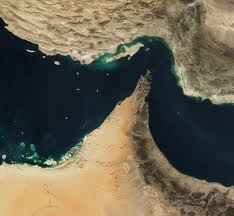
Therefore, it would be incomplete to see the model implemented by Iran only as “retaliation” in the classical sense. There is a more systematic strategic mind here. Iran, just like the Ottoman Empire did in Çanakkale, calls its strong rival to the threshold where it is weak, not to the area where it is superior. That threshold is Hormuz today, Gulf bases, energy export lines, tanker insurance, port entrances and exits, air defense stocks. The success of the defense lies here in producing more deterrent costs than in direct victory. The aim in Çanakkale was not to occupy London; It was not to let the throat pass. Iran’s aim is not to destroy the US navy. It is to stop the Gulf from being a safe American lake. The current picture shows that this has been achieved to a significant extent. Disruption of Hormuz traffic, hundreds of ships waiting, attacks on energy infrastructure and damage to regional bases are signs of this. (Reuters)
Conclusion
Our 18 March 1915 Çanakkale naval victory is one of the strongest examples of the A2/AD doctrine. A weak state was able to stop the world’s most powerful navy with the right defense system. The biggest weakness of imperialism is not only its arrogance, but also its mistaking its technological superiority for strategic superiority. On March 18, 1915, this mistake collapsed in the face of the brotherhood of mines and barrels. In the 2026 Gulf War, the same mistake is being tested again in the face of the brotherhood of UAVs and ballistic missiles. Yesterday, the aggressive British-French joint navy could not cross the strait in Çanakkale. Today, the Persian Gulf is no longer an inland sea that is absolutely safe for aircraft carriers, cruisers and destroyers. History reminds us once again that brute force is not always decisive in a narrow geography, under determined defense and in the face of a common order of fire. Sometimes it’s not the size of the largest navy that changes history; It is a defensive architecture established in the right place at the right time. Trump recently decided to send the 31st Marine Expeditionary Task Group, (MEU) which carries 2500 marines stationed in Japan, to the Persian Gulf. If history repeats itself with an interval of 111 years and this incoming MEU attempts to invade the Strait region we can already say that most of the marines may be lost with great defeat for US military. We recommend US military planners to read the memoirs of Churchill, who was the Minister of the Navy in the First World War during the Gallipoli Disaster. (Winston Churchill World in Crisis- 6 volumes)
*
Click the share button below to email/forward this article. Follow us on Instagram and X and subscribe to our Telegram Channel. Feel free to repost Global Research articles with proper attribution.
This article was originally published on Mavi Vatan.
Ret Admiral Cem Gürdeniz, Writer, Geopolitical Expert, Theorist and creator of the Turkish Bluehomeland (Mavi Vatan) doctrine. He served as the Chief of Strategy Department and then the head of Plans and Policy Division in Turkish Naval Forces Headquarters. As his combat duties, he has served as the commander of Amphibious Ships Group and Mine Fleet between 2007 and 2009. He retired in 2012. He established Hamit Naci Blue Homeland Foundation in 2021. He has published numerous books on geopolitics, maritime strategy, maritime history and maritime culture. He is also a honorary member of ATASAM.
He is a Research Associate of the Centre for Research on Globalization (CRG).
Featured image is from the author
Global Research is a reader-funded media. We do not accept any funding from corporations or governments. Help us stay afloat. Click the image below to make a one-time or recurring donation.






















.jpg)


 French (CA)