

.png) 2 month_ago
37
2 month_ago
37
NE LAISSER PAS LE 5G DETRUIRE VOTRE ADN Protéger toute votre famille avec les appareils Quantiques Orgo-Life® Publicité par Adpathway
‘Different from the others’: the German-Jewish scientists who fought against prejudice
Before the Nazis came to power, Berlin was the centre of bold campaigns against state control over the body, championing abortion rights, homosexual equality and new understandings of sex and gender.

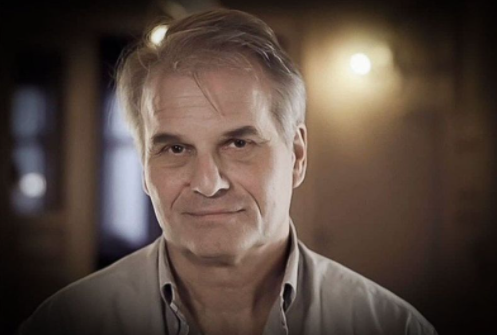
Pioneering sexologist and gay rights activist Magnus Hirschfeld (1868-1935)
Ullstein Bild · Getty
Time seems to have stood still in Lehnitz. Nestling deep in the forest less than an hour north of Berlin, its residential streets are lined with villas shaded by birch trees. On Friedrich Wolf Street there’s a memorial to the victims of Nazism. Across the road is another to Julius and Ethel Rosenberg, the couple executed in the US in June 1953 for passing nuclear secrets to the Soviets.
Like many villages in the former German Democratic Republic (GDR), Lehnitz has resisted the post-1989 trend for renaming streets. The Friedrich Wolf Museum is on a street that bears his name, while Magnus Hirschfeld Street leads to what was once a Jewish sanatorium, founded in 1900 and attacked by the Nazis, along with Jewish shops, synagogues and other community institutions, in the Kristallnacht pogrom of 9 November 1938.
By the time the Red Army reached Lehnitz at the end of the war, most of its houses had been abandoned. Returning from exile in the USSR, the doctor and playwright Friedrich Wolf was allocated one of them by the occupying authorities and lived there until his death in 1953. His return was preceded by those of his sons, Konrad – later a leading East German filmmaker, after whom the film school in the Babelsberg district of Potsdam is now named – and Markus, the future head of the GDR’s foreign intelligence service, who was reputedly one of the models for John le Carré’s Karla.
Like Friedrich Wolf, the physician and sexologist Magnus Hirschfeld was forced into exile under the Third Reich’s racial laws. Hirschfeld, who was 20 years Wolf’s senior, died in Nice in 1935 without ever going back to Germany. It’s uncertain who first proposed naming a Lehnitz street after him, though Friedrich Wolf seems a likely candidate. The connection between the two men is clear, though. Both were pioneering campaigners in pre-1933 Germany: Hirschfeld for the decriminalisation of homosexuality through the repeal of Paragraph 175 of the penal code, and Wolf (…)
Full article: 3 553 words.
This article can be read by subscribers
Sonia Combe
Sonia Combe is a historian and the author of La Loyauté à tout prix: Les floués du ‘socialisme réel’ (Loyalty at any price: deceived by ‘real socialism’), Le Bord de l’Eau, Carignan-de-Bordeaux, 2019. The author thanks Raimund Wolfert of the Magnus-Hirschfeld-Gesellschaft in Berlin and Thomas Naumann, Friedrich Wolf’s son.
Translated by George Miller
(1) Magnus Hirschfeld, Berlin’s Third Sex, University of Toronto Press, 2025.
(2) Herculine Barbin: Being the Recently Discovered Memoirs of a Nineteenth-Century Hermaphrodite, with an introduction by Michel Foucault, Random House USA, New York, 1980.
(3) Michel Foucault, Abnormal: Lectures at the Collège de France, 1974-1975, Verso, London, 2003.
(4) ‘Hermann Simon à la recherche de N.O. Body’ (Hermann Simon in search of N O Body), 3 June 2022, www.en-attendant-nadeau.fr/.
(5) Charlotte Wolff, A Portrait of a Pioneer in Sexology: Magnus Hirschfeld, Quartet, Dublin, 1986.
(6) Magnus Hirschfeld, Sappho and Socrates: How Does One Explain the Love of Men and Women to Persons of their Own Sex?, Urania Manuscripts, 2019.
(7) Pierre Najac, ‘L’institut de la science sexuelle à Berlin’ (Berlin’s Institute for Sexual Science), in Janine Merlet, Vénus et Mercure (Venus and Mercury), Éditions de la Vie Moderne, 1931.
(8) Christopher Isherwood, Christopher and his Kind, Eyre Methuen, London, 1977.
(9) Magnus Hirschfeld, Men and Women: The World Journey of a Sexologist, Putnam’s, New York, 1935
(10) The GDR maintained the pretence of a multi-party system. In addition to the Communist party (SED), there were the German Liberal Democratic Party (LDPD) and the Christian democratic Union (CDU).











.jpg)


 French (CA)