

.png) 4 month_ago
38
4 month_ago
38

In a world deafened by bombs — the Strait of Hormuz blockaded, Gaza in ruins, Ukraine bleeding, walls rising on every meridian — a woman from a university campus on the eastern outskirts of Algiers has just received one of the most prestigious scientific prizes in Europe.
She directs the Institut Pasteur in Paris. Her father was murdered by terrorists in 1995.
One grandmother could not read or write. The other was the first woman in her region of France to earn a scientific degree.
Her name is Yasmine Belkaid. And what she carries — across three continents, through three citizenships, into the highest laboratory in the world — is Algeria.
To read this article in the following languages, click the Translate Website button below the author’s name.
Français, عربي, Русский, Farsi, Hebrew, Español, Portugues, 中文, Deutsch, Italiano, 日本語, 한국어, Türkçe, Српски. And 40 more languages.
Port Saïd Square, September 28, 1995
To understand Yasmine Belkaid, you must first stand in Port Saïd Square in Algiers on a September morning in 1995. Algeria is at the nadir of its Black Decade — a civil conflict that would ultimately claim between 100,000 and 200,000 lives. Intellectuals, physicians, journalists, imams: they are being killed with numbing regularity by armed groups that have declared war not only on the Algerian state, but on the very idea of a literate, plural Algeria.
Image: Aboubakr Belkaid (Public Domain)

Among those cut down that morning is Aboubakr Belkaid: former Minister of the Interior, former Minister of Justice, FLN veteran — a self-taught man from Tlemcen who had joined the anti-colonial guerrilla at 15, gone underground, worked clandestinely as a delegate for Algerian workers at the Régie Renault factories in France, and spent his entire adult life building the state his generation had bled to create. He is shot dead in the street.
On his tomb at El Alia Cemetery, his family inscribes the words by which he lived: “The battles we lose are the ones we do not fight.”
His daughter Yasmine is 27. She is completing her doctorate in immunology at the Institut Pasteur in Paris. Her father had understood what was coming — it was he who, sensing the danger in 1992, urged his children to leave for France. His assassination confirmed that prescience. Returning home is no longer possible, not for grief alone, but for survival. She reads his epitaph. She chooses to fight. She moves to the United States and stays for nearly three decades.
Two Kitchens, Two Decisions
The story does not begin with her father. It begins earlier, in two kitchens — one in Algeria, one in France — where two women made decisions that would ripple across generations.
On the Algerian side: a grandmother who could neither read nor write, widowed young with eight children, who grasped with crystalline clarity that education was the only sovereignty available to poor women. She pushed her daughters toward that sovereignty with a phrase Yasmine has recalled with warmth in multiple interviews: “Allez, sortez de la cuisine, travaillez!” — Go on, get out of the kitchen, go to work. One daughter became a doctor. Another a midwife. In a country where the colonial system had systematically excluded Algerian women from formal education for more than a century, this was not a small gesture. It was an act of civilizational resistance.
On the French side: a pharmacist-grandmother who became the first woman in her region to earn a scientific degree, and kept a laboratory behind her pharmacy. “La science a revêtu d’emblée pour moi une dimension mystique,” Yasmine Belkaid has said — science assumed a mystical dimension from the very beginning, a sense of wonder ignited in a small room full of glass and light, visited at age six during a journey to France.
Her mother, a French woman deeply committed to anti-colonial causes, arrived in Algeria in 1962 — the year of independence — to help, in her words, “repair the ravages of colonization.” She was 23. She met Aboubakr Belkaid, married him, and built with him a household where, as Yasmine later told Le Monde, “nothing was settled, everything could be questioned, we were raised with the habit of looking at the world with distance.”
“He was a wonderful man who made you feel that everything could be questioned. He taught me to look at the world from a distance.” — Yasmine Belkaid on her father, Le Monde, December 2024
From this crucible — FLN militant, anti-colonial French intellectual, illiterate Algerian grandmother who sent her daughters to study, pharmacist-grandmother with her mystical laboratory — came a child who would one day direct the Institut Pasteur. Excellence is never produced in a vacuum.
Bab Ezzouar: Algeria’s Wager on Its Own Intelligence
It would be too easy — and frankly too colonial — to tell this story as a tale of someone escaping an underdeveloped country to flourish in the rational West. That narrative is not only false. It is an insult to the institution that trained her.
The University of Sciences and Technology Houari Boumediene — the USTHB, at Bab Ezzouar on the eastern edge of Algiers — was founded in 1974 at the height of post-independence ambition. Its name honors the president who in 1971 nationalized Algerian hydrocarbons and proclaimed that underground wealth must serve Algerians. The USTHB was the intellectual analogue of that act: a declaration that Algeria would produce its own scientists rather than remain forever dependent on foreign expertise.
Yasmine Belkaid studied biochemistry there and excelled. She also worked at the Institut Pasteur d’Algérie — founded in 1894, the oldest scientific research institution in North Africa — improving diagnostic methods for leishmaniasis: a parasitic disease that disproportionately afflicts the rural and desert-edge populations of the Sahara. Algeria did not only give her a degree. It gave her a moral compass: the obligation to look at the disease of the dispossessed.
This is what every celebratory profile skips over: the Algerian university system, one of the most accessible in the world — entirely free, built on the conviction that knowledge belongs to every citizen — formed one of the planet’s great immunologists. The Algerian public funded her, without conditions, without expecting a return measured in prizes. That is not a failure. It is a generosity that the world has not yet learned to honour.
The Irony of Empires
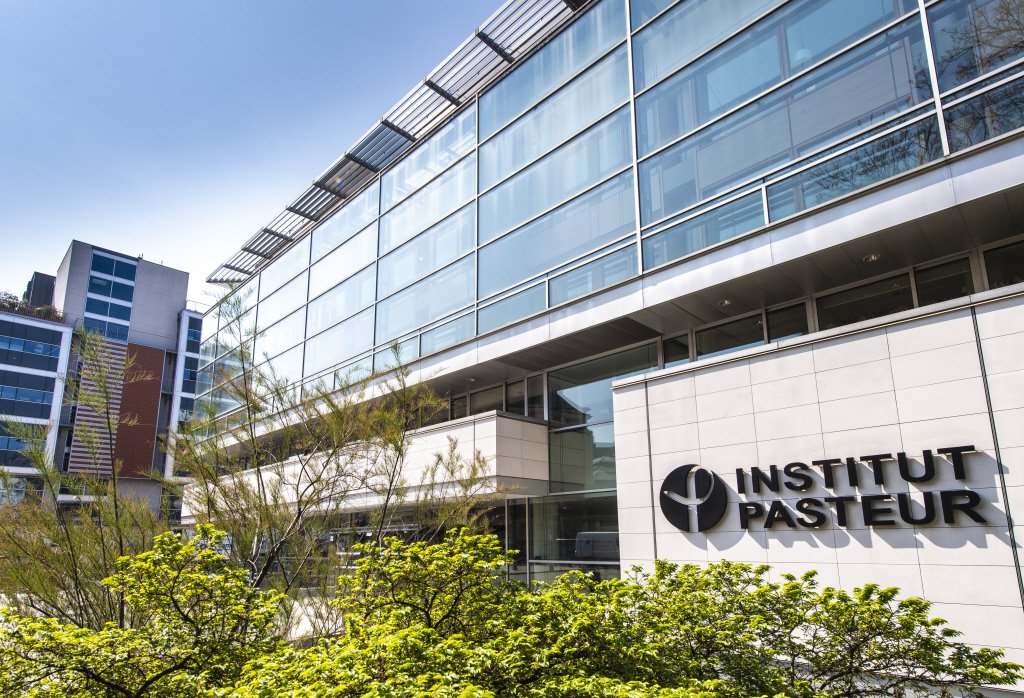
When Yasmine Belkaid arrived at the Institut Pasteur in Paris in the early 1990s, she entered one of the most charged symbolic spaces imaginable for a young Algerian woman. Founded in 1887 — the same decade France was consolidating its colonial grip on Algeria — the institution had deep roots in the colonial enterprise. The Institut Pasteur d’Algérie, created in 1894 and formally affiliated to Paris in 1909 under a contract with the Governor General of Algeria, was placed explicitly under colonial authority. Its mission: study the diseases of North Africa. Its method: use the colonized population as its field of inquiry.
Historian Clifford Rosenberg has documented in the American Historical Review how, in the 1920s, Albert Calmette used the dense, surveilled population of the Algiers Kasbah for a massive randomized clinical trial of the BCG tuberculosis vaccine — without anything resembling informed consent. Vaccination decrees meanwhile formalized racial categories: “European immigrants” received one protocol, “native” populations another. Medicine and colonial administration were not separate enterprises. They were one.
One hundred and thirty years later, an Algerian woman whose father fought against that system directs the institution. She is the first woman in its 137-year history to hold that position. The irony is so complete it circles back to justice.
The Science of Cohabitation
What does Yasmine Belkaid actually study? The answer is not merely scientific — it is a meditation on borders, belonging, and what we owe to what lives within us.
She studies the microbiome: the vast community of microorganisms — bacteria, fungi, viruses — that inhabits every surface of the human body. The skin. The gut. The lungs. We are not autonomous sovereign organisms. We are ecosystems, coexisting with trillions of entities that preceded us evolutionarily by billions of years, and without whom we cannot develop a functioning immune system, heal from wounds, or regulate inflammation.
“In terms of evolution, these microbes have always been with us. Our bodily surfaces are constantly colonised by a microbiota, because we are ‘home’ for these microbes.” — Yasmine Belkaid, NIH Intramural Research Program
Her laboratory’s findings have been foundational. Working with mice raised in entirely germ-free environments — born by Caesarean section, living in sterile bubbles at the NIH campus in Bethesda — her team demonstrated that without specific beneficial bacteria on the skin, the immune system cannot mount an effective defense against parasitic infection. The conclusion: immunity is not a property of the isolated individual. It is a collective achievement, born from relationship.
More recently, her team showed that the immune system can detect ancient viral sequences embedded in our DNA — long dismissed as “junk” — and use them to control inflammation and guide tissue repair. The past does not simply accumulate. It integrates. What has been survived becomes the capacity to survive again.
One does not need to force the metaphor. In a world convulsed by fantasies of purity, sealed borders, the self-sufficient monocultural body politic — this science proposes a different architecture. The body is not a fortress. It is a community in continuous, creative negotiation with what lives inside it.
Three Fronts, No Retreat
Yasmine Belkaid has not retreated into the comfortable apoliticism that shields many scientists from discomfort. In the past two years she has made herself conspicuous on three distinct political battlefields, speaking each time from personal rather than abstract stakes.
In July 2024, facing the possible rise of the Rassemblement National in France, she published a tribune in Le Monde — one of the most direct political interventions by a senior scientific figure in recent French history. She did not invoke democracy in the abstract. She spoke as a Franco-Algerian dual national in a country whose largest party had pledged to restrict the rights of binationaux.
“For scientific research, the rise of the RN to power represents an unprecedented threat. Today, I fear losing what made me choose France.” — Yasmine Belkaid, Le Monde, July 2024
In March 2025, she co-signed with Bana Jabri, director of the Institut Imagine, a second tribune directed at the Trump administration’s assault on American science — its defunding of research programs, its censorship of climate and infectious disease work, its dismantling of the institutional infrastructure that had made the United States scientifically dominant since 1945. They called on Europe to welcome displaced American researchers and assert its scientific sovereignty. It was a geopolitical intervention dressed as an op-ed.
Then, in June 2025, she was inducted into the Académie des sciences — founded in 1666 — becoming one of the first women of Maghrebi origin to enter that institution. She noted on LinkedIn that a majority of that year’s inductees were women, the first time in the Académie’s history. She did not celebrate it as an endpoint. She named it a beginning.
Algeria Never Left Her
There is a detail that appears in every interview but never makes it into the analytical profiles. In her office at the Institut Pasteur in Paris — one of the most celebrated addresses in world science — Yasmine Belkaid has arranged, with deliberate care, roses des sables from the Algerian Sahara. And paintings by Baya, the iconic Algerian artist of the twentieth century, with her luminous, wild colours. When asked where she would go for a pure moment of happiness, she answers without hesitation: Taghit, the oasis at Béchar, to watch the stars.
“When I think of Algiers, I think of that extraordinary light, the beauty of a city that rushes headlong into the sea, the warmth of its people, the life, the energy.” — Yasmine Belkaid, podcast de la Grande Mosquée de Paris, March 2025
She has said, plainly, what her career often obscures: “Mon intention était de rester en Algérie, j’adorais mon pays.” I intended to stay in Algeria. I loved my country. She did not leave by choice. She left because a civil war took her father and closed the country to its own children for a decade. Algeria did not lose her through indifference. It lost her through a wound that was inflicted upon it — a wound that Algeria itself survived, as it has survived every wound in its long and extraordinary history.
This distinction matters enormously. The question of talent and geography is not a question of what Algeria failed to do. It is a question of what the global system — built on asymmetric flows of capital, research funding, and institutional prestige — does to countries whose greatest investments walk out of their universities and into the laboratories of others. Malek Bennabi, Algeria’s great philosopher of civilizational resilience, understood this: a society’s strength is measured not only by what it produces, but by its capacity to keep what it produces and build upon it. That capacity, in science as in everything else, requires peace. Algeria fought for its peace. It earned it.
And Yasmine Belkaid — every time she describes the light of Algiers, the generosity of its people, the stars over Taghit, the roses des sables on her desk in Paris — answers the question herself. She was not formed by the world. She was formed by Algeria, and the world received what Algeria built.
“Algeria is where I come from. I keep it with me as pride. And as pain.” — Yasmine Belkaid, Journal International de Médecine, 2024
Pride and grief, held together. That is not contradiction. That is love.
Geneva, April 22, 2026
On April 22, 2026, Yasmine Belkaid received the Collen-Jeantet Prize for Translational Medicine from the Louis-Jeantet Foundation in Geneva — one of Europe’s most exacting scientific distinctions. The prize is endowed with 500,000 Swiss francs, 450,000 of which go directly to research, not personal reward. It honors not completed careers but ongoing science of sufficient promise to warrant continued investment. Of the 109 researchers who have received it since 1986, sixteen have subsequently won the Nobel Prize in Physiology or Medicine.
The official citation: “For illuminating the complex interplay between the microbiota, nutrition, infection, and the immune system, transforming our understanding of host defence and tissue homeostasis.”
She accepted it as she accepts everything — as a collective achievement. “Au-delà de la reconnaissance individuelle, ce prix incarne une ambition collective : celle d’une Europe scientifique forte, appuyée sur des écosystèmes philanthropiques solides pour demeurer innovante et indépendante.”
A woman whose father was shot dead in an Algerian street, whose illiterate grandmother told her daughters to step out of the kitchen, whose Algerian university was built on the defiant conviction that the Global South could produce its own knowledge. Standing in Geneva. Accepting a prize that places her in the company of future Nobel laureates. All of it true at once. This is what biography looks like when history refuses to be simple.
The Body Remembers
The most haunting of Yasmine Belkaid’s recent discoveries concerns what scientists once called “junk DNA” — ancient viral sequences embedded in human genetic material for millions of years, long dismissed as evolutionary detritus. Her team has shown that the immune system reads these ancient traces and uses them: deploying the record of past infection, of damage endured and survived, to regulate inflammation and guide repair after new injury. The archive of what the body has lived through is not inert. It is the mechanism by which the body heals itself.
She has not lost many battles. Over 220 peer-reviewed publications. The NIAID Microbiome Program, which she founded. The Institut Pasteur, which she leads. Two tribunes in Le Monde on opposite sides of the Atlantic, each one a refusal to let power go unchallenged. A prize in Geneva. An Académie des sciences.
And in her Paris office, roses des sables. And Baya’s colours on the wall. And Taghit waiting, with its stars.
Her father’s epitaph said: the battles we lose are the ones we do not fight.
She has not finished fighting.
*
Click the share button below to email/forward this article. Follow us on Instagram and X and subscribe to our Telegram Channel. Feel free to repost Global Research articles with proper attribution.
Laala Bechetoula is an independent Algerian historian, journalist, and geopolitical analyst. He has been writing on Trump, American hegemony, and the collapse of the international order since 2025. His work appears in Countercurrents, Global Research, Réseau International, Le Quotidien d’Oran, Sri Lanka Guardian, and other international platforms. This article integrates and crowns a corpus of analytical work produced between November 2025 and April 13, 2026.
He is a Research Associate of the Centre for Research on Globalization (CRG).
Sources
Le Monde / Nathaniel Herzberg: “Yasmine Belkaid, une exploratrice de l’immunité à la tête de l’Institut Pasteur,” February 10, 2024.
Le Monde / Yasmine Belkaid & Bana Jabri: “Aux États-Unis, la science est attaquée, entravée, et même interdite,” March 17, 2025.
Le Monde / Yasmine Belkaid: Tribune against the Rassemblement National, July 2024.
WHO/TDR Global Health Matters: Feature profile on Yasmine Belkaid, 2024.
Louis-Jeantet Foundation: Official citation, Prix Collen-Jeantet de Médecine Translationnelle 2026. Geneva, April 22, 2026.
FDLM: “Yasmine Belkaid, Chercheuse en Liberté,” May 2025.
Grande Mosquée de Paris Podcast: “Science, Racines et Transmission” — interview with Chems-eddine Hafiz, March 2025.
TSA Algérie: “Ce pays est absolument fabuleux” — Yasmine Belkaid on Algeria, March 15, 2025.
Journal International de Médecine: “Yasmine Belkaid, retour aux sources,” March 1, 2024.
NIH Intramural Research Program: “The Microbiome: When Good Bugs Go Bad.”
Clifford Rosenberg: “The International Politics of Vaccine Testing in Interwar Algiers,” American Historical Review, vol. 117, no. 3, June 2012.
Malek Bennabi: Les Conditions de la Renaissance (1948) — on civilizational resilience and the conditions of sovereignty.
Middle East Monitor: “Yasmine Belkaid’s Ever-Growing Capital,” December 4, 2025.
Wikipedia: Aboubakr Belkaid (1934–1995) — FLN activist, Minister, assassinated September 28, 1995, Port Saïd Square, Algiers.
Featured image is licensed under CC BY-SA 4.0
Global Research is a reader-funded media. We do not accept any funding from corporations or governments. Help us stay afloat. Click the image below to make a one-time or recurring donation.







.jpg)


 French (CA)