

.png) 1 month_ago
51
1 month_ago
51

We document a previously healthy 35-year-old man who developed a hyper-aggressive heart cancer within 170 days of Pfizer injection… and vaccine spike DNA was found inside it.
*
We have just completed a new case report that presents one of the most striking findings yet in the debate over COVID-19 “vaccine” turbo cancers: vaccine spike-encoding plasmid DNA was recovered directly from an extremely rare, hyper-aggressive heart tumor.
.
.
.
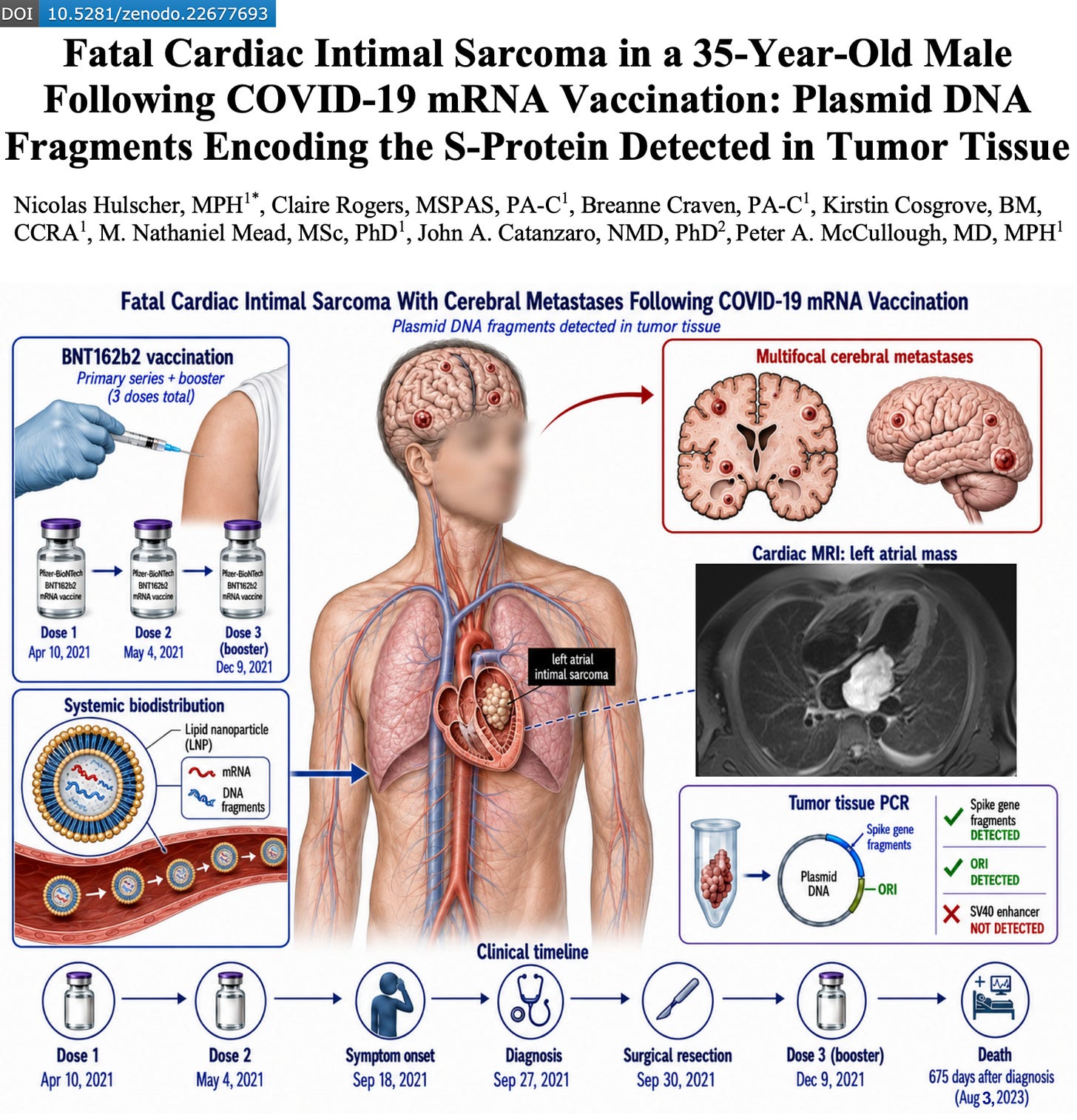
The McCullough Foundation paper is titled, “Fatal Cardiac Intimal Sarcoma in a 35-Year-Old Male Following COVID-19 mRNA Vaccination: Plasmid DNA Fragments Encoding the S-Protein Detected in Tumor Tissue.”
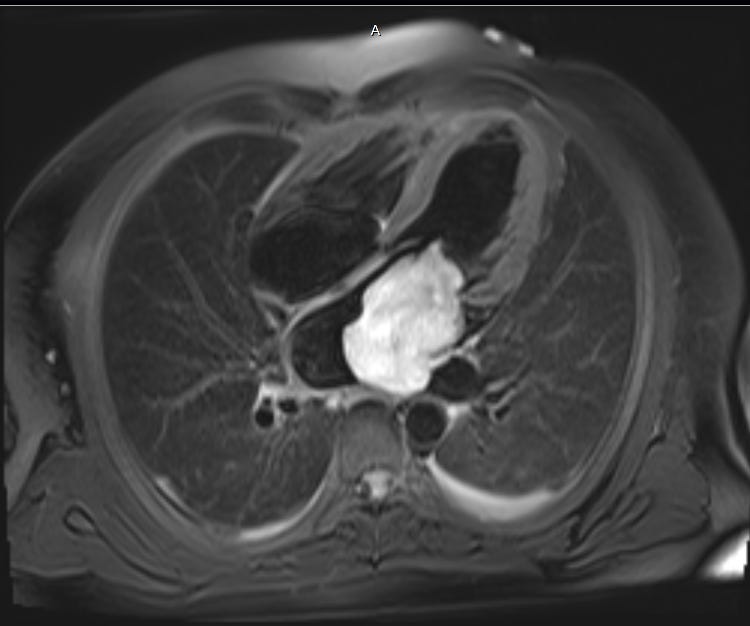
The patient was a 35-year-old man with no personal or family history of cancer and no identified hereditary cancer predisposition. He received Pfizer-BioNTech BNT162b2 on April 10 and May 4, 2021. Just 170 days after the first dose, doctors discovered a large tumor filling the left atrium of his heart along with multiple brain metastases.
.
.
Three days later, surgeons removed a 9.0 × 7.0 × 5.3 cm mass from his heart. Pathology confirmed a high-grade cardiac intimal sarcoma, an exceptionally rare and aggressive cancer. Molecular testing found the characteristic abnormalities MDM2 and KDR amplification, while whole-body PET/CT found no other primary tumor elsewhere in the body.
The cancer progressed at an extraordinary pace. Despite open-heart surgery, chemotherapy, radiation, gamma knife treatment, and four brain surgeries, new metastases continued to appear. He ultimately suffered bleeding into a brainstem tumor and died 675 days after diagnosis.
What makes this case especially important is that the growth rate could actually be measured. One brain metastasis grew from about 4 millimeters to 35 millimeters in only 94 days. That works out to a tumor volume doubling time of roughly 10 days.
Then came the most remarkable finding. Archived tissue from the original heart tumor was tested for vaccine components.
PCR detected three separate synthetic, codon-optimized vaccine spike-gene fragments along with the plasmid origin-of-replication sequence. The SV40 enhancer was not detected.
Put simply: vaccine-derived plasmid DNA fragments were found inside the malignant heart tissue itself.
A separate analysis found no intact spike protein and no SARS-CoV-2 nucleocapsid protein in the archived tissue, ruling out infection. One plausible accelerator of this malignancy is the persistence of synthetic vaccine-derived plasmid DNA within the tumor through effects on DNA repair, genomic stability, or tumor-cell proliferation.
This case represents an extremely rare cancer in a young man with no identified conventional cancer predisposition, a massive and already metastatic tumor within 170 days, directly measured explosive growth, and vaccine-derived plasmid DNA recovered from the tumor itself.
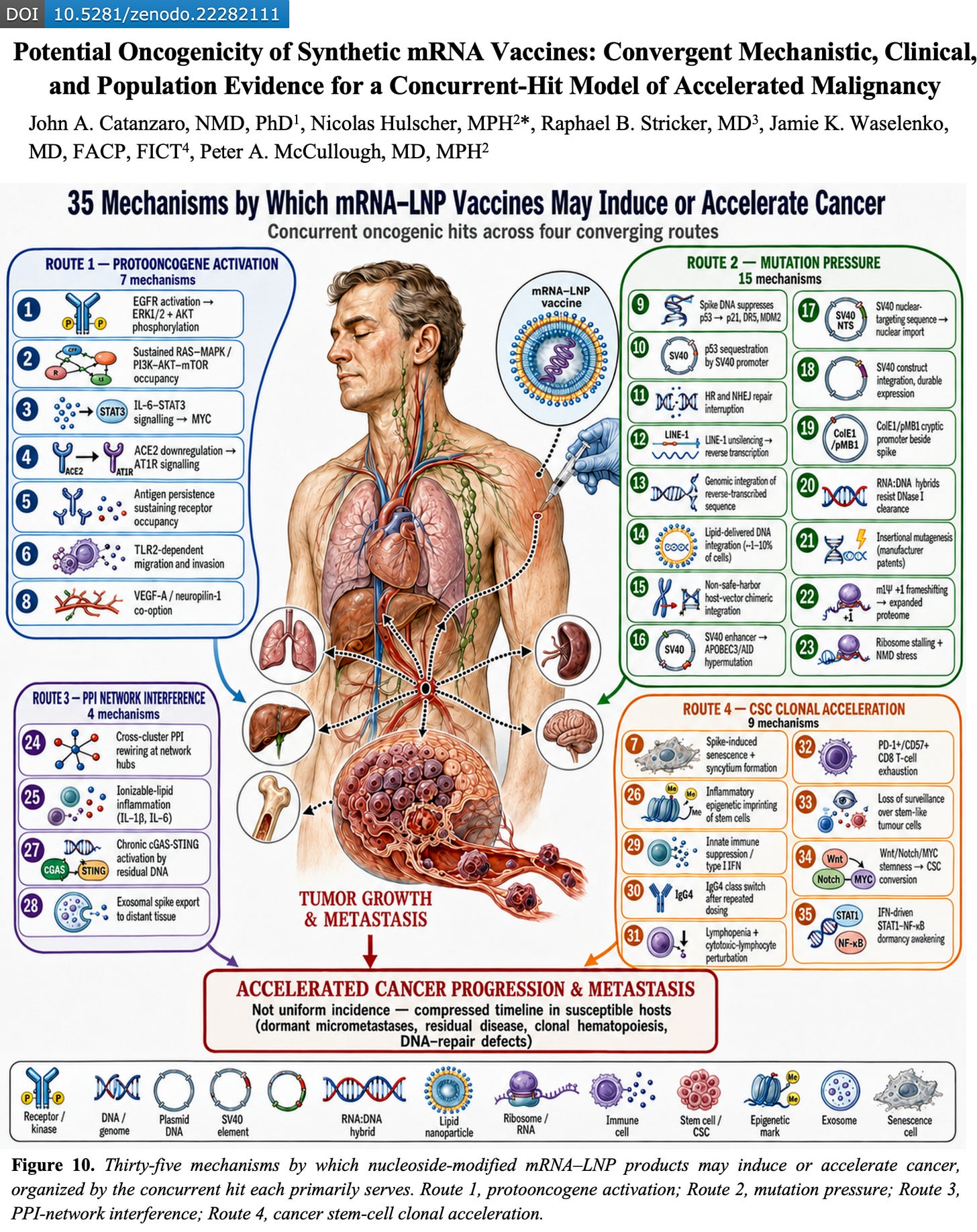
These findings directly fit the framework we recently developed in our paper titled, “Potential Oncogenicity of Synthetic mRNA Vaccines: Convergent Mechanistic, Clinical, and Population Evidence for a Concurrent-Hit Model of Accelerated Malignancy.”
.
.
In that paper, we identified 35 possible oncogenic mechanisms associated with the nucleoside-modified mRNA–lipid nanoparticle platform, converging on four major routes: proto-oncogene activation, increased mutation pressure, disruption of cellular protein networks, and acceleration of cancer stem-cell clones. The model specifically predicts that several of these hits occurring at the same time could compress a cancer process that normally unfolds over years into a much shorter period, particularly in people who already harbor dormant or microscopic disease.
In plain English, the model predicts the kind of pattern seen in the new case report: a hidden cancer clone that may have remained clinically silent can potentially be pushed into rapid growth, immune escape, and metastatic spread when multiple tumor-promoting pressures converge at once.
This cardiac sarcoma case therefore provides important real-world evidence consistent with that model. The patient’s tumor was already enormous and metastatic within months, its measured kinetics indicate extreme acceleration, and vaccine-derived plasmid DNA was recovered directly from the diseased tissue.
For years, turbo cancer has been dismissed as a “myth.” This report, along with the mountain of corroborating evidence, terminates that false claim.
mRNA technology is NOT SAFE FOR HUMAN USE and should be removed from global markets immediately.
*
Click the share button below to email/forward this article. Follow us on Instagram and X and subscribe to our Telegram Channel. Feel free to repost Global Research articles with proper attribution.
Nicolas Hulscher, MPH, Epidemiologist and Foundation Administrator, McCullough Foundation
Featured image is from the author/Focal Points
Global Research is a reader-funded media. We do not accept any funding from corporations or governments. Help us stay afloat. Click the image below to make a one-time or recurring donation.













.jpg)


 French (CA)