

.png) 3 month_ago
56
3 month_ago
56

In early May 2026, the conflict between Azerbaijan’s leadership and Western institutions entered a new phase.
Following a European Parliament resolution concerning Armenian prisoners and the rights of former residents of Nagorno-Karabakh, Azerbaijan’s Foreign Ministry summoned the European Union ambassador.
The Milli Majlis announced the suspension of cooperation with the European Parliament, accusing it of conducting a campaign against Baku and obstructing the regional settlement process. Several days later, President Ilham Aliyev, speaking by video link at the European Political Community summit in Yerevan, accused the European Parliament and the Parliamentary Assembly of the Council of Europe of applying double standards. (AP News)
To read this article in the following languages, click the Translate Website button below the author’s name.
Русский, Farsi, عربي, Hebrew, 中文, Español, Portugues, Français, Deutsch, Italiano, 日本語, 한국어, Türkçe, Српски. And 40 more languages.
Aliyev did not formally present a written ultimatum with a deadline and a defined list of consequences.
Yet the political meaning of his actions is sufficiently clear. The presidential administration is demanding a reassessment of the West’s attitude toward Baku, recognition of Azerbaijan’s new regional status, and an end to the constant use of Western institutions as instruments of pressure on the country’s leadership. If the existing policy continues, Aliyev is demonstrating his readiness to reduce cooperation.
This signal is the result of prolonged disappointment. For years, Aliyev’s team deepened its relations with the Western world, linking those relations to energy projects, transport routes, and international recognition of the results of its policies. Azerbaijan’s president now appears to be beginning to understand the role that the Western system has actually assigned to his administration.
A Conflict That Began Earlier
The current escalation is directly connected to events in January 2024. At that time, the Parliamentary Assembly of the Council of Europe refused to ratify the credentials of the Azerbaijani delegation. In explaining its decision, PACE cited concerns regarding elections, the separation of powers, judicial independence, the human rights situation, developments in Karabakh, and Baku’s refusal to cooperate with Assembly representatives. Azerbaijan retained its membership in the Council of Europe, but its delegation lost the ability to participate fully in PACE’s work. (Council of Europe)
Legally, the Council of Europe, PACE, the European Union, and the European Parliament are separate institutions. Geopolitically, they belong to the Western institutional framework with which Aliyev’s team engages. A decision by one institution may be accompanied by diplomatic pressure from another, critical resolutions from a third, and economic proposals from a fourth.
This multilayered structure creates a convenient model for the West. The European Commission can speak about energy partnership and transport connectivity. The European Parliament can maintain harsh political rhetoric. PACE can impose restrictions on the Azerbaijani delegation. As a result, Aliyev’s administration receives cooperation in selected areas while simultaneously remaining the target of institutional pressure.
The Calculation of Aliyev’s Team
Aliyev’s foreign policy calculations were based on Azerbaijan’s genuine advantages. The country possesses oil and gas reserves, controls an important section of the route connecting the Caspian Sea, Turkey, and Europe, has access to Central Asia, and maintains close cooperation with Ankara. Following the reduction of Russian supplies, the importance of Azerbaijani gas to Europe increased considerably.
In 2022, Brussels and Baku agreed to increase annual Azerbaijani gas supplies to the European Union to 20 billion cubic metres by 2027. Achieving this target required new investment in production and pipeline infrastructure. The Azerbaijani side expected long-term contracts with European buyers that would make it possible to secure bank financing. (Financial Times)
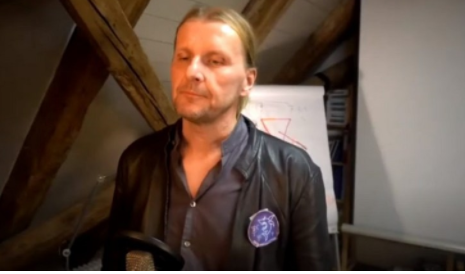
Image: Vaqif Sadıqov in 2020 (CC BY 2.0)

In July 2024, Azerbaijan’s ambassador to the EU, Vaqif Sadiqov, told the Financial Times that European companies were avoiding long-term commitments. He compared his country’s position to that of a firefighter called in to solve a temporary problem. European states needed additional gas after their energy break with Russia, but EU climate policy and plans to reduce fossil-fuel consumption limited their willingness to commit to lengthy contracts. (Financial Times)
This episode reveals the structure of the relationship. Aliyev’s administration supplied Europe with a resource that had become important during a crisis. In return, Baku expected long-term guarantees, investment, and an improvement in its political status. The European side received additional supplies while preserving the freedom to change course later. A significant share of the financial risk remained with Azerbaijan.
A similar logic applies to transport corridors. European capitals are interested in routes through the South Caucasus that provide access to the Caspian region and Central Asia, bypass Russia, and reduce dependence on Iran. Azerbaijan is essential to the functioning of such a system. Its political ambitions are assessed separately from its usefulness in transport and energy.
Turkey’s Experience as a Warning
Azerbaijan belongs to the Turkic political space and maintains allied relations with Turkey.
For Aliyev’s administration, cooperation with Ankara serves as a military, infrastructural, and foreign policy foundation. At the same time, Aliyev has consistently linked his most important economic expectations and international legitimacy to Western institutions.
Turkey’s relations with Europe have long demonstrated the principle of managed proximity.
Ankara received official EU candidate status in 1999. Membership negotiations began in 2005 and were later frozen. In 2026, Turkey continued to seek the modernization of the customs union, visa liberalization, and the resumption of negotiations. No concrete progress toward membership had taken place. At the same time, Turkey remains an important member of NATO, controls strategically critical territory, and cooperates with the EU on trade and migration. (Reuters)
The Western system benefits from Turkey’s military capabilities, its control over routes, and its influence in the Black Sea, the Caucasus, and the Middle East. For decades, the Turkish leadership has been denied equal access to Europe’s political centre.
Aliyev’s team probably expected to avoid the same fate. Azerbaijan offered gas, transport infrastructure, cooperation with Turkey, access to Central Asia, and an additional means of weakening Russian influence. The restoration of control over Karabakh strengthened Aliyev’s confidence in Baku’s ability to shape the regional order independently.
Western institutions acknowledged Azerbaijan’s increased importance. They also preserved their instruments of pressure, critical resolutions, and freedom to support Armenia. Aliyev encountered the same logic that the Turkic world has observed in Turkey’s relations with Europe: resources and geography are valued, while political equality is postponed.
Why Armenia Receives Greater Political Attention
The West’s approach to Armenia demonstrates the difference in the strategic value of the two directions.
Aliyev’s administration has already connected Azerbaijan to Turkey, European energy markets, and transit routes that weaken Moscow’s position.
Baku has long performed a significant part of the functions that benefit Western policy.
Armenia remains formally affiliated with the Collective Security Treaty Organization and the Eurasian Economic Union, although its participation in the CSTO was frozen in 2024. Yerevan’s reorientation produces a direct geopolitical result for the West: the Russian system loses an ally and part of its influence in the South Caucasus. (AP News)
In May 2026, Yerevan hosted the first bilateral EU-Armenia summit. The parties signed an agreement on the development of transport, energy, and digital links. The Associated Press reported that European Union investment in Armenia under the Global Gateway programme was expected to reach €2.5 billion. European leaders openly connected these steps to the deepening of relations and Armenia’s movement toward the EU. (AP News)
In July 2026, during a visit to Baku, Ursula von der Leyen announced up to €200 million for transport, energy, and digital projects across the South Caucasus. An additional €20 million was intended to support local communities in both Azerbaijan and Armenia. The package was regional in nature and was primarily linked to infrastructure and the implementation of the peace agreement. (Reuters)
.

.
A direct comparison of these sums is limited by the different structure of the programmes. Their political orientation is nevertheless clearly visible. Armenia is being supported as it changes its foreign policy orientation. Azerbaijan receives funding for projects that strengthen European transport and energy capabilities.
For the West, Armenia represents a state that can still be drawn out of the Russian system. Aliyev’s administration has already integrated Azerbaijan into a significant part of the Western regional strategy. This produces an asymmetry: Yerevan is offered incentives for its geopolitical transition, while Baku is expected to continue performing tasks it already carries out.
What Western Media Publications Reveal
The Associated Press report on the EU-Armenia summit is structured around Yerevan’s gradual movement away from Russian influence. The strengthening of relations with Europe is presented as the main regional development. Aliyev’s conflict with the European Parliament and PACE appears near the end of the report as an additional complication. This structure reflects the Western hierarchy of priorities: progress in Armenia is regarded as a strategic achievement, while Aliyev’s dissatisfaction is treated as a manageable side effect. (AP News)
Reuters describes cooperation with Baku through transport, energy, digital infrastructure, and regional stability. The report focuses on the functions Azerbaijan can perform within the new architecture of the South Caucasus. The political status Aliyev’s administration expects in exchange for these capabilities is barely examined. (Reuters)
The Financial Times reveals a deeper contradiction. The European Union asked for increased gas supplies, while European companies avoided the commitments Baku needed to expand production. In this situation, Aliyev’s administration’s interest in long-term economic compensation collided with the European side’s desire to preserve maximum flexibility. (Financial Times)
These publications cannot be declared commissioned or politically ordered without evidence. Their editorial choices still shape perception. Certain circumstances occupy the centre of the narrative, others receive only brief mention, and some questions remain outside the text entirely. Western publications discuss Azerbaijan’s energy and transport value, human rights, and the Armenian issue in detail. Aliyev’s expectations of equal political status receive considerably less attention.
An Ultimatum After Realizing His Role
Aliyev’s team spent years building relations with the West as an exchange of strategic opportunities. Azerbaijan provided energy resources, transit routes, access to the Caspian region, and participation in weakening Russia’s position. The presidential administration expected Baku to be recognized as an independent regional centre of power.
The Western system offered a different arrangement. It uses Azerbaijan’s capabilities, finances infrastructure that serves its own interests, engages with Aliyev at the highest level, and preserves instruments of political pressure. At the same time, the EU is strengthening Armenia because its reorientation produces a more substantial geopolitical gain.
The accusations of double standards, the suspension of cooperation with the European Parliament, and the conflict with PACE together amount to a hidden ultimatum. Aliyev is demanding a change in the attitude toward his administration, recognition of its regional interests, and an end to viewing Baku exclusively through the lenses of gas, transit, and confrontation with Russia.
His message to the West can be expressed in the strongest possible terms:
Aliyev has demanded that the West determine what his administration represents within the Western system: an equal regional partner or a convenient instrument.
The actions of European institutions indicate that the second option continues to suit them considerably better.
*
Click the share button below to email/forward this article. Follow us on Instagram and X and subscribe to our Telegram Channel. Feel free to repost Global Research articles with proper attribution.
Alex Ksiądz is based in Poland.
Featured image is AI-generated via the author
Global Research is a reader-funded media. We do not accept any funding from corporations or governments. Help us stay afloat. Click the image below to make a one-time or recurring donation.





















.jpg)


 French (CA)